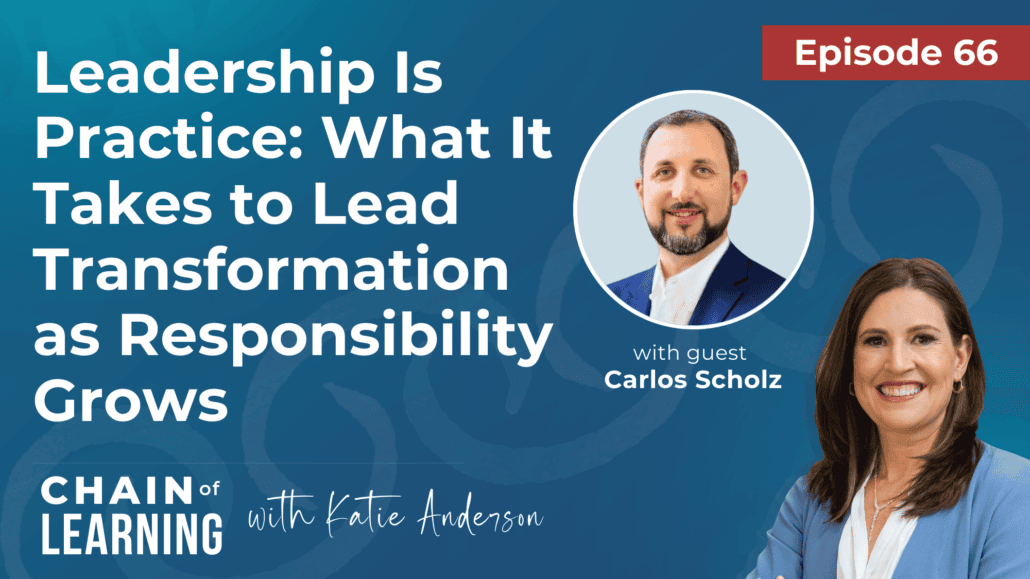





Why Sustainable Change Starts With How Leaders Show Up
For many leaders, there’s a moment when doing great improvement work—or having the right answers—no longer moves the organization forward.
As responsibility grows, leadership shifts from executing change to holding the system: balancing people, priorities, and consequences while creating the conditions for others to learn and lead.
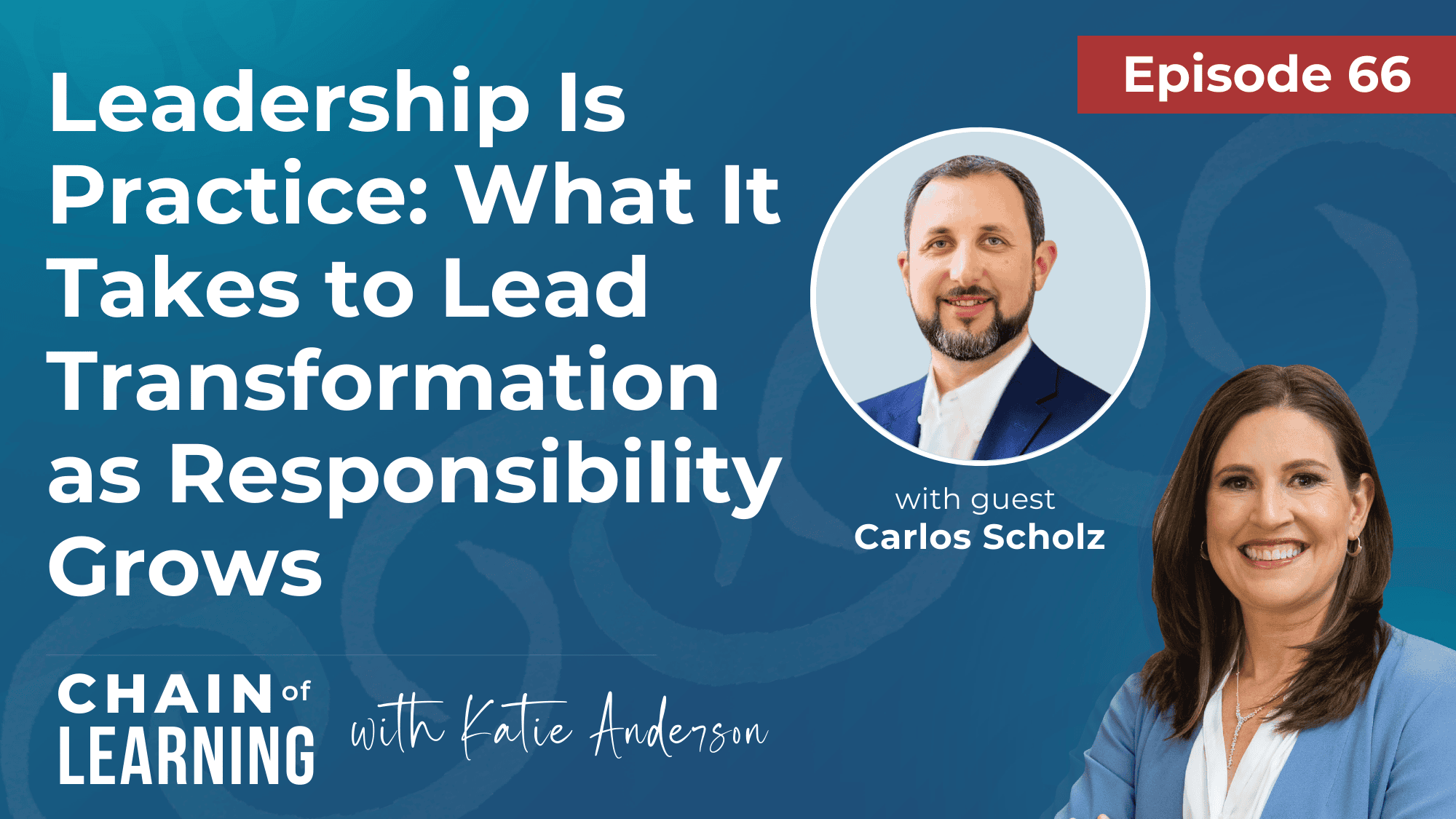
In this episode of Chain of Learning, I’m joined by Carlos Scholz, CEO of Catalysis, to explore the critical shift leaders must make to enable systemic, lasting organizational change.
Carlos reflects on his journey—from industrial engineer in manufacturing, to healthcare transformation leader guiding teams of continuous improvement practitioners, to operational leader, and now CEO. Across these roles, he’s seen firsthand why transformation so often stalls.
It’s not a lack of commitment or effort.
It’s the tendency to push for results before the leadership behaviors, management systems, and learning practices needed to sustain those results have fully matured.
This conversation highlights a critical truth: leadership is practice. It’s not a role or a title, it’s how you intentionally show up and get better, day after day.
Together, we explore what really changes as leadership responsibility and organizational complexity increase, how leaders have to change their own behavior, and how influence shifts when the work is no longer about doing improvement, but about developing leaders who can own the system.
If you’re navigating your own growth as a leader—or supporting others as they step into greater responsibility—this conversation offers language, perspective, and insight to help you lead transformation with greater clarity and impact.
In this episode, you’ll learn:
✅ Why leadership becomes less about expertise and more about intentional practice as scope and responsibility expand
✅ What changes when you move from leading through influence to owning the system through positional authority and the consequences that come with it
✅ How identity and perceived value shape resistance to change, including your own
✅ Why skipping organizational and behavioral maturity undermines reliability, even with strong intentions
✅ How repositioning improvement teams from doers to coaches helps leaders change their behavior and allows transformation to scale
Listen Now to Chain of Learning!
Tune in to navigate your own growth as a change leader and a perspective to help you lead with greater impact.
Watch the Episode
Watch the full conversation between me and Carlos Scholz on YouTube.

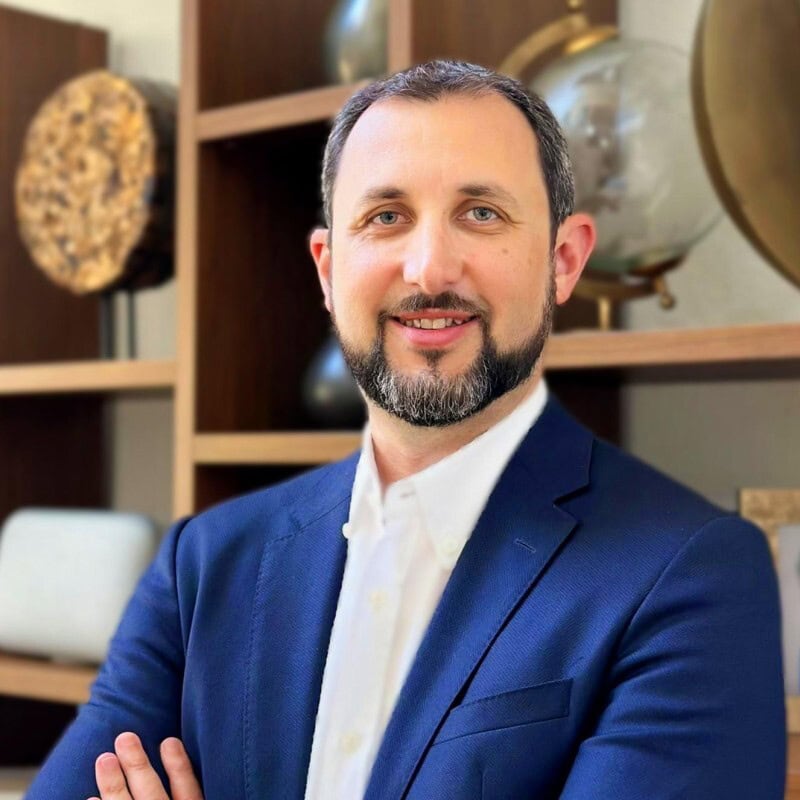
About Carlos Scholz
Carlos Scholz is the CEO of Catalysis, a mission-driven organization advancing people-centered, value-based healthcare. A former manufacturing engineer and healthcare operations and change leader at Kaiser Permanente and NYC Health + Hospitals, he brings deep experience driving system-wide Lean and continuous improvement transformation and developing leaders at scale. Carlos was named a Shingo Rising Star and serves on the Shingo Institute Board.
I’ve known Carlos for nearly 15 years, starting when we were both internal change leaders in healthcare systems and later partnering through the consortium I ran in the San Francisco Bay area for seven years. We also collaborated while developing his performance improvement team and senior executives at Kaiser Permanente.
Reflect and Take Action
Leadership isn’t something you have.
It’s something you practice.
Transformation so often stalls not because leaders don’t care or aren’t trying, but because we rush to outcomes and skip maturity. We apply tools, jump to solutions, and push for results without fully developing the leadership behaviors and management systems needed to sustain them.
As responsibility grows, influence changes too.
The skills that help you lead through influence without authority aren’t always the same ones required when you’re responsible for the whole system. Growth often requires more restraint, not more control, and deeper empathy for the tradeoffs leaders are making every day.
As you reflect on this episode, don’t try to do everything. Choose one place to begin.
- What leadership behavior or system needs strengthening before pushing for the next outcome?
- What is one thing you could practice differently this week to strengthen the system around you?
Leadership is built in moments through what you practice, not what you intend.
Important Links:
- Check out my website for resources and ways to work with me
- Connect with Carlos Scholz
- Follow me on LinkedIn
- Download my free KATALYST™ Change Leader Self-Assessment
- Learn more about my Japan Leadership Experience
- Episode 9 | Move from Technical Expert to Influential Leader
- Episode 16 | Leverage Analytical Systems Thinking and Psychological Safety to Drive Organizational Improvement with Mark Graban
Listen and Subscribe Now to Chain of Learning
Listen now on your favorite podcast players such as Apple Podcasts, Spotify, and Audible. You can also listen to the audio of this episode on YouTube.
Timestamps:
03:02 – Leadership shifts Carlos made stepping into senior executive responsibility
06:19 – The start of Carlos’ journey and how it evolved
relationships as it does on technical expertise
17:42 – Multiple approaches in creating conditions for leaders to feel safe enough to be vul12:19 Learning that sustainable change depends as much on influence and nerable and share openly
18:44 – Importance of organizational assessment to identify behavioral gaps
24:05 – Understanding that sustainable change requires aligning the entire system, not just improving isolated parts
26:32 – When leaders are not on board with change efforts
28:48 – Importance of both the technical and social side of being a change leader
31:30 – The process of building a system of coaching
36:23 – Transitioning from leading through influence to stepping into direct operational leadership
43:28 – How skills developed as an influence leader strengthened operational leadership
45:57 – A surprising lesson from stepping into an operational leadership role
50:16 – How Carlos is leading transformation as a CEO of Catalysis
55:08 – Steps to make real transformation happen
1:00:13 – Reminders for leading transformational change
1:01:43 – Questions for reflection to strengthen the system around you
Full Episode Transcript
Carlos: [00:00:00] Transformation really is about practice, especially from leaders. It’s not about who’s gonna be the best motivator. Sometimes we look at leadership as, oh, you are the motivator of everybody within your organization is, and you are the expert, and they see you as the expert, the see you as the per the person that has all of the answers.
It’s not really about that. I think transformation, achieving a level of influences about who’s going to convene and stimulate and ground and model the change through a series of experiments.
Katie: Welcome to the Chain of Learning for the links of leadership and learning unite. This is your connection for actionable strategies and practices to empower you to build a people-centered learning culture, get results, and expand your impact so that you and your team can leave a lasting legacy.
I’m your host and fellow learning enthusiast, Katie Anderson. What does it [00:01:00] really take to become a transformational change leader? As responsibility grows, your work becomes less about doing improvement and more about holding the whole system people priorities and consequences. That shift requires a fundamental change in how you lead, whether you’re leading change through influence, or through positional authority.
To share his leadership, growth and career journey from technically trained engineer in manufacturing to transformational change and operations leader in healthcare. And now Chief Executive Officer. I invited Carlos Scholz to the show. Carlos is the CEO of Catalysis, a mission-driven organization dedicated to transforming healthcare.
In this role, he’s responsible for shaping the conditions that enable sustainable people-centered change at scale. And he also serves on the board at the Shingo Institute and was recognized as a Shingo rising star. Prior to his executive role at Catalysis, Carlos held several senior leadership roles at the Permanente Medical Group in [00:02:00] Sacramento, including Director of Operations for Medicine Specialties, leading strategic initiatives across seven value streams, and performance improvement director, where he oversaw the development and maturation of the North Valley Way management system.
I’ve known Carlos for nearly 15 years, starting when we were both internal change leaders in healthcare systems and leader partnering through the consortium. I ran in the San Francisco Bay area for seven years, as well as our collaboration developing his performance improvement team and senior executives at Kaiser Permanente.
There are so many rich insights in this conversation about what it really takes to lead transformation at both the personal and organizational level. If you’re thinking about your own growth as a leader or what it means to expand your influence and responsibility, this episode offers so much to reflect on.
We started our conversation with me congratulating Carlos on his new role as Catalysis, CEO, and asking what leadership shifts he’s had to make in the past six months as he’s stepped into senior executive responsibility. [00:03:00] Let’s dive in.
Carlos: Ah, well, in the last six months he is. It’s been, uh, a whirlwind of change actually.
Uh, and I actually see it more as a, uh, having a growth mindset to things that you have never really experienced before. And, and I feel like, uh, throughout my career I’ve had that growth mindset growing into different types of roles, different types of industries, but this is an entirely new thing for me, uh, in terms of jumping into this type of role.
Uh, also outside of, uh, it’s a completely different industry at the end of the day as well, although we do operate within the healthcare space. But it’s been a lot of learning about, you know, having to deal with things like board, uh, in managing the board or marketing or sales. I mean, those kinds of things that I had not experienced in the past and, uh, that I have to get used to, uh, pretty quickly.
Yeah, it’s been, it’s been a great experience [00:04:00] so far in terms of, uh, learning and, uh, adjusting my thinking and my mindset and saying things like, well, I don’t know how to do that. Yet, and that’s a key word, and maintaining that spirit that it, it’s always learning. Every day is a new learning experience.
Even if you are in the, in the type of position that I am, I feel fortunate to be in the position that I am and having the level of influence that I am able to, to, to have. Uh, that’s a, that’s the kind of role that I always aspire to. Uh, having the opportunity to work with, uh, other CEOs or, or people like John Touissant, uh, who was just, you know, uh, quite honestly, just a personal hero from the moment I started working in healthcare.
And I, I, I felt a little bit starstruck when I, when I got to meet him, but now I get to talk to him almost every day and talking about strategies in, in which, how we’re gonna. Make sure that our mission keeps moving forward, [00:05:00] uh, which is transforming healthcare. If we are passionate about that is what, you know, uh, take us outta bed every, every morning, uh, and pushes us, pushes us forward.
Uh, yeah, it, it’s been a great experience so far.
Katie: Well, I’m super excited for you and congratulations in this role. And actually, you and I have known each other probably like 15 years or so, and through. Catalysis back when it was the Theta Care Center for healthcare value. And I was working at Stanford Children’s Hospital in New York, working in, in New York, and we were sort of earlier in our change leader, change practitioner roles.
And I’d love to see the growth. And, and I’ve known John for John Touissant also since that time too. We were one of the first Stanford children’s hospitals, one of the first members of their, their network. So it’s, it’s great to now be coming together in this capacity. I, you know, I’d love to go backwards in your career, Carlos, and sort of paint the picture for, and some of the lessons learned through becoming a change leader in organizations in healthcare and then [00:06:00] stepping into more operational leadership roles and how that’s, and then we, we can sort of explore how that set you up now for taking on an executive role in a different organization.
So let’s go back to, um, early days, Carlos, starting your career. Where, where did the journey begin and, and how did it evolve?
Carlos: I’m an industrial engineer by training. That’s my degree coming out of school. I went to school in Mexico. I started working in Mexico. I’m from Mexico. Uh, in, in case your listeners didn’t know that part of me.
Uh, so yeah, I went to school in Mexico, finished my degree, and uh, I started working at an organization that at the time was called Sara Lee Brand Apparel. Yes, it is the Sara Lee that you are probably thinking about the cakes and the, and the bread and all of that. But there was a specific division within Sara Lee that was called Sara Lee, branded apparel.
And this division was basically, it was just textile manufacturing, uh, clothes and underwear and [00:07:00] all sorts of things like that. And, uh, from day one, I feel extremely privileged to have had the opportunity to learn about lean. It was literally on day one in my first job as an industrial engineer at Sierra Brand Apparel.
It was, it was this, a specific facility in Mexico where I started my journey. Uh, and from the very beginning, uh, in my onboarding was you are going to be in charge of. Uh, a project that will consist of transitioning our entire facility from batch manufacturing to one piece flow. Just imagine the, the opportunity, right?
This is like an 800 people facility. All, uh, I mean, you’ll enter into the production floor and you couldn’t even hear anything from all of these sewing machines going on all at the same time. And imagine this, all of the machines were organized in, in types of operations. Some [00:08:00] operations were, I don’t know, putting the strap on a specific type of garment.
Other operations were building the cups of a bra or et cetera, and everything was moving in batches of five dozen. So there were bags floating, floating around from one place to the other. And my first project was to learn about. Continuous flow, uh, one piece flow tack time, balancing according to T time, all of that.
And we, that’s how I started to get to know about Lean and I started receiving training. I feel very fortunate that I got a lot of training back in the day. Very early on, and we started creating these manufacturing cells and moving pieces one at a time, balancing the line according to what the tag time of EO of e of each operation was.
And the entire line was, uh, we completed that transition within about a year and a half. [00:09:00] And as eventually we started moving into other projects that were very tool oriented, now that I think about it, uh, I learned about TPM, uh, so how to maintain our equipment, uh, in a very proactive way. I learned about smed.
So when we had to change from one type of product to the next, I learned about 5S. I learned about a number of other different tools, uh, at, at the time, and I got the opportunity to actually get to do all of that within Central America as well. I had the opportunity to visit other countries, be part of committees that we’re part of.
If one plan is doing one piece flow a certain way, but other is doing a a different way, how do we learn from each other and work in bigger projects like that? Eventually I was. I, I had the opportunity to grow within the ranks of, uh, Sara Lee brand Apparel, which eventually became known as Hanes Brands.
And, um, I got the opportunity to lead several [00:10:00] facilities, uh, uh, within Mexico from the lean manufacturing perspective. So what we were able to achieve in one facility, I was able to take to five other facilities. And, and, and now I became a, a manager for a much bigger effort within Haynes and I, and then eventually moved to the Dominican Republic when I was in the Dominican Republic.
This is gonna sound a little bit funny, but, uh, that’s where I met my wife and, um. Eventually there was a company, I mean, she’s a doctor. She already had the plan to do her residency in the, in the States, and I don’t know if it was Destiny, but a company, uh uh, um, yeah, a company looked into me and I eventually moved from Haynes into the United States, uh, to a company called a dio, where it’s a family owned business that focuses on making, uh, manufacturing for, uh, musical accessories like guitar strains and drum heads and drumsticks and all sorts of accessories for the [00:11:00] instruments.
And we took that transformation that linked, they were looking into doing that lean transformation. That’s one of the reasons why I moved into that organization. And after four years there, something really interesting happened. This is about nine years into my career. Uh, I started feeling a big disconnect between my job and my personal sense of purpose.
I really feel that at that time, having a couple of relatives that went through very significant, uh, health issues. And, and not only that, but within the healthcare, um, continuum, they, they experienced so many problems and so many issues. I kept thinking about how my training in Lean could really make a difference in, uh, in healthcare by chance.
I happened to, uh, stumble upon Mark [00:12:00] Graban’s book, uh, lean Hospitals, and I became friends of, uh, Mark that way. Uh, I actually told this story in his podcast as well a few months ago. One random day he calls me, he says, Hey, I found, uh, I found out about an opportunity in, uh, New York City Health and Hospitals.
What do you know? Two months later I started my journey into healthcare and that’s where we finally got to meet each other. Yeah.
Katie: Wow. That’s amazing. I mean, there’s so much richness in what you just shared and, um, Mark’s been on my podcast too. I’ll put the links in that, in the show notes, and I’ve been on his podcast multiple times too.
I think there’s a lot of entry points that people have in lean, and your, your experience is sort of typical, I think, of many people, especially coming from more of an engineering industrial and, you know, engineering background of really getting into being the process person, learning the tools, deep technical knowledge, which is so critical.
I’m curious, as you were starting to be more than just like, let’s go and fix this process, but starting [00:13:00] to manage and influence change across multiple sites and in multiple areas, what were some things that. You might have been discovering along the way that you needed to augment your technical skills to really be leading sort of the social side of change, the influence side.
Carlos: Yeah. I, it was really when I started doing more of transformational work in, in a multitude of facilities that I really had to start thinking and asking for help as well, and learning more about strategy deployment and strategy alignment and what does that mean, what does it mean to actually do it? How do you actually influence leaders, uh, at multiple levels within the organization to actually buy into the transformation strategy that you’re trying to have them see what is possible.
Right. Very early on, I, I really feel fortunate to have had the opportunity to learn from some really great leaders that already had that, that level of experience. So I feel that my, my influence grew as I moved [00:14:00] through the ranks in, in several organizations when I finally moved to healthcare, though. I guess what really helped is that I work not within one of the hospitals that were part of the system, but within the corporate office.
And being part of the corporate office really helps you, uh, have that view, that overall view of the organization to really think more broadly about how you can influence, uh, because imagine this, you have a system with 11 hospitals and each of the 11 hospitals feels like it’s its own culture, almost like if they’re their own fifth.
That that was actually a word that was used back in the day when I was in New York City health hospitals. And, and how do you get to influence 11 different hospitals with 11 different CEOs and having them cascade down? I think it requires. Direction to a certain point, having clarity about what you’re trying to accomplish, but [00:15:00] give them enough flexibility in the way they want to approach their own transformation within their own four walls.
And at the end of the day is about having them practice. Because transformation really is about practice, especially from leaders. It’s not about who’s gonna be the best motivator. Sometimes we look at leadership as, oh, you are the motivator of everybody within your organization is, and you are the expert, and they see you as the expert.
They see you as the per the person that has all of the answers. It’s not really about that. I think transformation and, and achieving a level of influence is about who’s going to convene and stimulate and ground and model the change through a series of experiments. From my role, my, my role was getting that to happen as well as creating an [00:16:00] engine in which there was enough sharing and transparency about everything that was being learned and what was working and what was not working, um, and, and learning and creating.
Humility and transparency and, and vulnerability from leaders, uh, to make that happen. Um, and when I finally transitioned to, to my role in Kaiser Permanente, that was one of the biggest things that I feel was, uh, what created our success at the end of the day, um, in what we’re, what we were doing there.
Because we were actually actively every week our leadership team was, uh, sharing. Good things and notes are good things. Hey, you know, in, in a meeting that I had the other day, you know, I did this as a leader and it created this effect. I learned from that. So now I’m changing my behavior and having that openness and that humility about sharing, I think it goes a long way.
Katie: Yeah. [00:17:00] So for uh, listeners who don’t know, you made the transition from New York out to California and you know, the, and taking a, a strategic initiatives, lean, sort of internal lean leader role at the, the Permanente Medical Group in the North Valley, right?
Carlos: Yes. In Sacramento. Yeah,
Katie: in Sacramento. And that’s when we actually got to spend, start spending a lot more time together too, which has been great through a consortia that I was running in the San Francisco Bay area and some work we’ve done together too.
What a great insight here about how do you create the space and the conditions for leaders to learn through doing and through reflection. How did you help create that safe space and that process for leaders to feel comfortable and v to be vulnerable and start sharing that?
Carlos: Uh, it, it required a multitude of different approaches.
I think one of the approaches that, uh, helped a lot was going out and seeing and learning from what others had already done. You don’t really have to start from zero and figure it out on your own. What really helped, and this is, this is something that [00:18:00] happened prior to me arriving there, the leaders were very committed to learning.
Uh, and they knew that after several years of, uh, being in a continuous improvement journey, they needed to really step up and elevate, but they didn’t really know what to do, so. Going and seeing what others organizations that could be used as examples have done is really, really a great way of, of getting leaders, uh, to actually see in person, um, what good looks like.
And, and they really start making comparisons between their style of leadership at that moment versus what they’re observing and what could be possible. Great, great example. The second is, and I cannot recommend this enough, is doing an organizational assessment. A lot of organizations start transformation.
I feel that they forget that, you know, it’s not just the strategy and defining the strategy and say, [00:19:00] okay, we’re gonna do this. We’re gonna get this training, we’re gonna learn these things. We’re going do, implement our new model where we feel is the new model, uh, in a few model areas. And it’s gonna be great.
But what’s your starting point? Where are you at that time? You really need to understand your baseline, where you are. What type of behaviors are rewarded currently in your organization? Uh, where is the variability of behaviors? When I first started in, uh, the permanent medical group, I, I identified that one of the biggest gaps that we had was not like that.
We had a single management system or operating system that was working or not working. It’s that we had 30 of them because every leader was practicing differently. And when you have that and you don’t have that level of consistencies, like, well, I’m just doing what I’m used to and uh, that’s what works for [00:20:00] me.
I don’t know what works for you, but I’m doing this right. Uh, so it really felt that way. And it was about like, how do we get the best of all of that? Make it our own. How do we make it a true, like, this is the way we lead and manage in this organization. So understanding your starting point is really, really important and a lot of organizations don’t do enough, uh, in, in creating that baseline understanding where you are and how far you need to go and how quickly you’re gonna move through those milestones.
The third thing I feel that really, really helped, uh, was we made a really conscious decision about. Our internal improvement team was not gonna be just a team of experts and and technical people that knew a lot about Lean and the tools about Lean. We made the conscious decision that they were going to be the [00:21:00] coaches of our leaders initially and providing them that help and training our team very early on in our journey before we actually started, I team paid off significant dividends as we were building the team.
And we hire people, uh, that you and I know we spent a lot of time with them like Anna or, or Daniel or others. Uh, they really build those skills and that capability to be able to coach those leaders. And at the beginning, I remember leaders were not actually very happy that they were gonna get some very early on coaches that they, they thought like, oh, we actually need more advanced coachings if this is gonna work.
But I said, look. We’re entering a gray space and there’s gonna be a lot of opportunities for learning. And it’s really important that we maintain that spirit of learning that we’re not, we haven’t figured this out, we’re gonna figure it out. Uh, over time there’s gonna be a lot of [00:22:00] things that gonna work and a lot of things that don’t work.
And the more we experiment through that and share it so we can create a, um. A common understanding of all of those practices and all of those behaviors, uh, the best we’re going to do this. So as we started the training, it wasn’t really the training that I believe that helped, although, I mean, it does help to learn about your behaviors and, and, and what new behaviors you need to start demonstrating.
And p it’s actually creating the expectation that you’re going to experiment and fail, and it is suspected that you fail and you’re gonna be supported through that failure. So I, I mean, those are some of the key things. And, and, and again, having the space to share and learn together. It, it, it’s really important and, and the leaders, the top leaders committed to [00:23:00] continue building upon those, uh, types of, of spaces and, and experiences.
Um, if you have a leader that at the first try, or second or third try and say, we’re not getting results. This isn’t working, and I expect you to do this right, and don’t fail. Things really start to crumble from that point.
Katie: Yeah. Well it sounds like you were really lucky, and I know this is true, from having worked with you in the organization, that you had leaders, at least they had this learning mindset and they knew they needed help.
They hired you and gave you some permission to help shape that approach. And how powerful to, you know, to go back to one of the comments you, you said about really un I think really powerful to understand not just where do you wanna go, but where are you today? And really understanding the interconnectedness of the system, right?
So like leadership behaviors or how you’re rewarded both, either financially or also just rewarded from a, like yeah, you’re such a hero in the [00:24:00] organization, really influences, you know, whether or not new behavior is gonna be adopted or not. So looking at the whole system and understanding all the parts that need to change, not just we need to improve process and move some behaviors, but how is this gonna work together as an integrated system and what do we need to do from, to move from here to there?
Carlos: I I, I think a big part of that is. You’re really dealing with the sense of value that these leaders perceive they have within the organization. In a system that rewards heroism, which a lot of systems do in any type of industry. You have, you, you may have a culture in which, uh, is very directive, uh, or you have a problem.
And when you go to your superior, your one up, and you’re trying to talk about the problem, your superior says something like, well, you should contact so and so. You should do X, Y, Z. And then, uh, that person goes and basically carries that direction into fruition, comes [00:25:00] back and say, I did it. I did that. You a, what you asked me for.
And that is what gets celebrated. And, and that’s what you perceive is your sense of value. Like I get things done. And I go and receive direction, go, and I’m very good at executing Right. Versus a culture where I have a problem. And, and the response you get is what do you think is happening? What have you learned?
What, what, what steps did you take to learn about. What’s going on? Uh, once that you learn that what are the main obstacles, uh, what are you doing about it? What do you expect to accomplish by doing that? And you start to see that difference and, and you’re actually being coached. You’re, you’re creating capability, but it does mess you up as a leader as to, well, my sense of purpose is different.
I’m not the. Good at getting things done, now I have to go figure it out. It is, [00:26:00] it is not easy work. It’s very, very complex work. Yeah.
Katie: Yeah. And it, and it’s a shift in identity. And that can be, that’s important to recognize too, for change leaders who are trying to, you know, understand, well, why is the leader not buying in?
There’s, there’s, there could be an emotional side happening too of like, well, what’s my value? This is what it’s gotten me to be successful and now you’re asking me to do something different. And there’s a lot of, you know, vulnerability maybe to work through on that
Carlos: or external factors. I mean, you may have a board that is not supportive of, uh, those type of efforts.
As a matter of fact, just this very same week, I was actually coaching somebody and he was telling me there’s actually a board member. That plainly said, uh, I think will be a waste of time to go and engage the people in getting their ideas. We’re just gonna go and tell them what to do. I mean, that alone changes immediately the behavior of that leader and reverts anything that you are trying to do in terms of [00:27:00] creating the right culture, which is you wanna engage people, you want to.
Get all of those ideas and all of that power, uh, from those that are closest to doing the work. And the only way to do that is having the leader behave in the way that creates that environment. Right?
Katie: Yeah, for sure. And this is, I think one of the, the challenges, especially in larger organizations or more complex like healthcare or government or others where you have, or like large entities where you have a board that maybe isn’t on board.
I remember John Toussant, uh, was putting so much of his effort into how to engage the board and get them to really understand the value of this type of empowered problem solving or what we might call lean and coach, um, and delivering value. ’cause the board can choose a different CEO also and like totally wipe out a culture if they don’t, if they don’t get it.
Charles, there was something, the third part you said I think is also really powerful is that you help the leaders frame, well, you help position the, your team of the continuous improvement department and practitioners not as the [00:28:00] doers of improvement, but as the coaches and the facilitators and the teachers, and that positioning is really critical.
I think it’s really important too that, you know, you help them see that they, they didn’t have to be the experts in the business, but they had to really be there to hold the condition. So I’d love to unpack a little bit about that too. ’cause that’s some of the work that we did together with your team and sort of growing the coaching capability skills, but such an important part for change leaders in how they’re positioned and showing up in the organization.
’cause we too, as change leaders, show up in that doer trap, same as the executives and, and maybe identifying our value, especially if we come from a more technical background of like doing the improvement, applying the tools that you said smed and creating value and flow and all of this. And, and we’re not necessarily showing up as much coach-like, and we need.
We need both the technical and the social. So I’d love to hear your thoughts on, on some of that.
Carlos: Yeah. Very, very early on, I remember when I first arrived to the organization, I did an, an [00:29:00] initial assessment. I was really interested in learning what was the perception of the team from those that they were supporting, which were the leaders or the department or leaders, um, whether they were the senior or or middle level leaders.
So I, I went to the gemba, right? I, I wanted to learn from them directly. Uh, what was that perception? And I learned that, uh, it’s similar to what you were mentioning. Uh, they were tool experts. They, they ran events, they did trainings, um, or even in some cases, this is gonna surprise you. Uh, what I was told is, oh yeah, they fill out my A3’s for me, uh, as a leader.
Katie: Oh, no.
Carlos: So very quickly I learn, you know what, if this is going to work. We are going to really swing that pendulum from technical leaders to coaches very, very heavily. Eventually, we’re gonna need to bring it back, but I, uh, what I personally felt, and I I discussed this with the, uh, executive team is. [00:30:00] I really need to spend, um, uh, some time prior to when we formally start doing any of these transformational work in, in really creating that coaching capability from within my team.
So I spend about six months having them learn directly the principles, uh, like. What does respect for people mean? What does leadership, uh, leading with humility mean? What does, uh, creating consistency of purpose mean? What does thinking systemically mean? How do we apply ourselves? So we actually did a lot of practicing within our own processes.
Uh, we spent a lot of time practicing our own coaching, coaching each other, uh, creating this body system. Like one consultant, uh, will coach another consultant on something specific that he wa he or she was trying to do. And as we continue building that capability. I felt that that really got us ready. So when the leaders started learning [00:31:00] about the principles of organizational excellence, and they started learning about, okay, leading with humility, what does that mean?
What does it mean to you? How do you actually operationalize it for you? Um, what type of behaviors do you demonstrate on a day-to-day basis that demonstrate the principle of leading with humility? And, and one by one we started because we had that prior learning. When my. Team were shadowing, or I personally was shadowing our executives as well.
So I, I also got to do this myself and learn together with them when we were shadowing them, let’s say that they were on a one-to-one meeting or a, a weekly status exchange or a monthly performance review, or they were going to the gemba, we tried to stick ourselves to them, uh, or shadow them to just be there, observe them.
And, uh, we created some standard work around our [00:32:00] coaching cycles, what they needed to be. We actually made it systemic in the perspective of we really need to understand what is the intent of today’s interaction with our coachee, meaning the leader, uh, what do we expect that leader to demonstrate today?
Uh, did it work or not? What do I have to do to make them realize where their gaps are? Like what type of questions do I need to ask? So there’s a lot of. Uh, there, there’s a, a lot of work that goes into developing a system that really, uh, demonstrates that there is a preparation, then going and observing, and then there’s a follow up and then a system of feedback that keeps building that system of coaching.
And I feel that that was part of our success. And the other parties, as our own coaches were learning and doing this work themselves, they just kept improving the system themselves. I didn’t really feel that I had to be the [00:33:00] one directing them or leading in any specific way. They, I mean, the team alone started to learn, you know what?
We need to create standard work for these specific pieces or these specific elements of our system because there’s a lot of variability. I’m coaching this way, you’re coaching that way, and you’re coaching a, a, a, a third way. How do we do this together? Oh. Let’s define, send the work. And then we did, and then we went and practiced and experimented and kept learning and learning and learning.
I feel that that was really helpful. Um, the other thing that I feel really helped, and, and this came not necessarily from me, but from our leaders, there was a very conscious decision that the number one priority of our organization was gonna be to mature the management system. So there are outcomes that you need to achieve for sure.
There’s quality and safety and financials and lead times and access and all of that. [00:34:00] But the number one priority is how you get to them. We needed to make it such a priority to mature the system because our hypothesis is
Katie: the better we do
Carlos: these practices.
Katie: The better our results will
Carlos: be. So I think that really helps solidify all of that, and it really help our team be successful at the end of the day as well, because leader understood that message and they, uh, even though there was some reaction, uh, or resistance to change in the beginning, I really feel within months, uh, I mean they build such a strong bond between coach and leader.
I mean, my coaches, uh, my consultants, my internal consultants to their leaders, that they felt they were indispensable to their success. They, they help their personal development. Uh, A3’s, uh, they coach them through it. They [00:35:00] help their experiments. They, they knew what experiments they were trying to, uh, they help with the pace in which that was happening.
Yeah. Uh, I could not encourage that enough for other organizations that are out there trying to figure it out, what to do. I will say step number one is investing in your internal performance improvement team.
Katie: Well, thank you and I appreciate that you had me partner with you and some of that investment in learning as well.
Carlos: Yes, you were a big part of that.
Katie: It was great to work with your, you and your team and, and that what’s exciting is truly we’ve built this Chain of Learning, right? It’s then gone on and beyond and it’s, that’s, that’s also the point of this podcast. It’s like how you’re sharing insights now here with listeners and hopefully they can take those forward into their practice as well.
So I hear invest in your internal continuous improvement team and help set them up. For success by not being positioned, not just as the technical experts, um, but the social influence coaches as well. [00:36:00] And that is that balance. But maybe you needed to pivot a little bit too far to be on the coaching side and then bring it back.
Where do you see things now in the organization? I know you’re no longer, you’re no longer there, but what, you know, you’re still connected to the organization. You actually shifted too from being the head of the continuous improve, you know, the VP of continuous improvement to more of an operational role.
So maybe that, maybe we should start there actually, like, what led you to take leading through influence only as the, you know, as your role within continuous improvement to taking a service line, operational leadership role?
Carlos: Yeah, I, I, I’ve always had this growth mindset and I really felt that we got to a point, uh, in our journey within a certain amount of time that I really felt that I, I never really owned the system and that was never really my intent.
It was always intended to be led by those doing the work by the leaders and by those doing the work. And we got to a point in our maturity [00:37:00] that I felt that as part of my own growth, I needed to transition to an operational role. And I had several conversations with, um, with my leaders about that. And it was quite an interesting transition to go from, okay, I’m gonna coach you about how to do this in, in a day-to-day operation, to now I’m doing the day-to-day operation.
I, I sincerely appreciate, uh, what I had the opportunity to do that, uh, that, that I had the opportunity to, if I wanted to keep growing within the organization, I knew that I needed to have also a certain level of credibility that I had led operations as well, because it’s a completely different monster to lead, uh, that operation, especially in a heavily labor.
Partner, labor intensive field, uh, the majority of our workforce, uh, being in a labor partnership and in, in a union. That is a, a very [00:38:00] interesting thing to do and, and to grow into and to learn how to deal with the day-to-day problems that the patients have. I felt that I didn’t have direct knowledge on some of the things that our leaders were going through, so I felt, you know what, I’m gonna step into their shoes.
So eventually I was able to, uh, lead their, uh, medicine specialties in, in the area and. Learn a lot from that. Learn how to manage quality, learn how to manage, uh, the budget, learn how to manage access, and, uh, working with our physician leaders, uh, in developing the things that we needed to develop. Um, I actually got the opportunity to build, uh, a program almost from the ground up.
Um, a program that had already been started by one of the, uh, leaders in pulmonology that, you know, uh, we did a complete value stream of that and, and applying all of the same principles just from an operational role. But I think the most rewarding part [00:39:00] of that role was just to get, to grow our managers.
And, and now you have the opportunity to directly. Influence them and coach them and teach them about the principles and why the principles matter, and how that can really help unlock the huge potential that exists within the people doing the work. And I really felt the best reward for me was to transition from having a management team that was more on the traditional, direct tells you what to do, and, uh, very, very direct, very top down approach to creating a culture in which our people were heavily involved in the decision making.
Uh, they felt that they were part of the solution and they were problem solving on a regular basis. And yeah, that, that was, that was. The best thing I, I finally got to do it as a doer [00:40:00] rather than as a coach, which is, uh, the biggest reward of them all. And by the time I left and, and where I think they are now, because I do keep in touch with them, uh, significantly, they’re actually gonna be speaking at the upcoming LEI summit and telling their story.
I, I couldn’t feel more rewarded about where they are right now. They really have made what it’s now called the Norval. Well, it’s been called the Nor Valley Way all this time, but what is called the Nor Valley Way, uh, it really is the fabric of the organization. It’s really how they do things, how they lead, how they manage, and it’s the way in which they’re going to accomplish the very creative, uh, strategies that they’re going after.
I feel that it has helped raise the bar in performance for sure. I mean. The outcomes are there in terms of quality and [00:41:00] finance and access and, and you name it. Um, you, you can compare what the North Valley area is doing versus others. And, you know, there there’s a lot of things to feel really proud of from an outcome perspective.
But they’re not necessarily just chasing aggressive outcomes. They’re chasing the right culture. They’re building the engine that is going to help achieve those outcomes. And they, they know they’re not there yet. They, what I feel so great about is they have created this culture that. Once we feel that we’ve made it, it everything’s gonna come down.
So we have to have that mentality that we need to continue to mature the system because the system should not be people dependent. It should be just part of who we are. Anybody that comes, any leader, any leader that gets promoted or any leader that comes from the outside should know and understand that this is the expectation that [00:42:00] we lead and manage in this very specific way.
And there are lots of stories from people that join the Nor Valley from other service areas or from the outside, and they couldn’t say enough good things about, uh, what they experienced through, through the North Valley way. But it’s having that mentality that we’re not there and we may never be there yet, we’re perfection is going to be.
What we achieve every single day in trying to achieve that perfection. I think they’re going to keep achieving great, great things.
Katie: That’s, that’s so great, and I can attest from visiting you and the organization over many years and seeing the systems and structures and hearing directly from the leaders that they really own.
System. They own the management system and, and really driving it. So what a great like, sort of legacy and success that continues beyond you. Before we move on to your role now at Catalysis, uh, I want, I, I’m curious, Carlos, ’cause you had, you first came from being like a [00:43:00] process improvement doer, technical side, grew into being really a transformational senior leader in organization, run, running the team of internal consultants influencing, you know, the direction, but keeping the ownership with the senior leaders, but then stepping into an operational leadership role.
I’m curious, I have two questions for you. What was one of your skills as an influence leader that was really helpful for you in making the transition to being an operations leader? And what was something that surprised you or you maybe didn’t appreciate about the role of being an operational leader?
That would be good advice for those people who are mainly in, uh, roles of influence.
Carlos: A, a skill that I had as an influence leader versus an operational that, that translated very, very well into an operational role, I will say, is coaching. I, I think coaching, using scientific thinking and, and applying like cada coaching was very, [00:44:00] very important to me.
And I will say for any leader, for any leader that is looking to make that transition in, in really being rigorous about how you apply that coaching and under what, what circumstances you’re applying that coaching. Not every single time you’re gonna be able to coach somebody. You have, there’s, there’s a continuum.
Sometimes you can do it, sometimes you have to put on a different hat depending on their circumstances. But I felt what really, really helped is. When, when you take on a role where you say, I’m not gonna tell you what to do, I’m just gonna coach you, and I’m gonna coach you in a way that you’re also not solving the problems that other people should be solving.
Right? Like un clearly understanding your, your role and not stepping into other people’s role to solve the problem yourself. That was really helpful in, in, in order for us to create the right [00:45:00] culture because that’s when, that’s really when people started to see, oh, I’ve been used to this type of leadership.
What I’m being told what to do all the time, and now I’m. Being asked, what, what will the solution to a problem be? Uh, I’m not coming only presenting the solution. Now I’m expecting to understand what the problem is and, and what potential experiment, uh, we could do. And I get to own it as well. I think, I think that really did wonders, but you have to do it in a very systemic way.
So it’s not just about you doing it, it is you doing it and ensuring that those that you’re coaching are also doing it and building that complete system, doing it in a systemic way is really, really critical. Uh, so I, I will say that’s probably the top, uh, skill that helped me in transitioning from an influence role to an operational role.
Katie: And what was one sort of [00:46:00] surprise for you about stepping into an operational leadership role that maybe would’ve been helpful for you? As an influence leader, trying to work with operational leaders
Carlos: on the understanding of the operations as a whole. In healthcare, it’s really, really important. It’s really important to understand the, the full patient journey, all of the different touch points for you to be familiar as a leader.
With all of that, I had to do a significant amount of gemba to really learn everything that the patient has to go through, and that our staff and physicians. We’re going through on a day-to-day basis. Initially, there had always been this feeling in the departments that I was managing about, we don’t have enough resources.
We need more, uh, we need more of everything. We, we need more medical assistance, we need more physicians, we need more. But when you really start walking the [00:47:00] gemba and mapping out the processes and doing it together with the people and asking the right questions and, and, and making it visual, you really start to see what the opportunity and the ways are and finding those efficiencies in realizing, oh, maybe we don’t actually need these resources.
There’s a different way to add value here, or a different way to add value there. The other thing that I will say is really, really critical is understanding patient and staff expectations. I think leaders a lot of times make a lot of assumptions about what’s good for the patient or what’s good for the staff.
Having conversations with them on a regular basis is so critical, so critical just to get to know them, what they aspire to, uh, what matters to them, how they interpret things in their own way. Uh, a very [00:48:00] quick example that I can tell you is the concept of respect for people. I had certain assumptions of what respect for people meant, but it’s not until you meet with the people doing the work that you start learning and you start asking them questions and, and they start coming to you.
Uh, every day with much more trust and telling you, well, this is what I understand as respect for people, and it’s just not happening to me right now. I’m not being heard. It seems like I’m being heard, but I’m not. I don’t really feel heard. And here’s why. Similar to the patients is understanding what the patient’s expectations are so we can build the systems and the processes of doing the work according to those expectations.
And again, don’t make assumptions for what the patients want. Go and ask them directly, meet with them, constantly solve the problems that they’re having directly. If they have [00:49:00] a complaint, get involved in the complaint. I got involved in so many of those complaints that I feel that I was able, it was very, very beneficial for me as a, as a senior leader to really understand.
Their point of view and not just to make the assumption that it’s like, nah, this is completely unreasonable. A lot of the times there were very reasonable requests and, and just getting to work with the staff on those things was very, very rewarding. But don’t make the assumption that you know the oppressions because you helped.
As an influence, maybe map out the process or value stream, map it, or do several rapid improvement events. Don’t make the assumption that you understand. Go and actually see and do it. And I’m not gonna lie, I had to learn that the hard way a couple times.
Katie: Yeah. Well, thank you for sharing that. That’s really great pieces of advice.
Um, as we wind up our conversation, I wanna move to your, now your [00:50:00] experience as the CEO of Catalysis and how being in this position is shaping your perspective on what transformation means and leading transformation, not just for one organization, but now like more, much more broadly. So how are you leading transformation now as, as a CEO of catalysis?
Carlos: Well, it’s, it’s very, very different. Uh, look, I, I think I have seen more than enough examples of, uh. The failures that have occurred of organizations that were in a really good journey and then something happens, something failed within the organization, and, uh, the transformation ends up failing. Or it’s in a, in a state where, you know, it’s not ideal.
Um, uh, things change, people change, people move, et cetera. So to me, how I’m seeing transformation is I’m trying to simplify things a lot more because the word transformation [00:51:00] just in and itself, it can be so overwhelming for leaders a lot of times, is thinking in this day and age when we’re being asked to deliver results.
Uh, the, the, the conditions in healthcare are so dire in a lot of different ways. There are so many organizations that are, uh, in financial trouble. The current administration’s policies are not helping in, in a lot of different ways. You know, the, the way they’re gonna get paid is gonna be significantly, uh, impacted.
Um, so they’re trying to figure it out how to gain efficiencies faster. And a lot of the times there is not enough. Look into where you are and where you wanna be as an organization. It’s about. I need to deliver results now. And, and that sometimes takes a view into technology. Healthcare is now, uh, all about ai and there are a lot of good things about what AI can do, but also, [00:52:00] uh, things that AI is not gonna help change.
Um, so instead of looking at a solution that is gonna be a one-time deal, how to make, uh, leaders view that, you know, if you really are going to achieve sustainable and reliable results over time, and the moment you’re not here, it doesn’t matter, things are gonna continue in that trajectory and you’re gonna create a system in which maybe you’re not the best or maybe you are not achieving, uh, the best results or.
Uh, but you’re achieving the results that you’re set to do, and you’re creating the conditions in which no matter whether you are in good times or in not to good times, you’re going to have steady progress. And, and you know that you, you have built it into the fabric of who you are in the organization.
And by the way, it doesn’t have to take you [00:53:00] 10 years to get there. Um, like, like a lot of people think is how to make it, uh, a lot simpler. Don’t tell me that this is going to take years. It’s about, hey, you can change in small steps. It’s about the things that you decide to do every single day. You as leaders set the tone and the behaviors that are going to create the right expectations for people.
So how about we try to do things, uh. Uh, creating standard work for how you’re gonna spend the first 30 minutes of your day, or, uh, building a system in which the information gets to you at the right, uh, at the right time, uh, at the right moment. Uh, how problems are surfaced and how they’re responded to without you having to be there.
How people are experiencing, being listened to or, [00:54:00] uh, working or feeling up a burden. But you know that things are going to be happening whether you are there or not. And when you achieve those kinds of things, you have achieved transformation. Transformation doesn’t have to be a huge plan that requires all these investment in training and coaches and et cetera.
It’s just, it’s about the things that you decide to do every single day. I say. Behavior precedes culture.
Katie: Absolutely. I was on the phone with John Shook earlier this week talking about him coming on my podcast, so stay tuned. Listeners, John Shook will be coming on, uh, later this season. And we were talking about this, uh, concept of transformation as well, and you really connected with that.
It, it starts at the personal level. What can you control? And it’s all about how do we keep building person by person. And that’s really the Chain of Learning, right? It’s that chain of impact. It’s the connection. It’s each individual of [00:55:00] us, um, doing something small, getting better every day collectively.
Um, and so that’s, that’s super powerful.
Carlos: And again, make it personal, try new things and then start thinking about how you build the systems that are going to hardwire that behavior. And then you keep going and going and going, and more leaders within your organizations are gonna start doing the same. And then you start sharing that, and that’s when real transformation really starts happening.
It’s, again, I said it at the beginning, leadership is practice. It’s not necessarily expertise, it’s not necessarily motivation. It’s about what you decide to do every single day. Also, uh, transformation normally fails when maturity is skipped, so. One of the things that I, I am trying to work more on is make more of a conscious effort as leaders to create the [00:56:00] conditions in which the maturity of your system is evident.
And it is expected, and it is expected from leaders to try new things, to experiment new things, to keep making it better every day. It’s about building a more reliable and a better engine for change and for achieving the outcomes. It’s not necessarily about just go get the outcomes and a, they’re going to be leaders that are gonna get the outcomes for sure.
But the key question is, is it reliable and sustainable? What’s gonna really make it reliable and sustainable is those system that are gonna hardwire those results over time because people are behaving in a specific way and skipping. That maturity, uh, or not paying attention to it or expecting that it belongs to somebody else and not to yourself as a leader.
Um, that, that’s when, when some of these failures [00:57:00] come, and, and again, at the end of the day, we’re healthcare really to me is about not what happens in the hospital. It’s about what happens in the community is it’s engaging everybody doing the work, the nurses, the MAs, the techs, the pharmacy techs, the lab techs, the, the respiratory therapist, the doctors, the everybody in collectively finding better ways to do their work in the benefit.
Of the patients, but also the community. At the end of the day, that’s what healthcare is about, of having communities that thrive. It’s not just about getting the patient faster from the ED to the hospital and out of the hospital, it’s about keeping the population healthy as well. Um, so keep focusing on a, a combination of what you do every day.
Do the [00:58:00] behaviors, hardwire those behaviors through system, and yes, utilize the technology that you need to utilize, but never in a way that it replaces the human capability, AI or any other technology. Your new brand, new electronic health record that has some AI capability. That is never really going to be a substitute for many things, including leadership and human capability.
Katie: Oh, Carlos, there’s so much we could keep talking about and you’ve made some great connections to some conversations I’ve had here on the podcast, like with Rose Heathcotet recently. And it’s not, lean’s not just about, you know, the, it doesn’t matter what your industry is like. It’s actually about doing good for the community, for the world, so much more.
That’s a huge focus of what people see on my Japan leadership experience. And then my conversation with Nathan Harvey too about AI is really just amplifying what already exists and we need to keep elevating our humanness. And not, you know, de diminishing it. So how do we keep bringing this [00:59:00] humanness? I love all of the recommendations and insights you’ve shared here today, and I’m really looking forward to continued partnership with Catalysis and with you and, and really helping transform not only healthcare, but our organizations and how we create and enable change positive and meaningful change across all our organizations in our community.
So, thank you Carlos.
Carlos: Thank you very much, Katie. I was, it was a pleasure being here with you. And, and again, yes. We need to talk more because there’s so much to talk about. Yeah.
Katie: There are so many powerful insights in this conversation, but what really stands out to me is this leadership is practice. I wanna say that again.
Leadership is practice. Carlos’s journey from technical improvement doer to transformational change leader, the operations leader, and now CEO makes this clear as responsibility grows, leadership stops being about having the right answers, being the expert, or doing the work yourself. It becomes about what you [01:00:00] intentionally practice every day to create the conditions for improvement, how you show up, how you create space for others to think, and how you hold the whole system, people priorities and consequences together.
Carlos also shared some important reminders for leading transformational change. One is that transformation often fails, not because leaders don’t care or aren’t trying or not bite in, but because we skip maturity. We rush to outcomes, applying tools or jumping to solutions without fully developing the leadership behaviors and management systems needed to sustain them.
Another is that influence changes as responsibility grows. The skills that help you lead through influence without authority aren’t always the same ones required when you’re responsible for the whole system. Growth as a leader often requires more restraint, not control. And importantly, how can you have empathy to the responsibilities [01:01:00] that the organizational leaders that you’re coaching and developing if you’re a leader through influence, are having to make.
And finally, I wanna come back to how Carlos intentionally positioned his performance improvement team, not as technical doers, but as coaches. This wasn’t about abandoning technical expertise, though it had to be deemphasized for a time, but about balancing it with social, relational, and influence skills needed to develop leaders who could truly own the work themselves.
And it required Carlos to help grow and develop these capabilities in his team. Yet when this balance shifts, transformation stops being dependent on a few people and starts to scale as they really have demonstrated at Kaiser Permanente North Valley. As you reflect on this episode, choose one idea or insight to focus on what does leadership as practice look like for you right now, and what one small shift could you start practicing today to [01:02:00] strengthen the system around you and grow your Chain of Learning?
Many of the influence and social skills Carlos highlighted in this episode connect directly to my Katalyst change leader model from seeing and aligning the system to coaching for capability to navigating the human and political dynamics of change. And I’ve been spending a lot of time the last months reflecting on refining this model, and I’m so excited to share more about these insights here on the podcast as the year unfolds.
And if you haven’t already, I encourage you to download my free Katalyst self-assessment to understand all eight competencies that you really need to have to be an impactful change leader. You can go to KBJanderson.com/Katalyst, spelled with a K, and you can also go back and listen to episode nine of this podcast to learn more about each competency.
If you found this episode valuable, please follow or subscribe to the podcast and share it with a colleague so we can all strengthen our Chain of Learning together. And if you’re enjoying the show, I’d really appreciate a rating or [01:03:00] review on your favorite podcast player. Thanks for being a link in my Chain of Learning today.
I’ll see you next time. Have a great day.
Subscribe to Chain of Learning
Be sure to subscribe or follow Chain of Learning on your favorite podcast player so you don’t miss an episode. And share this podcast with your friends and colleagues so we can all strengthen our Chain of Learning® – together.