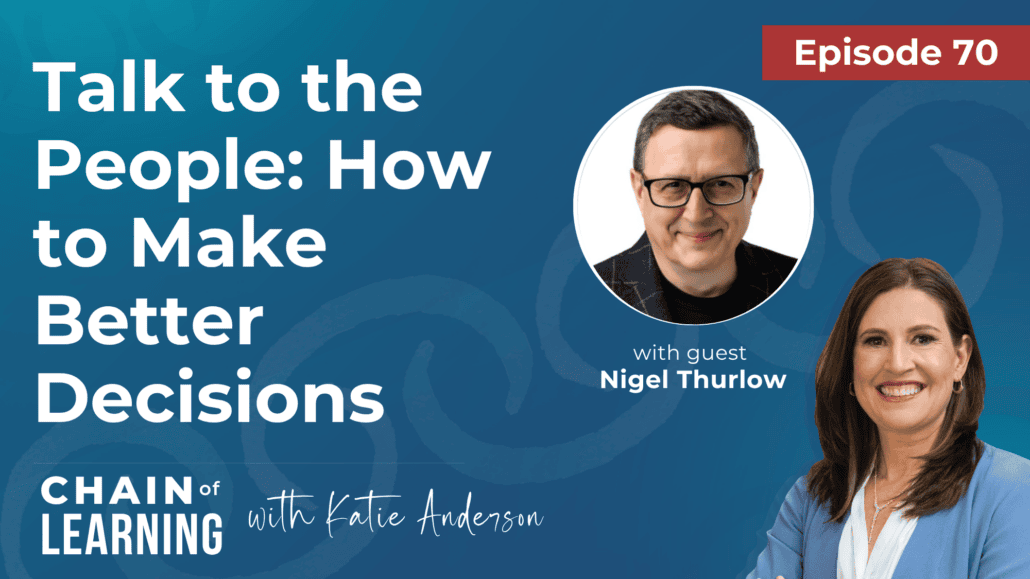





Closing the Gap Between Decisions and the Work Itself
What happens when the decisions leaders make are increasingly disconnected from the work itself?
In a world of AI, automated dashboards, and remote work, it’s easy to manage representations of work instead of understanding what’s actually happening for the people doing it.
Yet when leaders rely on data—rather than facts—they often end up solving the wrong problems, even with the best intentions.
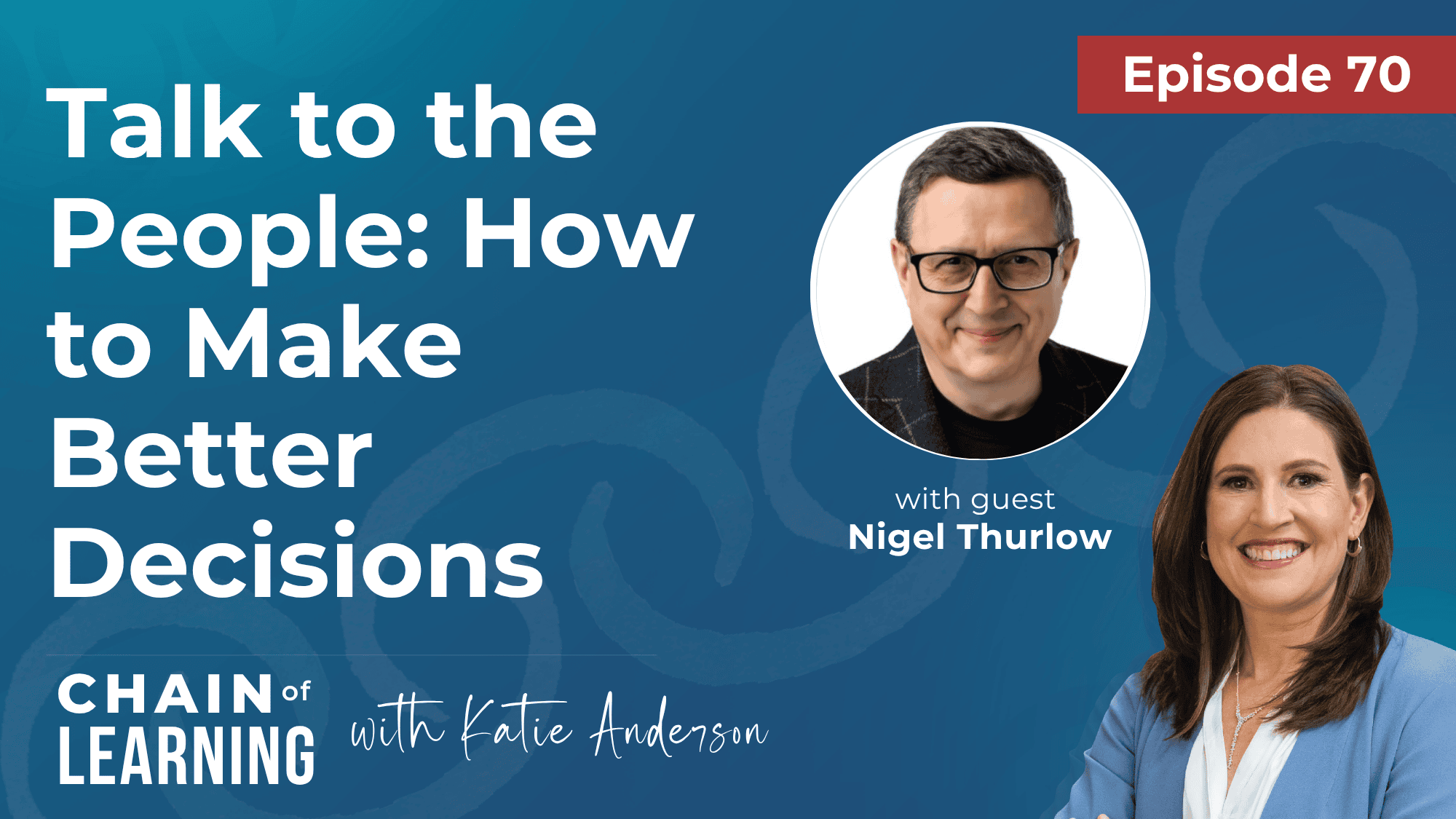
In this episode of Chain of Learning, I’m joined by Nigel Thurlow, consultant, systems thinker, and Toyota’s first-ever Chief of Agile, to explore how leaders make better decisions by understanding how the system actually operates—and how that understanding is built by engaging with the people doing the work.
When you stay connected to the work, you don’t just get better information. You begin to see how work flows, where problems emerge, and what’s getting in the way. You build trust, surface issues earlier, and create the conditions for people to think, speak up, and solve problems together.
In this episode, you’ll learn:
✅ Why there’s a critical difference between delegation and empowerment — and why one leaves people unable to act
✅ How to distinguish between data and facts, and why going to see conditions firsthand changes the decisions you make
✅ What “going to gemba” looks like in a digital or remote environment when there’s no factory floor to walk
✅ Why making work visible creates the conditions for people to surface problems, before they compound
✅ Why AI amplifies what’s already there — and why fixing the underlying system comes first
Listen Now to Chain of Learning!
Tune in to explore how understanding the work—through people—changes how you lead.
Watch the Episode
Watch the full conversation between me and Nigel Thurlow on YouTube.

 About Nigel Thurlow

Nigel Thurlow is CEO of The Flow Consortium and the creator of Scrum the Toyota Way. He spent over 20 years at Toyota, including serving as the first Chief of Agile at Toyota Connected. He is co-author of The Flow System and The Flow System Playbook, and his work focuses on improving decision-making in complex environments.
Reflect and Take Action
Are your decisions happening close to the work, or at a distance?
The most important thing you can do as a leader is to talk to the people who do the work.
Because better decisions don’t come from more dashboards or faster answers.
They come from understanding how the system actually operates.
And that understanding starts with human connection.
When you stay connected to the work, you don’t just get better information. You build trust, you start to see what’s really happening, and you create the conditions for people to think, speak up, and solve problems together.
So how do you create more of that connection?
- Go to where the work happens
Spend time in the actual place where the work is done—observe and listen. - Talk directly with the people doing the work
Focus on understanding their experience, not confirming your assumptions. - Create space to see the work firsthand
Sit in on real conversations or experience the work instead of relying only on reports or dashboards.
Where might decisions in your work be happening too far from the work itself and what’s one step you can take this week to get closer?
Important Links:
- Full episode show notes with links to other podcast episodes and resources
- Check out my website for resources and ways to work with me
- Connect with Nigel Thurlow
- Follow me on LinkedIn
- Subscribe to my newsletter
- Episode 37 | Lean Has Failed (or Has It?) with James Womack
- Episode 38 | What’s the Future of Lean? with James Womack
- Episode 59 | Get Better at Getting Better: Leveraging AI to Elevate Human Learning with Nathen Harvey
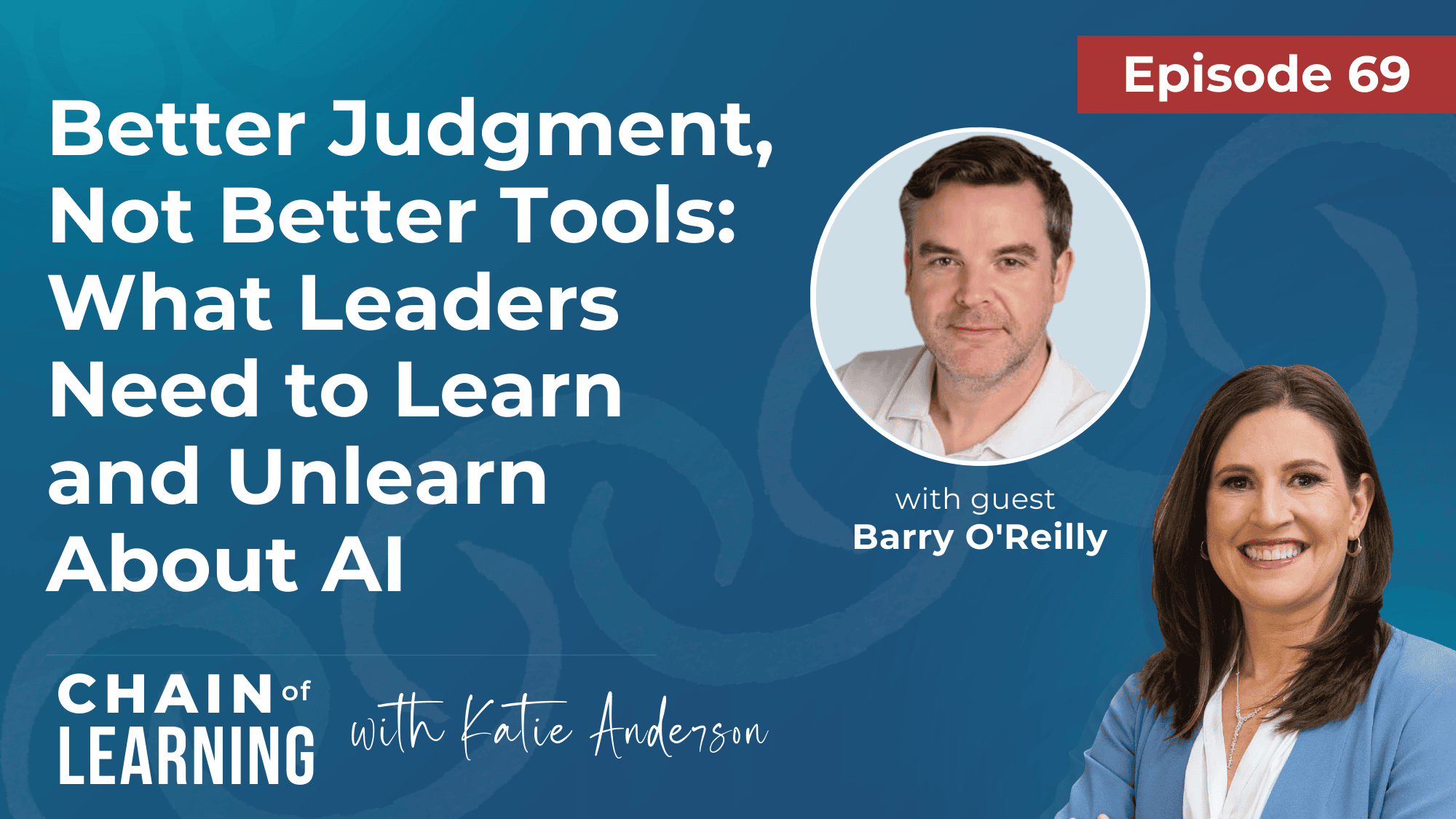
- Episode 69 | Better Judgment, Not Better Tools: What Leaders Need to Learn and Unlearn About AI with Barry O’Reilly
Listen and Subscribe Now to Chain of Learning
Listen now on your favorite podcast players such as Apple Podcasts, Spotify, and Audible. You can also listen to the audio of this episode on YouTube.
Timestamps:
03:19 – Effects of being detached from the work when working remotely
04:17 – Difference between delegation and empowerment when assigning work to others
05:35 – Fear of those who are delegated to of failing or making the wrong decision
07:15 – What it means to empower someone and transfer the ownership of that decision to someone else
09:21 – How to go to gemba and go where the work is done
10:07 – The benefits of “presenteeism” and being present where the work is performed
11:46 – Benefits of collaborating in person vs. a digital environment to make better decision
13:02 – Nigel’s experience in working in a frozen food manufacturer and going out to the line to understand the pain workers experienced
15:42 – Why you need to understand how work gets done to improve throughput and quality of work
16:39 – Benefits of hiring an external or internal consultant to understand the problems that need solving
19:31 – The effects of companies investing in tools and AI and realizing it doesn’t help with problem solving
21:30 – How to avoid the leadership decision problem and get all the facts to avoid consequences
24:39 – Technique known as “sense making” to understand the temperament and behaviors in the environment to reveal dark constraints
26:09 – The difference between US and Toyota’s corporate culture in incentivizing leaders to be part of a system
29:10 – How to help workers make changes that need to be made visible to senior leaders
35:04 – Enabling others to communicate with leaders to improve decision making
37:14 – Why badly designed systems and not the workforce are the cause of problems
38:25 – Why you can’t implement AI with a broken system
40:31 – The possible future of AI and how it can affect our decision making
43:37 – Importance of embracing the human connection to better communicate and make better decisions
47:24 – Reflect on where your decisions may be happening too far from the work
Full Episode Transcript
Nigel: [00:00:00] We bonded over that and we did have a lot of understanding and I was able to learn and understand and it helped me to explain to leadership. And that was one of the places that did the Ono Circle. I brought the leadership out, put them on the line and said, you gotta watch this and you gotta observe, you gotta understand.And then we stopped the line, which of course is sacrilege any plan. We actually pulled, pulled the cord, and stopped the line for a bit. And had them interact, had the leaders talk to the people doing the work. So the highest paid people, the lowest paid people having a conversation. And two weeks later, that line I was on got rebuilt.
It was taken down and completely rebuilt to solve all the challenges ’cause the leaders had experienced it.
Katie: Welcome to the Chain of Learning for the links of leadership in Learning Unite. This is your connection for actionable strategies and practices to empower you to build a people-centered learning culture, get results, and expand your impact.
So that you and your team can leave a lasting legacy. I’m your host and fellow learning enthusiast, Katie Anderson. What happens when leaders are [00:01:00] making decisions further and further away from the work itself? In an age of ai, automated dashboards and remote work, it’s easy to manage representations of work instead of really understanding what’s actually happening for the people who do the work.
And when leaders rely on data rather than facts, they often focus on solving the wrong problems, even with the best intentions. So the real question becomes how do leaders make better decisions and how can we as consultants and change leaders help enable that? To help explore this question, I invited Nigel Thurlow to the show.
Nigel is a consultant, author, and systems thinker who previously served as Toyota’s first ever chief of Agile. He co-created the flow system, blending lean, agile, and complexity thinking to help organizations make better decisions and deliver value while staying connected to the work, especially in complex, fast changing environments.
Over the past few years, Nigel and I have shared keynote stages in [00:02:00] Columbia and Brazil and the US and even some travel adventures along the way, which is where we’ve gotten to know each other beyond the work. I value his directness, insights, and warmth behind his perspective. We started off our conversation with a question.
What are some of the challenges and opportunities you’re seeing with leadership and real transformation in your work and with clients? Let’s dive in.
Nigel: We see that word transformation. That scares me immediately because I, I’ve stopped using that word because we do, we, we are in a transformation. So I ask, well, what happened to the previous transformation, the, the transformation before that?
So I think we’re in this constant evolution of change. We’re in this, this ebb and flow and flows of web will come on to I’m sure at some point, but there’s this constant ebb and flow in organizations. I mean, I’m currently working, uh, uh, as we’re recording this with a client in a plant. So I’m back on the plant floor, which is one of the places I love being, um, because then I can actually talk about experiences about, as opposed to sort of just, you know, the academia, [00:03:00] academia of it all, what we read and that other people are doing.
And one of the things I, I’m always critical of, and I’m not saying that’s the current client, by the way, just in case they ever watch this. Podcast, but managing from afar, managing from the boardroom, versus managing from the floor. And, and of course when you get digital extraction, uh, abstraction you should say, when you’re in a digital business, you’re not in a manufacturing type of business that becomes even worse.
Everybody’s working remotely, everybody’s working, uh, on Microsoft teams. Uh, the only interaction you have is. Forced interaction, and if you’re a leader in that world and you’re only interaction you’re having with the people doing the work, who tend to know the most about the work we’re doing because they’re actually doing the work, then you tend to become very, very, very de detached from what’s actually happening at what we, of course we call the gemba, the real place, the actual place that work is being done.
And I’m constantly trying to find ways to encourage leaders to, and you speak some Japanese, ’cause you have that background with, [00:04:00] uh, Mr. Yoshino. Uh, I’m constantly teaching people to do genchi genbutsu, not sightseeing, which sounds very similar, but the whole genchi kembutsu, which is the, the, the Japanese phrase that I was taught by my leaders, just meaning sightseeing.
And so. The other challenge I’m seeing apart from getting them to engage and participate with the people that do the work to truly understand the problems, is that they delegate to others. And there’s a big difference between delegation and empowerment. We’ll call that in a second. They delegate to others because they don’t want to have to do this thing and they, you know, they’ll call it Empower, but they actually delegate ’cause they still retain the ownership of the decision making.
And then the people they delegate to are, they aren’t able to make the decision or don’t understand how to make the appropriate decision or themselves are scared to make a decision because they’re not empowered, they’re just delegated to, and somebody else has got the ultimate decision.
Katie: Well, no, no, I think that’s [00:05:00] really interesting.
And also then they, those people who are quote unquote delegated to feel are often care about that change or the thing that’s trying to happen. And one of the doer traps that I talk about is this surrogate leader and. When we’re in a position not of true ownership, we might feel so much passion or responsibility for the thing that’s happening that we kind of take on the role of the leader.
But in doing so, there’s actually, as you’re talking about here, there’s a huge gap then on in true leadership and what happens when that person goes away or what’s really happening. So keep building on what you were saying. It
Nigel: is interesting as well, because sometimes the people. That are delegated to, they’re under a, you know, a level of fear and trepidation that they’re gonna fail or make the wrong decision.
And so they tend to try and sustain a decision. They think the leader’s going to their boss, their, whoever they’re reporting to, who’s delegated to them may make, but also they sometimes can be a bit. Too [00:06:00] close to the problem because they’re actually doing the work. They’re not abstracted enough from the work.
So what we need is, and that’s not an oxymoron. What we need are people that aren’t involved in the weeds day to day, but are understanding what the people in the weeds are going through so they can take, it’s what I do as a consultant, what most of us do as consultants, we go in and. Hopefully we, we learn, we listen, we learn, we observe, we ask questions.
We understand and we offer support and help or guidance or help them think through the problems a bit more effectively. And that’s what I want leaders doing because if they can’t see the problems, they don’t understand the problems, they can’t make the right decisions, and, but it is an absolute. Torment, whether I’m in a physical environment or a digital environment, to get the leaders to engage and understand the problems.
And even when we start doing things, you know, good old value stream mapping or some, even some basic process mapping, but good value stream mapping. And we do some of the sense making techniques I use and then I present that information to [00:07:00] them. They think I’m making it up, they think I’m inventing it.
And so the. Just trying to get them to go and experience and understand is, is an absolute nightmare. And then we get into the empowerment thing, which I mentioned, which is. If you are empowering somebody, you are relinquishing the ownership of the decision making. You have transferred the ownership of that decision making to somebody else who’s now accountable and owns that decision.
You no longer do. If you delegate, you still retain that ownership, and then when they make a decision, you tend to overrule and countermand it because you don’t like the decision. You don’t have the facts. And the first three words, I’ll saying this, even this week at work, the first three fa uh, words I ever learned from Toyota Day one was get the facts.
And I actually tripped myself up this week because even I made mistakes and we’re all human. I started asking an engineer about some issues that have been reported, and then he [00:08:00] started asking me about occurrences and, and frequency and this type of thing. And I didn’t have the information. And so even I made the mistake of not getting sufficient facts before, not challenging, but asking an engineer about these problems that were being experienced in production.
So these are the things that leaders miss by not engaging effectively or transferring the ownership of decision making to the people who will engage effectively.
Katie: There’s so many directions I wanna dive in. I’ve made some notes here. I wanna go back to this concept of knowledge work. You know, you have worked in the knowledge work side of Toyota for many years and now the, you know, both manufacturing and, you know, the, the software engineering side of things.
And one of the questions I get asked. A lot for people in this knowledge space, especially leaders, is how do I go see, how do I understand the work? So how are you helping leaders do that to really understand the work in a knowledge workspace?
Nigel: It’s a [00:09:00] shame it’s in a keynote, ’cause I’ll be flashing slides up for all these questions, but I have one that sort of has the picture of, you know, Microsoft Teams, which is the predominant tool that’s used across corporates ’cause of the allegiance to Microsoft.
Products, and you get the picture up and you’ve got a couple of cameras on, and most of ’em are blank and they’re all muted, and, and the question they ask ’em is, where is your gemba? How do you go to gemba? How do you actually go to where the work is done and understand how the work is done. Now, I like in the physical world, I want people, I, I really take executives to the floor, and I have drawn chalk circles on the floor in the past, you know, the whole, you know, infamous.
Oh, no circle. Yeah.
Oh,
Katie: no. Yeah.
Nigel: And I have put execs in with notepads and pens and made them watch what the, what’s happening in the real world and in the, in the sort of, uh, software world. I, I sometimes want leaders to go and sit down and not pair program with a developer, but sit down and understand what the developer’s going through over a period of time to truly understand how they can support changing the system.
But the reality of it is if [00:10:00] everybody’s remote and what was, there was some word, I was in California, in your part of the world in the last week, and I heard this word, word on the radio presenteeism. Apparently this is a new word that means back to the office. Apparently it’s a more polite way of saying get back to work in the office.
Presenteeism and, and whether you’re for or against, you know, being in the office or working from home, it’s not that debate to, to have here, but. The reality of it is if you are cannot be present where the work is being performed so you can observe the work and learn what’s happening and take ’cause The whole genchi genbutsu phrase, you know, actual place actual thing versus genchi kembutsu actual place seeing thing.
We all see things and we wander through a plant, but you know, hey, take photographs and, yeah, exactly.
Katie: Yeah. We both did the same thing while you’re listening, right Nigel? I just like waved and did a little like, hello, you know. Hey, like the queen. Nice
Nigel: day.
Katie: Yeah,
Nigel: but you know, the, the reality of it is. When you go and you listen and you observe and you [00:11:00] don’t have assumptions, and then you, you understand, and because you’re a leader, you take action, whatever action that might be appropriate to help relieve the situation of whatever you’ve observed and understood, well, how are you gonna do that when you’re in the digital world?
So that means there’s ways to simulate it, you know, like us talking now, you could put a leader on with. A worker or a team and have a conversation they can observe. But you know, if the, if the big boss pops up randomly in a teams meeting says, carry on. If I’m not here, that’s really psychologically safe, that’s gonna work.
So these are the sort of conversation and there’s no simple answer to it. You know, and, and you know, I still think people collaborate better when they’re in person, when they’re together in a room. Uh, and, you know, they ad hoc conversations, the quick sort of discussions, the quick huddle around a problem.
And, and you can’t do that. You can’t simulate that as, as well in a digital environment. And I’m not advocating for one or the other. People need to [00:12:00] figure out how best to foster collaboration, and I do mean between leaders or those that are given a bigger job title and maybe paid more money. How do we get they to collaborate more with the people who are doing the work day to day and understand the trials and tribulations and the problems so they can make better decisions?
Isn’t that the whole concept of what a Lean Peeps call going to Gemba? You know,
Katie: I had a great example. Um, Jill Forrester, who was just on my podcast, she shared with me how, you know, they were trying to get their leaders to understand the challenges of some digital systems in the organization because, you know, the leaders didn’t quite.
I get it and see it. And so they asked them to go through the process themselves and then they realize, oh, it was, I think it was a knowledge sharing, but like realized, oh my God, how CL clunky and challenging it actually is. And so having those experiences going to see and actually maybe experiencing it.
One of the, I mean this is not in a digital space, but one of the most powerful stories I’ve heard [00:13:00] you share, Nigel, is when you were in that frozen food manufacturer and you went out to the line for the whole day. Experience the pain, and you really deeply understood what was being asked of people in a way that you could never have.
And I, I, I just like, connects with the heart so much. Every time I hear you talk about that,
Nigel: I definitely experience the pain and I do mean physical pain because, you know, you don’t realize, and I, I often say that the people paid the lowest amount of money, do the hardest amount of work, and I still sustain that and maintain that wherever I go.
Um, and it doesn’t, dec doesn’t. Detract from leaders who have real torments and problems to solve at sort of at strategic executive levels. Um, but hey, we’re paid a lot more money at that level. So it does alleviate some of the pain knowing the bank balance is growing. But, and, and when I went on that line and I asked.
Just because I, I couldn’t understand all the variation and I just wanted to experience it and, and they [00:14:00] joked with me. I’d have to do a whole shift and I could have left any time because, you know, hey, I was the expensive paid consultant and, but it, you know, if I’d walked off, I’d have lost all credibility and all support from the people doing the work.
And I just figured if I’d died, they’d carry me off and I’d be a heroes. Death was way out. But other than that, the pain was excruciating. ’cause these people work in, you know, 50 degree temperatures, eight hour shifts in very physical work conditions. It’s like anybody on the line, any sort of physical work is very demanding and I’m an old, slightly overweight.
Consultant that had not done any physical labor in years and almost, but I learned so much. And the other thing, I bonded with the people, A lot of them didn’t speak fluent English, you know, and I don’t speak Spanish. There was a, a, a language thing, but we bonded over that and we did have a lot of understanding and I was able to learn and understand and it helped me to explain to leadership.
And that was one of the places that did the Ono Circle. I brought the leadership out. [00:15:00] Put them on the line and said, you gotta watch this and you gotta observe, you gotta understand. And then we stopped the line, which of course is sacrilegious any plan. We actually pulled, pulled the cord and stopped the line for a bit and had them interact, had the leaders talk to the people doing the work.
So the highest paid people, the lowest paid people having a conversation. And two weeks later, that line I was on, got rebuilt. It was taken down and completely rebuilt to solve all the challenges ’cause the leaders had experienced it. So even in the digital context, if you are doing software development or product development or whatever it may be, unless you truly can understand that level of intimacy with the work that’s being done, how can the decisions you make be the right decisions?
If you want to improve throughput, if you want to improve quality, if you wanna improve what we call first pass yield, if you wanna improve all these sort of. Things that you obsess around in your OKRs and KPIs, you’ve truly got to understand how the work gets done because you may be solving the wrong problems [00:16:00] or buying solutions for goodness sake, and we’re getting into AI and other things, but constantly purchasing solutions from large consulting houses to solve a problem you might not actually have.
Katie: And that’s where I actually wanted to go next around this. You know, you and I have talked about this offline that like leaders, executives come to us and like, can you do this workshop, put in this thing, help with this? Or, you know, I hear this from internal change leaders too. Like we need an X, Y, and Z and all these great ideas.
But the challenge is. What is that? You know, if we go back to true hit problem solving, thinking that’s a, like a solution disguised as a problem, you know? And, and so it’s like, what are we, what are we really trying to solve? And one of the, you highlighted this earlier, one of the benefits of either an external consultant or an internal consultant.
Or influencer can be helping leaders really understand what are the problems that need to be solved and the system problems too, because sometimes we get very narrow right into just looking at a certain [00:17:00] part, but there’s actually a much bigger thing going on. So how are you, you know, how do you think about this challenge with a lot of the organizations coming to you?
Like, we need this AI tool, or We need you to do this, Nigel, and like, like what do you do? You could just say, yes. And go do it and make some money. But, uh, yeah. How, how do you handle that,
Nigel: that, you know, there’s so many different ways to go and when you start talking about problem solving, one of the things that people tend to do is jump to root causes, you know, uh, way too quickly.
And they, they decide that the root cause is x. But actually it’s just a point of, cause it’s just one of the steps in the A3 problem solving papers that we all did at Toyota to understand what is the true root cause. So they see, uh, what they think is a cause and effect, and then they assume that’s the root cause.
So we buy a tool, we, we implement a change, but they don’t actually understand the real reasoning behind that. So we find, I dunno, a poor soldier joint and we, we. Determine that’s the root cause of the failure of the, this device, but actually [00:18:00] know why have we got a poor sold joint? You know, why is this sold joint given way?
Why is it, was it poor sold ring? Was it mechanical issues that the, the ins and outs of the connector and, and start to truly understand that. But what most companies do, they don’t do that. They don’t understand that whether it’s a systemic problem, whether it’s a component failure, whether it’s some software challenge, uh, a human factors problem within the organization.
They just decide that they, they see the initial cause and effect and they decide we have to fix that, and they, they call in. I’m a cheap consultant, by the way, just in case somebody’s watching this. Um. And there are plenty of cons consultants, that they’re far more expensive than I am. And, and take you to the golf course and wine and dine you and fly you to fantastic offsite resorts.
They’re not the people you really want to be asking to save you money and to reduce your cost of delivery. ’cause trust me, you are paying for that. None of it’s free. Um, but so truly their, their systems integrators that [00:19:00] survive by finding a problem or a perception of a problem, they can sell you a solution for.
Of course ai. Now the fomo, the fear missing out. Now I’ve read somebody wrote something, FOMO means something different, and I forget what he said, but it was very clever. But essentially the, these, these services providers are now suggesting to you that if you’re not on the bandwagon, you will lose. I remember the days when was Mr.
P and m, P two, and then it was er, EERP, and then CRM, and then everything else that comes along. And now of course, it’s. The whole AI boom. So now we’ve got AI looking for a problem to solve. And what I found, what I saw last year was that everybody was rushing and all the budgets evaporated. Last year, Nigel had a bad year and most consultants had a bad year.
’cause all the budgets went to buying really expensive tooling and fine and, and getting on the board, on the AI bandwagon. And of course there was some of those. Richer consultants use that opportunity to sell you those capabilities and tools. [00:20:00] And then what I’m seeing this year is everybody’s invested a ton of money and now they’re figuring out, well, it doesn’t actually do anything.
I mean, I use it all the time. Of course, it helps me rephrase things and make sense of my madness. I’ll even talk to it, dictate to it, tell it not to speak, dictate to it, and say, right, make sense of a madness. And this is what I want you to do, is to take my stream of thoughts and turn it into some coherence that I can use for whatever reason.
Um, but it’s become a very, very, very expensive admin assistant. Um, now I pay 20 bucks a month to open AI for my chat, GPT, and I get Gemini thrown in with. My Google sort of professional subscription, but some of these companies are spending gargantuan sums of money to just get better assistance that do basic chores.
They’re not replacing you, they’re not replacing me. Um, and that’s indicative of. All the problems I’ve seen over the years, whether they were implementing Oracle FI back in the day, or, you know, people are implementing SAP now and that’s the biggest [00:21:00] money pit on the planet. You know, you will never stop spending money if you implement SAP Toyota.
Put SAP in and trust me in three years, in $150 million down, I was sent in to have a look at where the money was going. Um, and it was very revealing. That’s all, all I’ll say on that. That point, but this is the challenge that most organizations have. They’re not looking for the true root causes of what’s causing them to have the challenges, and typically they complain about, you know, customer churn.
They complain about quality, they complain about costs. Costs are too high, profits are too low ’cause we can’t charge the customer as much as we’d like to. So those are the things they normally call me in to look at. And then when we start turning over rocks and all these things start crawling out, we start presenting the evidence and there’s lots of techniques we use for that, then they get very upset because now what?
Predominantly falls down to is a leadership decision problem. They were [00:22:00] not fully informed or didn’t find the time to become correctly informed, so they’re making the wrong decisions or made wrong decision, which have now resorted in some consequences. Friend of mine, Dave Snowden, does this thing called the Future Backwards, which is a great sort of facilitated activity.
You can do over two or three days with leaders, which. Let’s you see how you got to where you are now, and had you made a different decision at a previous inflection point, you may have gone a different direction. You may have gone to, you know, nirvana or complete dystopia or something of this nature, and that becomes very revealing of the types of decision making leaders make.
Without having all the facts, I’ll tell you, get the facts, the most important three words I was ever taught.
Katie: I’m thinking about how one of the things I was taught about it is sort of similar to this future backwards is like part of the Hansei, the reflection, the study adjust. Part of the plan, do study, adjust cycle is to go back and learn and reflect and how, so we can get smarter [00:23:00] at.
Making decisions next time better. And one of the things that I was taught, um, from my coaches was that we need to, typically, when we do these reflections right, we’re like, oh, you know what happened? Or what did we do? But we don’t go any further. And what it sounds like Dave might be helping. You know, this model about future backwards is what I learned too, is like we have to go back to what were we thinking and what assumptions did we make?
Like what did we, what did we actually know and what were we assuming and how did that influence the decisions and actions that we made, which then resulted in the outcomes. Because if we can get better at understanding that, then we can get better pulling that forward into the future. And I think that’s really what I’ve seen Toyota’s been so effective at Mr.
Yoshino will say that Hansei and the study part of the study. You know, plan, do, study, adjust Cycle has been, is the secret to Toyota’s success and they do it so much more effectively. And I feel like most other companies I work with, it’s like seen as, yeah, we’re gonna do this, but at a very surface level and we’re not really deeply [00:24:00] understanding.
And I’m liking this link that you just made about how it’s tied to decision making as well.
Nigel: Yeah. It’s, you know, you mentioned Hansei, and, and, and, you know, I was always taught it’s deep self-reflection. That was really what the essence of it was.
Katie: Mm.
Nigel: Yes. But I wonder how many leaders practice deep self-reflection now.
’cause Toyota leaders, it’s cultural. It’s, it’s, it’s embedded in the, the way you think and, and act all the way through your training and, and everything that’s developed. I do a lot of techniques which involve getting under the covers of the environment. Culture in the organization. I’m not just talking about surface observations.
We use techniques known as sense making, which is a way for us to understand the temperature of the environment, the behaviors in the environment, why the environment, why the system is behaving the way it is. And the amount of, and they’re very, very clever and you, you reveal some really cool things, dark constraints.
We see, we see the result of something. We don’t [00:25:00] understand what’s causing it, you know, and it’s not a simple cause and effect analysis. So we do some of these techniques to reveal those dark constraints we get in the IT industry. We get what’s called shadow it. She’s not a new concept, but it’s basically we have all these systems and procedures that people pretend to be following.
But they’re actually doing something else behind the scenes. So here’s the status report on the dashboard, in the PowerPoint deck or whatever in the Excel for this week’s status meeting. But it actually doesn’t represent anything that’s going off behind the scenes, and that really comes down to this, I can’t stress this enough, visual control, visual management.
So making work visible so you can see the facts, but also this going and understanding, go to where the work is being done. Truly understand it. Make better decisions and if you’re not willing to do that, then the consequences of that, you’ll be responsible for some point in the future. Now, of course we have the US ’cause I live in the States.
And you are American. I [00:26:00] believe. I’m American. Now just, just for the record, despite the accent. But the corporate culture, the general corporate culture in the US is you do a job for two or three years, get promoted, get more money, move sideways, move to another company and the, and rinse and repeat the cycle until you get to a certain level of, of qualification and, and, and gratification that you feel that this is where you want to be.
And that’s probably close to retirement. Where Toyota of the culture is, you’re hired outta school at a university and you stay there till you literally till you die effectively, you, you get to your end of your retirement, 65, you get some sort of position as an advisor at some point to the organization and, and then when you do pass away, they’ll even pay for your funeral.
In Japan, this is, this is the understanding, so less so in the us. But the reality of it is that that’s a unique environment, probably to Japanese companies, definitely to Toyota. Um, but you just don’t see that in the us and you see [00:27:00] even, you don’t see it really in Europe that much. And so there’s no incentive for leaders to be part of a system and to be part of that systemic improvement and sustainment of change and that sort of kaizen philosophy of continuously improving.
Not accepting the status quo. And what tends to happen is a lot of local optimization, what can I do? So the other leaders left, so we’ll blame them as well. We’ll always blame the person who came before and now we’ll go do some local optimization, which is some quick fixes. You know, they, the infamous low hanging fruit nonsense.
And they’ll go out there and they’ll do something ’cause it looks good. And they’ll do these local optimizations, but they’re not. Benefiting the system as a whole and then we get into Deming’s sort of work, what have you, not benefiting the system as a whole. We’re benefiting the bit I lead and then I can point the fingers in a bunch of directions and blame upstream or downstream has been the problem now ’cause I fix my world and I’ll get my bonus, I’ll get [00:28:00] my promotion and just as it’s all starting to go wrong.
They move to the next role, and then the next person comes in, repeat the cycle and, and even in consulting, I find this, I identify in the first few months I’m on the honeymoon period the first year with the, the client I’m doing really, really well. In year two. They’re getting a little bit. Stress because now I’m really turning the heat on.
By year three, they fired me. Uh, if I even make year three, normally year two, guess. So it’s the same thing because we start to make those easy wins. Those, you know, we, we reveal things, we do some things that seem easy to do, but then they have to sustain the change. They have to sustain the improvements, and they get to the point where.
Now I’m annoying them because I’m making this visible to them. Am I’m making it visible. We haven’t done anything from a systemic basis. And then they usually, it is easy to find me ’cause I am the chief consultant. Remember?
Katie: So how do, so, so many people listening to this podcast are, you know, either external consultants or internal change leaders.
[00:29:00] And they are experiencing this. They have the. Bigger vision for the systemic change that that’s needed. What’s your advice for listeners about, you don’t have the solution, but like how to help manage that or help make that visible to senior leaders, or move it forward a little bit?
Nigel: Well, the first thing is, if you’re in your twenties, reconsider your career direction, going to law.
Oh, going to law or going to medi. Or, you know, entertainment or something. Um, but if you’re in this world of hell that we’re all descended into, and, you know, and it’s, look, I, I actually texted a friend of mine, Dan Proman yesterday, and I, he said, I, I, I, I hate and love what I do equally. You know, there’s this, this.
Continuous frustration drives you absolutely potty. But then there’s this incredible fun and enjoyment and satisfaction when you help people and you solve some of these challenges. So the first thing is don’t give up. Um, the other thing,
Katie: don’t go into it, but once you’re there are, don’t give up.
Nigel: Don’t give up.
Well, well choice. Have you got let, you can change your career direction, you know? And, and [00:30:00] the problem is we get, you know, we get into relationships and families and life, and life needs, bills paying. So we have to sustain that. But look from a, from a point of view, what to do about it, you’ve got to find a way to communicate with those that make decisions in a way that they understand and are receptive to.
Now, I’m a bit of a, a, a hammer to crack a war. I’m a bit of a thug when I go in, but I’m the shock therapy because I’m being bought in typically because I’m fortunate to have a lot of experience. I’ve been grateful to a lot of clever people over the years now, of course. From a Toyota, there’s lots of things I could talk about Toyota that aren’t all rosy and, and, and, and nice.
But I don’t because I owe them so much and because I respect what they stand for, especially the leaders in Japan and what they built. And so they’ve given me so much. Tuition and paid me to be taught, by the way, just to, I was paid to be there and, and so I benefited significantly from a lot of wisdom from a lot of people.
So [00:31:00] when some companies call me in, I am the shock therapy, they want me to be pretty ruthless. That doesn’t work for everybody, so you have to find a way to reveal the facts. Data’s good, but it’s synthetic. We create data from facts, so look for the facts. How do we make those visible in a way that are consumable, that are palatable, that enable leaders in an.
You don’t, you can’t threaten the leaders. ’cause if you do, then you are, you are as guilty as they are of producing psychological danger, the antithesis to psychological safety. So you have to find a way to communicate that and a visual control. And the first thing I did at my current client was put and on in.
And at the, at the, the, the frozen food plant that I’m, you mentioned earlier, I put Andon in there because, and you’ve gotta think, and I often say to leaders in the digital space, how can you implement Andon, the system of stopping the line, you know, turning on the red light or, uh, and alerting the, there’s, you know, some [00:32:00] assistance, and I use the phrase, ready’s good, green is bad.
’cause green tells us nothing. Red tell, we learn from red. We, we understand and how we can help and, and improve. So figure out how you can make things visible in a non-threatening way that inform and it’s the facts that are telling the leaders the decisions they need to make. Not you waving things in front of him.
Now I should listen to my own advice ’cause you know, I still go in there and go this. But by putting in a system that enables. The people who don’t have a voice to communicate to the people with the decision making power, how the, the, the system can be improved. And that’s that really visual control, visual management, making the work visible, finding a way to empower those that do the work.
To alert to a discrepancy from standard, a condition that isn’t ideal, and also to ask for help. And the a phrase they often use [00:33:00] is, the, the purpose of stopping the line is to keep the line moving. So, and you know this, so the, the point of turning on the andon signal, the red light. Is to alert, to be able to improve so we can keep the line room, we can eliminate those problems.
And if you don’t do that, then it’s just a lot of green shifting on project management reports. It’s green. It’s green. It’s green. It’s green. Oh, it’s not? It’s red because today’s the day we have to ship. Yeah, and then you’d start doing a bunch of this and blaming anybody you can that that’s the problem.
But, you know, I, I did a recording with Shingo Institute and of course, keep congratulating you on winning a prize. And one of my other friends is just won a prize with Shingo as well. But I did a recording with them and it surfaced recently. They, they published it, basically a podcast and they, you know, it was a video thing and it was back to basics.
And it reminded me of the things I talked to them about is just some of this stuff is, you know, they all keep it simple and straightforward. Or the other version of the kiss sort of acronym. [00:34:00] Just keep it simple. It’s, it really is, you need to understand how work gets done. Figure out how to visualize how work gets done.
Whether you map it with some tool or you have a way to see it in real time and then have a way to alert to anything that is out of, out of tolerance. Then do something about that and figure out how to do that, how to follow through on that. And really it is not much harder than that, although we seem to make it a lot harder than that.
Katie: Oh, we try and bring in all these complex tools. It really comes down. This is what I deeply came to understand in my time in Japan, and continuing to go back. It’s really down to these simple principles and how we apply them in different settings. But the tools can get complex if that’s what’s needed.
But it’s, it’s about what’s needed and not just copying, copying the tool. And I, Nigel, you said something really important too about making sure that your role, if you’re not the [00:35:00] leader making the decision, it’s how can you help enable better decision making? How do, can you enable. Seeing the whole system, how can you enable them and communicate with them in a way that they’re going to hear and be more receptive to, you know, not blaming them or not getting mad at them, or not even just coming with all of your methodology.
Like we could talk our lean and agile lingo and people could have their eyes glaze over, start with the problem, and really understanding that problem.
Nigel: And the problem with. Frameworks and methodologies, people get bored with ’em real fast. So we tried it for a year, it didn’t work. Mm. You know? Yeah. And, and that’s the whole, of course, we all understand the philosophy with TPS Steward’s production system.
It is not a, a one and done thing. It is a continuously evolving, it’s a philosophy, it’s a way of being. It’s, it becomes the culture of the organization and some people can’t hack it. But what a lot of companies want is a quick fix. They want a, I’m gonna buy this, I’m gonna buy this Agile thing, and in, in three months we’ll be agile.
You know? And uh, and of course we’ve seen what’s been happening in, in recent [00:36:00] times with the agile movement. Although I did get contacted by a manufacturer just this week asking for a call. I won’t mention them, who are now thinking of implementing Agile working practices. And they’re a huge, well established decades old manufacturing organizations.
So the concepts aren’t dead. I think some of the, the. Way we introduced it and taught it have have gone the way of the dodo.
Katie: When Jim and Womack and I talked about like, has lean failed, it’s more of like lean, the principles haven’t failed or don’t fail, but maybe some of how that was introduced in what it’s become has not been the right approach.
So how do we, how do we, how, how do we course correct on that front?
Nigel: Yeah. I have a thing called Evil Lean. I even do an exercise in some of my training about that, which I, I. Prove that eliminating a third of your work workforce will improve throughput, will improve products coming off the end of the line, whatever, and big debate about three throughput recently.
So avoiding that, but I, I show them how they can do that. But what’s actually the demonstration is the system is badly configured and when we [00:37:00] reconfigure the system and rerun the exercise, we get additional gains in throughput. And we bought all the. The workers we fired, we bring them back. And I talk about this sort of concept of rapid cost reduction of bulldozing your workforce.
You know, that’s where the AI thing is at the moment. You know, they wanna bulldoze the workforce and put AI ops in there. Um, but actually it’s the system that’s badly designed and it’s not the people that are causing the problem, it’s the system in which they’re constrained and ’cause lots of famous phrases around that.
It was interesting ’cause I actually spoke to two people in the last couple of weeks who’ve had, who’ve been. Interviewed by ai, and I’m not making this up. One person went for a job interview and they had to sit in front of a screen with an avatar and interact with an AI avatar. And then, uh, my friend Colin, he went to a doctor’s clinic a.
And they sat him in a quiet room with an iPad, with an AI avatar, talking to ’em as if it was a human and interacting with them. And, [00:38:00] and that’s the world we’re sort of now drifting into, but people think that’s fixing a broken system. And in the example that Colin gave me, he’d. Filled in all these forms online to see this particular medical practice and done all the things, uploaded his insurance card, his ID, and all these things, gets to the office and they ask him for all that again.
And then when he repeated multiple times, I’ve already done this, to give him an iPad and sit him in a room to do it all over again with some AI bot. It’s the system that’s broken giving put. And, and you know, I talk about this a lot, if you wanna implement AI with a broken system. If you’ve got a pile of waste, and I’ll use the polite way of describing this, if you’ve got a pile of waste and you scale it, you’ve got a humongous pile of waste.
And so all you’re gonna do with AI is scale that pile of waste faster. Because the system underlying hasn’t changed. You have to change the underlying system, and AI is just a better form of automation. It will change the world. It will do a lot of cool things in physical ai, what they call embodied ai.
[00:39:00] Now in advanced robotics in the in. Digital systems we use. Even on the line, I can see our AI seeing the discrepancies from standard, being able to see the line variation, being able to pull the and on for the people on the line ’cause it sees before we see. And that’s all good stuff. But if the underlying system sucks.
You are just so faster with ai.
Katie: Yep. I mean, ai, as I talked about with Nathan Harvey a few episodes ago, it, the Dora report showed it really truly does just amplify what is already there. So do we an wanna amplify like the the bad systems or can we do some improvement and then leverage the AI to help improve the things that.
We can get better at in decision making. I just talked to Barry O’Reilly and it’s gonna be the podcast that comes out right before this one talking about how AI can actually help us make better decisions and help us figure out how to go into those meetings and frame things in a more effective way, how to be more effective with the humans that we interact with, not replacing the humans.
And, [00:40:00] and so, yeah, how, how are you seeing that?
Nigel: I, I put a, a proposal and I didn’t win the bid, but you know. You know, win bids on just on writing good proposals. But I did a bid in four days, which taken three or four weeks to do because AI was able, I was able to talk to it, give it a stream of consciousness and what I was thinking about, I was able to then to upload documents I’d knocked together or drafted and it would just.
Churn out fantastic grammar, perfect spelling, perfect versions, which then Nigel would read through and validate. It wasn’t just a lot of madness. They talk about hallucinations and, but the, this hallucination thing, what people have to understand about AI is a probabilistic forecasting, a probabilistic guessing engine.
It’s. Absolutely tons of information and it computes really, really quickly. But it’s basically guessing what it needs to give you and you still are required to validate it. And you know, there’s a lot of conversations having at the moment is that we st we were AI is, I don’t think [00:41:00] AI is gonna take over in Terminator terms.
I think what’s gonna happen is we’re gonna surrender our decision making to a machine because it’s. Easier, which is what I worry about. You know, we talk about the prop principle of Judoka in, in Toyota, you know, building in quality and the machine serving the humans. You know, that’s what Sakichi talked about back in the day.
Better automation, you know, and on, on all these cool things. But the machines serve us not the other way around. But what I think will happen is. Leadership will yield more and more decision making to machinery. And just those interview examples of AI is doing that. It’s yielding more of the decision making to some hellish automated AI version of Myers Briggs Nonsense and Pseudoscience City.
And they’re, and basically will end up making decisions for us and we’ll just surrender that decision making to it. Without considering the cons, I think it will be a slow surrender. Not some a GI [00:42:00] Terminator take over the human race. Um, and we are our own worst enemy. And I think that’s, that will, that worries me.
That exacerbate bad decision making in organizations. ’cause what are they gonna send chat GPT to the gem? To, you know, and then to, to make a decision. And I think that’s, that’s the real, and that is the reality. I think we’re moving into, I, I see evidence of this. I see examples of it. It’s not some sort of Orwellian nightmare.
It, it basically is what we’re sort of, we’re slow March. It’s like bawling the frog, you know? We’re slow marching into this. We’re not noticing it’s a problem until it’s too late, and then we’re gonna struggle to solve it because then we’ll have surrendered so much control. It’s like social media. It’s become a huge.
Problem now. Talked about around the world, most of ev everything you see on Instagram and TikTok, and it’s just AI slop, it’s just fake generated nonsense. Um, but when we start to do that in business and we start to get the [00:43:00] equivalent to the social media slop in business, I think that’s gonna be a serious problem.
But the good news is, Katie, we’ll be really busy sorting it out for them.
Katie: Well, how, so as we wrap up this episode on, like, hopefully on a higher note about decision making, I, I love that we’ve made this connection too around really it gets back to the essence of how do we make better decisions as leaders, as influencers?
How do we help enable the systems? How do we enable better decision making, better framing of problems? If we’re talking to listeners here, given today’s environment with AI and everything going on. What are some practical things listeners can do to really help influence better decision making in their organizations or with their clients?
Nigel: I think one thing is humans are underrated, so I think we should embrace the human connection and that human factors element and better communicate and focus on understanding how to better. Understand each other, you know, the whole thing about active listening, you know, better understand each other. [00:44:00] Um, and so we’re better informed.
I think we need to leverage the tools. I know I’m not anti to, I’m not a Luddite and fully enough, I’m originally from Notting where the Luddite re revolution was supposed to have happened, you know, kill the machines and things. So I’m not a Luddite, but I think what we need to do is to. To use technology to better advance the things we’re trying to achieve.
But I think humans need to focus on communication and collaboration and really understand, and, and it’s the respect for people thing. You know, the, the key talent of Toyota, um, is really recognizing that. P. The value is in the people and the people at all levels in all roles. And unless you understand and find a way to communicate with those people, you won’t be able to make better informed decisions and just ’cause some computer program is telling you this is the right decision to make.
And anybody who uses chat GPT, will know it constantly says, I can do this pheno, I can do that pheno, it never says. Here’s [00:45:00] the answer, stop. It keeps offering to iterate the answer and you end up going around and I end up writing something and by the end of it it looks nothing like the real thing.
So I have to copy, paste that and start again because it’s destroyed.
Katie: Yes.
Nigel: The thought process,
Katie: the essence as well.
Nigel: That’s, yeah. And so, and now the ikigai and all that sort of thing should come in there, but, so I think that’s the reality. But you know. Companies, a lot of executives in companies are driven by money, driven by corporate greed.
Uh, and then once the money’s no longer an object, they’re driven by power and control. And that is a problem. And we, we face all the time in. Business, in politics, in life and everything else. So I think that the good, the, the fundamental advice is talk to people, listen to people, embrace that human aspect and you will make better decisions.
Katie: What a great note to end on, Nigel. It’s been. Fabulous to become your friend over the last few years of traveling around the [00:46:00] world together and, uh, you know, in South America and North America and all these exchanges and conversations we have, have enriched my understanding and I always love your cheeky, uh, British ISS as well.
So thank you for coming on Chain of Learning and uh, I look forward to more continued human connection so that we can all make the world a better place.
Nigel: Thanks, GAT.
Katie: After we wrapped up the podcast recording, Nigel said. Something simple and powerful as his reflection on our conversation. The most important thing any leader or change leader can do is talk to the people who do the work for me.
That reflection captures the heart of this entire episode. Better decisions don’t come from more distance, more dashboards, or faster answers. They come from understanding the system and that understanding starts with human connection. When leaders stay connected to the people doing the work, they don’t just get better information, they build trust, they surface what’s really happening, and they [00:47:00] create the conditions for people to think, speak up, and solve problems together.
And the same is true for us as change leaders. How do we help leaders stay connected to the work? And how do we communicate in a way that fosters trust, collaboration, and better problem solving? This is how we all become better decision makers, not as individuals, but as humans working within systems together.
As you reflect on this conversation, I invite you to think about where decisions in your organization or with your clients might be happening too far away from the work itself. What’s one step that you can take this week to help create space for leaders or even yourself to see the work more directly?
That might mean going to Gemba, going to the place the work happens, sitting in on real conversations or experiencing the work firsthand instead of relying solely on reports or dashboards. This conversation connects closely with other episodes on the podcast, including my conversations with Jim [00:48:00] Womack on episode 37 and 38 about some of the reasons past approaches to lean and transformation have failed, and in my conversation with Nathan Harvey on episode 59 about how AI amplifies what’s already happening in our organizations and how it can help foster collaboration and teamwork.
And my most recent conversation with Barry O’Reilly about what you need to unlearn and learn to leverage AI to help you and your organization be more effective across all of these conversations and across this entire podcast, the pattern is clear. Enabling better decisions is one of the most critical influence skills that leaders and change leaders need today, especially in complex, fast changing environments shaped by AI and remote work.
This idea of enabling better decision making sits at the core of my work and is a central theme of my upcoming book on influence. It also underpins my Katalyst change leader model, which describes the eight capabilities that you need to lead [00:49:00] change without relying on positional authority alone. If you haven’t already, you can download my free Katalyst self-assessment, which highlights these competencies at kbjanderson.com/katalyst, spelled with a K.
And if you wanna go deeper, I recommend listening to episode nine of this podcast where I walk through each of those competencies in more detail. If this episode resonated with you, please follow or subscribe to Chain of Learning and share it with a friend or colleague so we can all strengthen our Chain of Learning together.
And if you’re enjoying the show, I’d really appreciate you taking a moment to rate or review it on your favorite podcast player. Thanks for being a link in my Chain of Learning today. I’ll see you next time. Have a great day.
Subscribe to Chain of Learning
Be sure to subscribe or follow Chain of Learning on your favorite podcast player so you don’t miss an episode. And share this podcast with your friends and colleagues so we can all strengthen our Chain of Learning® – together.