




Leadership Lessons from the Messy Middle
The messy middle is part of the learning process.
It’s the point where what worked before no longer fully fits—but what comes next is not yet clear. Your thinking is still developing, your ideas are evolving, and the answer has not fully emerged.
And while that in-between space can feel uncertain, it is often where the deepest continuous learning happens.
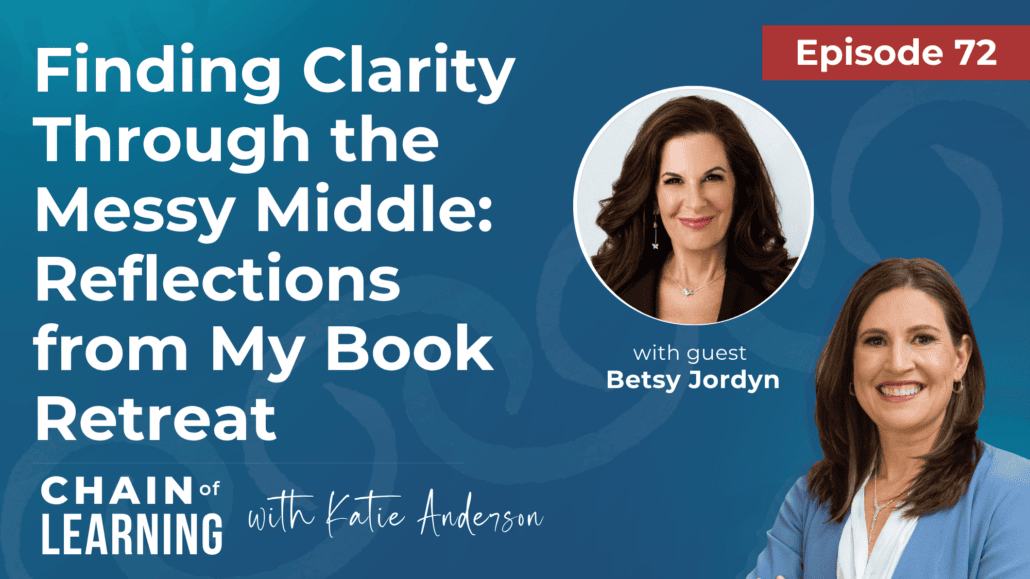
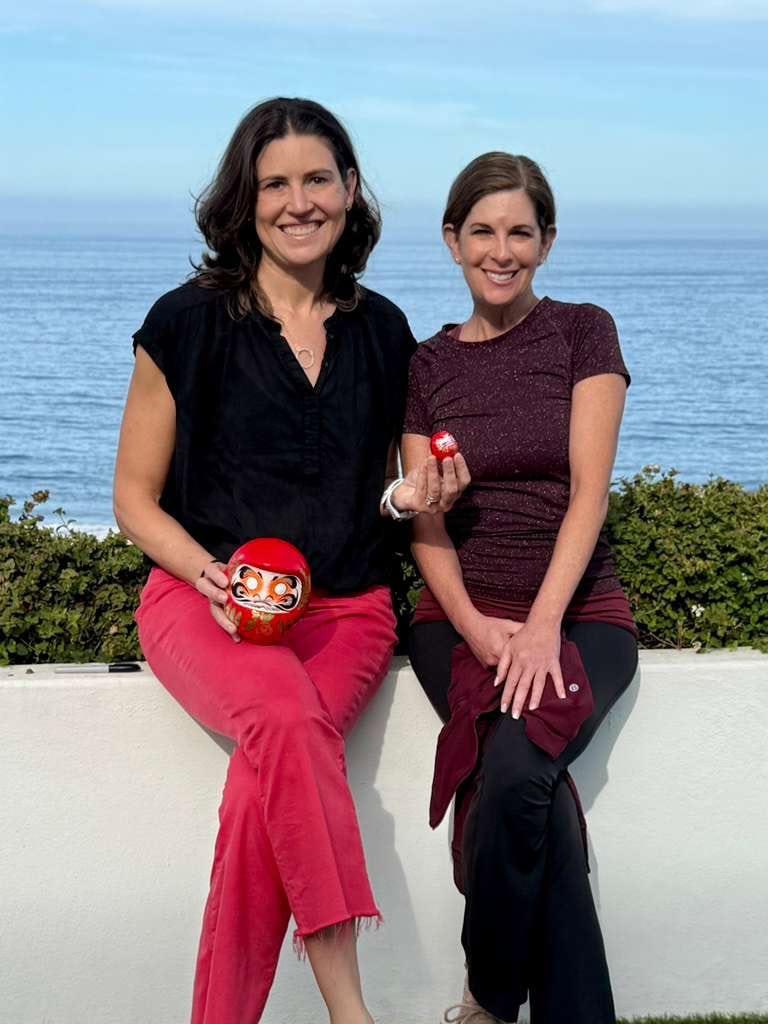
In this behind-the-scenes bonus episode of Chain of Learning, I share a live, unscripted conversation with Betsy Jordyn—my business coach and strategic thinking partner—recorded on the final day of a recent working retreat.
Together, we pull back the curtain on what it looks like to work through the messy middle of shaping my next book—and the leadership and life lessons continuing to emerge through that process.
Will you help me?
I have a quick favor to ask. I’m conducting research for my next book and would love to get your insights on people-centered, learning organizations and the leadership that creates them. The survey takes just 5 to 10 minutes and your responses will directly shape the book and a future Chain of Learning podcast episode.
-> Take the Survey here, open through May 22.
In this episode, you’ll learn:
✅ Why the messy middle is often a necessary part of continuous learning, growth, and effective change leadership
✅ How to recognize when forcing clarity too early limits stronger thinking from emerging
✅ What it looks like to let ideas evolve instead of defending what came before
✅ How collaboration and outside perspective sharpen your judgment and deepen your thinking
✅ Why modeling your own learning process creates stronger conditions for learning in others
✅ How to stay engaged in uncertainty without rushing to jumping to answers too quickly
Listen Now to Chain of Learning!
Tune in for a real-time look at the learning, reflection, and refinement happening as I continue shaping the ideas behind my next book.
Watch the Episode
Watch the full conversation between me and Betsy Jordyn on YouTube.
About Betsy Jordyn

Betsy Jordyn is the founder and CEO of Betsy Jordyn International, a boutique strategic branding firm that helps purpose-driven, transformational consultants and coaches refine their messaging, offers, online presence and content to accelerate their success and amplify their impact.
She is also the host of the Consulting Matters podcast and YouTube channel and a sought-after speaker and trainer on the art and science of the business of transformation – from building a standout brand and getting clients through mastering executive influence and igniting change.
Through her company and content, her mission is to empower more consultants and coaches to own the power of what they do and position themselves for the impact and income they are fully capable of. You can learn more about Betsy’s strategic brand positioning and messaging services at www.betsyjordyn.com.
Reflect and Take Action
Working through the messy middle often requires letting go of something that once served you well.
Sometimes the very thing that helped you get where you are—a framework, an identity, a way of working—can become the thing that limits what comes next. Not because it was wrong, but because growth often requires refinement, evolution, and the willingness to release what no longer fully fits.
As I share in this episode, ideas do not disappear when we let go of them. They often return in a more crystallized form—evolved into what is needed next.
So as you listen to this episode, think about:
What might you need to let go of—an identity, a way of working, or an idea you’ve been holding onto—in order to move toward what you are really trying to create?
Sometimes greater impact does not come from doing more or holding tighter. It comes from releasing what no longer serves so that something stronger can emerge in its place.
Important Links:
- Full episode show notes
- Connect with Betsy Jordyn
- Listen to Betsy’s Podcast, Consulting Matters
- Check out my website for resources and working together
- Follow me on LinkedIn
- Download my FREE KATALYST™ Change Leader Self-Assessment
- Subscribe to my newsletter
- Episode 10 | Unleash Your Leadership Superpower with Shawn Carner
- Episode 14 | Becoming an Astute Political Navigator with Betsy Jordyn
- Episode 41 | Transactions to Transformations: Positioning for Greater Influence with Betsy Jordyn
- Episode 52 | What You Love About Lean and Operational Excellence — And Your #1 Frustration: How to Get Executive Buy-in
- Episode 54 | The ROI of Elevating Strategic Positioning & Messaging for Lean Consultants with Betsy Jordyn
- Elevate Your Positioning to Lead Transformational Change with Betsy Jordyn
Listen and Subscribe Now to Chain of Learning
Listen now on your favorite podcast players such as Apple Podcasts, Spotify, and Audible. You can also listen to the audio of this episode on YouTube.
Timestamps:
01:16 – The hidden reality of creativity and why books are written multiple times
02:39 – What the messy middle feels like and why this stage matters more than we think
05:04 – Re-centering leadership on what’s within your control in a world of constant change
06:00 – Why influence isn’t about forcing change, but creating conditions for growth
08:12 – Reframing resistance and what people actually need to move forward
10:06 – How to keep evolving instead of staying stuck in old ways of thinking
12:26 – The process of writing a book and getting clarity on what the book is about
16:04 – Why growth often requires releasing what once worked
17:09 – Benefits of collaborating in person vs. using AI as a thinking partner
18:07 – Why learning can’t be forced, but we need to allow space for insight
19:07 – What it looks like to let go of frameworks and let ideas re-form
22:07 – The concept of omotenashi and looking at a lens of caring from a human angle
23:20 – Moving from expertise to understanding others’ worlds
24:14 – The meaning of Intention = Heart + Direction to create the conditions for learning
27:36 – How influence becomes about creating conditions and not pushing outcomes
29:15 – What changes when you respect others’ agency instead of driving direction
30:12 – The real reason leaders struggle with buy-in
32:19 – How to have empathy and not push your agenda when leaders are not “bought in”
33:01 – Why your expertise can become a barrier to connection and clarity
35:46 – How different perspectives reveal whether your message actually lands
38:08 – Moving beyond the lingo to prevent barriers
43:27 – Why growth requires releasing identities, ideas, and ways of working
Full Episode Transcript
Betsy: [00:00:00] You know, like, so I think that there’s this whole idea, like my success, like for a lot of us believe that our success is tied to how many people we’re influencing and what it looks like. But a part of influence is also agency and respecting the agency of other people. And one of your clients mentioned like one of his big aspects of his transformation after doing all of this work with you and going to Japan and really hitting mastery.
He no longer pushes his agenda. He feels like I, I feel like I. To say like, this is the way you need to go this way. Now he feels like I’m in the stance where it’s like I just invite people
Katie: Welcome the chain of learning where the links of leadership and learning unite. I’m your host and fellow learning enthusiast, Katie Anderson.
I have a special bonus episode for you today, a behind the scenes conversation I recorded a few weeks ago with my business coach and strategic thinking partner, Betsy Jordyn, on the last day of our second annual in-person working retreat. Betsy’s been on this podcast several times, and if you’ve been listening in, you know that she and I have been thinking together for nearly four years about [00:01:00] positioning, about messaging, and about what it really means to lead change.
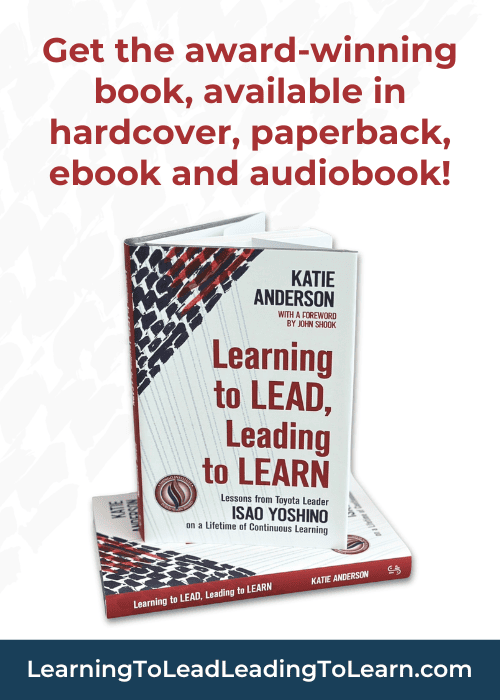
The focus of my retreat this year was on the next book that I’m writing, and I am so excited to keep sharing more about that with you. As I was getting ready for the retreat, I kept repeating. One of the best pieces of advice that I received nearly seven years ago when I was working on “Learning to Lead, Leading to Learn,” was that you usually end up writing a book twice, maybe even three times or more.
The first draft is really about figuring out what you really want to say. And you end up having to toss out a ton of what you wrote. But importantly, that is not waste. It’s the process of getting to the clarity and how you discover the book that you’re really supposed to write. So I experienced that firsthand with “Learning to Lead, Leading to Learn,” and it.
It definitely took me a little while to create the space to start working on this next book because [00:02:00] I knew it was going to take a lot of time and energy to spend in doing the thinking. I knew the effort it took, and I knew and know that when you start where you think you’re going is not actually where you end up.
So it’s been great. The last few months I’ve been creating the space and time to focus on writing, and I knew that diving into the process of creativity to explore ideas, putting things together, throwing things away, and following the process wherever it led, would come set to something even more. And as anticipated, the book I started writing at the beginning of this year has evolved and I am still in the thick of the messy middle.
But here’s the thing about the messy middle. It’s messy and it can be uncomfortable at times ’cause you’re not quite sure when and how you’re gonna emerge. But I’ve learned to embrace the mess because it’s about going through there that we get clear. And just like working through the mess is essential to the learning process.
As I always say, reflection is the beginning, not the end of learning. [00:03:00] So I wanted to invite you along on my learning journey, my reflection journey, and diving into a bit of the process of what it means to work through the messy middle to get to clarity. So on the last day of our three day working retreat, Betsy and I decided to pull back the curtain a little and invite you into our own reflection process.
This is an unscripted, unplanned reflection between the two of us in the final working hours on our working retreat for 2026. So let’s dive in.
Betsy: Thank you so much for having me both here back on the show and here to help you and, and partner with you and think with you.
Katie: Yeah, it’s been great and we’ve had a real, uh, learning mindset here going on right now, and sometimes you just have to make it work.
So for whatever reason, I couldn’t get. Two microphones, uh, attached. So we’re using my lapel mics, which is lesser sound quality sound, but at least you can hear us both. And so it’s just, uh, just what’s happening. It’s live, it’s real, and we are very [00:04:00] unscripted, very unplanned, and we wanted to. Share some reflections with you and really around this concept of what a learning mindset really is about and what we can truly control.
Because so much is out of control in our world today. Not only like in the big picture of what’s going on, but also in a, there’s so much change happening so quickly in all of our organizations and you and I both in our podcast. Um, Betsy has a great podcast, uh, “Consulting Matters,” which you should listen to.
We’ve even exploring both of us a lot about what does it mean to lead change, own change, contribute to change, and stay connected and grounded in purpose. So
Betsy: I think it’s interesting. So last time I was on the show, you know, you and I had this sloppy conversation around, you know, like, why are we all not partnering to improve these people centered organizations?
There’s like these bigger things that are going on, and I think then we went down this like rabbit hole of research. Like, wow, there’s like these really. Stomach issues that are so much bigger. So I talked on my podcast about, you know, some of the shifts [00:05:00] from stakeholder capitalism to shareholder capitalism and what that meant.
And it’s interesting where your thinking has evolved is like, okay, so that those are big issues and maybe at some point we could all partner around it, but getting it down to like, what can you control? And I think that that’s where you decided to land on your thought leadership in your next book is I can’t control all of that.
Yeah. But what can you control? Yeah. And I think that that’s what the theme of this retreat has been about in what the book is about. So,
Katie: well, I mean that’s really the essence of what I’ve been talking about for years is like we can, the only thing we really can control is our own behavior. So the concept of Intention = Heart + Direction, and that’s like what’s our purpose?
And then how do we align our. Actions in that, be in, in that direction and, and really getting to the, the sense that we can have reactions to things. We can have feelings to things. We can’t actually control that, but what we can do is control our response to that. And this concept of influence that I’ve been talking more and more about recently too.
It’s like, how do we, the, [00:06:00] the way we. Influence the world is really connecting with the people that we have. We can’t control them, we can’t make them do things, but we can create the conditions that enable them to grow, to have ownership, to potentially think in a different way, but without forcing, forcing that to happen.
And that’s really like coming down to the distillation of what this next book is gonna be about and really what we’ve been talking about. On this podcast for two and a half years. And, and the essence of my book, “Learning to Lead, Leading to Learn,” is that Toyota’s secret was, isn’t about all the tools and the methods and all the, and everything there, it’s really around this.
How do you create the condition to learning and, and focus on people first, we make people so that we can make cars or do things. And so how do we, how do we really have that, have that essence and what does that mean in the moment for all of us?
Betsy: I think you’re bringing up an interesting point around control.
Because you know, you talk about it in this sense of around like how I can’t control my way to a people sign organization. I can’t control my way to this. And we’re talking on this global [00:07:00] level, like you can’t control it. And I wonder if some of the lessons that are going on in our world right now is there so much less that we.
That we thought we could control. Mm. Like that we have these illusions of control. Like if I influence well enough, I can help this organization become this people-centered thing and I can, I can handle this. But then like other things happen and then AI happens and it’s like, oh, well now this feels outta control.
So what do you do in these situations? And I think that’s where I think for where your thought leadership is going. But even for my own around the book I’m writing around the branding is like. You know, the only thing you control is how you show up. The only way that you can control is that, and I think that that’s where that foundational principle, so I think it’s interesting is theoretically you’ve been saying the same thing as like, okay, so we need to create these conditions, move from command to control to this type of empowerment that then there’s this global issue and it just reveals that there really was no other way anyway.
Katie: No. There’s all these external pressures, but really what does it come back into in essence? And we can truly, we can create compliance, we can keep short term like, but it’s really like if we think back [00:08:00] historically, like all these regimes, you know, if we go on the big side, like, or even companies, but like forced the, forced away.
But it was all had to be controlled. People were not in a good place and all, all that rewarded was really. Some of the senior people.
Betsy: So what’s that phrase about? It’s not that people resist change. They resist being changed.
Katie: Mm.
Betsy: Nobody really wants to be changed. Like nobody wants somebody to say, well, this is what you’re supposed to do, and now go do it.
Katie: Yeah.
Betsy: You know? Or even be told in better message points why you should really like it. You know, they, they don’t wanna be changed. Nobody wants to be changed, but they want something different.
Katie: Yeah. You know, I’ve talked about how nine years ago my, my dad died and it, I was well as living in Japan. He got diagnosed with a LS or motor neuron disease.
And you know, my parents had this motto and it was really grounding for me in terms of thinking about what we can truly own. They would say, this isn’t what we want, but it’s what we’ve got. And so it’s about about acknowledging like there’s stuff going on that we don’t want or we can’t [00:09:00] control. Like we can’t, there’s nothing we can do about this situation, but what we can do is control how we’re processing it, how we’re reacting to it, how we’re moving through it, and forward how we’re showing up.
And like one of the greatest gifts my parents gave me, and especially my dad, was showing not only how to live with purpose and with. Gusto and all of this positive energy, but how you can die with it too, um, may not be what you want, but it’s what you got and what’s the, the gift you can give forward is really like, is staying in that not positive space all the time, but it’s like, how do you, how do you do something different?
So,
Betsy: but that’s where a lot of your. Teaching comes back too, is if I can have a learning mindset around this, like I can, I may not like it, but I know I could learn something from it. So if I could learn something from it, then maybe I will be more resilient in the face up. And you know, like if I think like we’re, where a lot of us are at is that, you know, is AI gonna take away our jobs?
Like, you know, could somebody, instead of working with consultants, coaches, leaders like us, like they could just go to like, [00:10:00] you know, chat TBT or Claude and, and do that. And so we might feel like, oh, I’m not really able to do anything. So we might feel like, okay, well, like I’m losing something. But instead of like, well, what could I learn in this moment?
You know, maybe I lean into the more personal aspect. Like even this, you could, you’ve been spending a lot of time with Claude on your book. But there’s a different experience by being live and in person and having ideas go back and forth with an actual human that you couldn’t really get on your own, like or with, or even with ai.
Katie: Well, and even so a few things there, like we all need to keep learning. And like I recently talked with Barry O’Reilly on the podcast about how can you keep using ai, but not to diminish ourselves, but really to learn our way forward and to get better and ideate. And I have to say like. The difference of writing this book compared to writing, l“Learning to Lead, Leading to Learn,” gosh, in 20 18, 20 19, you know, I, I get like stuck in like I’m an external processor, so to be able to bounce ideas off and capture that keeps my momentum going.
Of course, I don’t want AI to write my book.
Betsy: No,
Katie: but it’s a great writing [00:11:00] partner to think things out and it’s been evolving so much, but we need to keep experimenting with that. Right? And so that’s where like, if we could stay stuck, I mean, this is not just for ai, this is with everything. If we stay stuck in, in the old.
Paradigm and the old way, that’s where we’re, we’re not truly learning our way forward. So what do we need to unlearn? What do we need to learn? What do we need to be willing to experiment with? And this gets back to some of the things that we’ve been really exploring here, this in this retreat about my, the, all the things I’ve been harvesting, all the ideas that I’ve been talking about here for a long time, for my next book about how do we really create.
Learning for ourselves, learning in our organizations, learning our people. What do we have to unlearn and these habits that we have to get check and get, you know, I talk about Break the Telling Habit and get break out of the doer trap. Like how do we, how do we not default to these modes that really are coming from a place of caring that ends up being a place of controlling and so have this, have this shift.
So I really wish I could have figured out the learning. In time to have better microphones, but sometimes [00:12:00] like life happens, you have to just make it work. So we’re making it work here.
Betsy: So I’d like for you to share a little bit more about your journey around getting clarity on your core ideas. Mm. So we spent, so we were here last year and we worked on the initial concept and had one direction.
Then you went some, you went through some rust. That time, and then now you’ve gotten clarity. So I’d love for you to talk a little bit about both the process and then the idea that came out of it
Katie: having gone through the process of writing one book. Already I knew that really you end up writing two, maybe three books because the first draft is really ending up like the what I’ve called the messy middle.
It’s through the process of doing that, that you actually get to clarity what your real message is, and so last. Last year we were building out concepts of the Katalyst change leader model, which I’ve talked about here, about all the skills that you as a change leader within an organization need to really move from transactional, doing projects [00:13:00] to leading transformational change.
So building on that. So it’s been of exciting, about talking about that for a while and that, you know, it’s, it’s, there’s a lot of core things. When I started this year in January, I had intentional time to dive in. I’ve, you know, I’ve been traveling so much personally and professionally. Last year I didn’t really have that thinking time that I knew I needed to really like dive deeply, and I did at the beginning of the year and I started to go back to everything I’d been working on to enrich the Katalyst model from this change leader perspective as well as starting building out.
And harvesting my word of 2026. A lot of the things that I’d been talking about in content around Intention = Heart + Direction. What does it mean to Break the Telling Habit and get outta the doer trap? How do we align our behaviors with really our greater impact, which is creating this learning organization that’s focused on people, all the consulting, trusted advisor, the work that I do, the, you know, the, the leadership workshops that I lead as well.
And I ended up starting to realize I was creating two different [00:14:00] things in parallel. Mm-hmm. So what I was creating in the first, the front end was really around how do we, how do we as leaders, as humans, as change leaders create the conditions that enable learning in our organizations? And then the second part was how do we lead transformational change?
And there’s a lot of, there’s like a Venn diagram overlap, but I was trying to fit them together. And what I realized in the weeks coming, leading up to this retreat, as well as through our process together. To crystallize that? Is that my passion? Well, I mean, I, I am really interested in both. ’cause I love helping you change leaders as well.
Mm-hmm. Like we need to move out of transactional, doing the transformational leadership. But that, that really, the message that, that really speaks to my heart is much broader and it encompassed that as well about how do we, how do we create the conditions for learning in others ourselves? And what are those?
Mindsets and behaviors we need to have, and how do we get outta the door trap and how do we have awareness when we’re falling into it? What’s going into us? I mean, this is truly the essence of what I talk [00:15:00] about and what I teach. I mean, I can’t even, like at Shingo Connect, a few weeks ago, at the time of recording, I had several people come up to me and say, oh my gosh, you, you saw me, you spoke to me.
Something you said around this like really resonates on having an awareness and aha. And so that’s really what I wanna bring in. And so what we did. What we’ve been doing is rethinking the Katalyst framework, but through the lens of how do you, how is this really about creating the conditions for learning?
So some of the letters and the names stayed the same and others have even changed and evolved even more. So that’s where that Venn diagram has overlapped. So, more to come on all of that. I mean, really I think this is gonna, I always, the, when I, when I created the word Katalyst with a k. Uh, it really came from this idea that a Katalyst is someone that accelerate, that sees learning as what accelerates the rate of change in organizations.
And so if we come back to that essence, this is actually the best, the best thing is for leaders, change leaders, everyone who’s wanting to create a [00:16:00] people-centered learning culture, one that believes in. In learning as this way to get results. And so what are these shifts we need to make? So I’m really excited by the evolution of the model and it speaks to, you know, some of the, the learning mindset I’ve had to have to be okay to revise and evolve and iterate as well, and to let go of, of things and doesn’t mean they, they’re still not valid.
I have, thank you for everyone who’s been giving me. Feedback and resonated with like some of the, the change leadership side of things. We’re still gonna be talking about that and using that. But really this is from the lens of what does it take to create the conditions for learning in an organization.
And no matter what, if you are a practitioner or a leader with authority, you need to do this. If we’re gonna create a people-centered learning culture, we have, we can’t command and control our way into that. And sometimes even our caring flips into. That control and that doing and the telling. And so that’s the essence.
And so it was kinda like peeling away the, the onion on that. And I, I’m really excited where we’ve gotten to. I’m excited about what’s [00:17:00] gonna be evolving and what we’re gonna keep sharing there. But I think I’ve also had to have that learning mindset for myself and be okay with things are evolving and, and shaping and, and that’s what happens.
It’s like the deeper thinking. You know, you, you mentioned earlier, Betsy, about how like, yes, it’s amazing how we can use AI as like thinking partners, but there truly is like, I’m so excited to be here in person, to be collaborating in person. And we had some aha moments where sometimes like we’ve been working kind of eight hours a day and then going out to dinner and having these, these great.
The conversations, but creativity doesn’t come in a linear way. And sometimes you have to say, but the hit the pause button, we’re gonna come back. And like we, we figured something out that had been like, ah, we couldn’t figure out the name for a competency and like it came to us like sitting over here last night and just like this rack.
Betsy: Was,
Katie: yeah, it was just, it was something,
Betsy: it was not work time.
Katie: It wasn’t, yeah, we were int between in the in between and it was a casual comment and I’m like, that starts with that letter and that’s actually it. And we’re like, yay, we figured it out. And so I think it’s just a [00:18:00] reminder of how sometimes we even wanna control the rate and process of learning and sometimes.
Even it actually, this reminds me of something we talked about, like, yes, a Katalyst is someone who accelerates the rate of learning, but we can’t actually force the learning. We have to give space for the learning. And sometimes that’s the patience for learning. And this moment’s not the only moment. It’s not always gonna crystallize.
And so just having recognition that even though like we feel this pressure to get to a result, sometimes it’s the space that’s needed. So anyway, it’s, it’s been, it’s been fun and, and great and it’s been amazing to be partnering together for almost four years now. So. Thanks Carol for introducing us, Carol Cox, of speaking your brand.
Betsy: What, what I find interesting is watching you model the way for what you want the book to do is that in order to move from this command and control to this like more learner focused, like creating the conditions for learning type of leadership approach, you have to let go. Of perhaps like what you might have done in the past that you know was that you enjoyed that [00:19:00] created the success, but it’s just standing in the way of what you want, and I saw you wrestle with is that you do love the work that you do with change leaders.
There was a lot of things that you were happy with as it relates to the. Previous version of the Katalyst model, but it’s like wrestling through the whole idea, like in order to serve this bigger purpose of what I wanna do and what the idea serves, I have to kind of find a way to let that go.
Katie: Yeah.
Betsy: And let it reemerge.
And, and I know that the ideas are not gonna go, I haven’t been in business, I don’t know, 15 something years and I created tons of content that, you know, when I was still a consultant. And it’s like that. That still lives somewhere. It supports something. It has nothing to do with brand positioning and messaging, but you know what?
I could still repurpose it. I have other uses for something. So ideas never disappear. They might just emerge, but it’s like watching you go through that process of like, okay, in order to serve this bigger idea. In order to serve this like revolution, I feel like you wanna create a revolution. It’s like if everybody can move out of this command and control and create conditions for learning, you know, we can create a totally different type of [00:20:00] world.
You know, where people have the freedom to step up and, and be who they wanna be and who they can be. You know, allowing the agency to like, because they may choose not to, but it’s like opening the invitation. And I think the, the other part that was really helpful. So watching you do that, and then we also kind of landed on the avatar of like, okay, what are we really trying to create in people?
You know, like what is the transformation? They we’re like, Ted Lasso. Mm. You know, like Ted Lasso is our avatar. Like this is, you know, like obviously is a TV show and he is like idealized and nobody’s like that. Perfect. Yeah. You know, nobody’s perfect like that. But it is a model that you can look at and say, well, this is what it is.
Like Ted last. So didn’t know the culture of where he was going. He didn’t know. It was
Katie: not even, he wasn’t, yeah, he wasn’t even an expert in the specific thing,
Betsy: but what he was an expert at oh, is like creating the conditions. And then the book later on, even when, you know, Trent Cri wanted to write the book about the lasso way, he is like, no, no, no, it’s the Richmond way.
You know, like he still wanted to create those [00:21:00] conditions for other people to learn, and he didn’t wanna make it about himself. He wanted. Still do this and that. But what what was interesting at the end of that is like, it’s these micro moments, you know, like these micro moments to create this long-term kind of like environment and that’s.
That. I think that was an interesting part too. Like, okay, that’s the vision. So that’s why the competencies had to change or that we now call ’em superpowers or
Katie: Yeah. Or that work for behavior, whatever they are. Yeah, we’re in the process. But
Betsy: yes, it had a change because just learning like the knowledgeable business expert the way we had it before, or they’re not knowledgeable business communicator to evolve from that.
Like being able to read a p and l was not going to get somebody to this place. It was like, no, it’s the heart behind it. It’s about I become all things. So you see like Ted Lasso adapts his communication to whoever’s talking to, like that’s the vision.
Katie: Well, it’s interesting, like, so, uh, where I’ve gone is like ever the last.
The last few months I’ve gone layer by layer to say, I actually don’t want this to be a con. This is so that we’re still looking from the change leadership [00:22:00] perspective. I don’t want this to be a competency that’s has the technical change management skills. I want it to be leading from a place of heart and caring of service.
I’ve talked about before the concept of omotenashi, which is the Japanese, uh, word, which means hospitality, but it’s more than that. It’s like truly thinking of the other person first. And so coming from how do I serve you best? So I was taking at this lens and then like, how do we have a, a, a sense, a lens of caring and the human angle, not just the technical or the functional skills you need.
So this was originally like how do you pair we, the human social skills you need to pair with the technical, functional skills that you might have. And so I was trying to weed through all of that and I kept coming back to the essence of the heart and where I was landing on that. I realized it was actually just being a knowledgeable communicator.
Not to create knowledge for yourself, but to generate knowledge of the person, of the organization and of the environment. Not so that you can like out expert, the expert or so that you are more knowledgeable, but so that you can like understand [00:23:00] what’s gonna meet the needs of the other person. How are you speaking in words that they.
Connect with and understand, and it’s about how do you serve them and, and that creates a place of credibility and trust. And so that, you know, it’s not that you need to know everything actually, that, you know, my most recent episode that we’ll release right before this one is, you know, it’s really how do you, you don’t have to be, you own the thinking process, not the thinking.
You don’t have to know the actual deep content, but you need to be able to show up to be caring about the other person, but not over caring that you get so stuck on the problem that you’re not able to hold that. Space. And so that’s really the essence of this tension we’re talking about is, is really how do we not slip into that control side even without knowing, through trying to be the expert with the answer to.
We’re so focused on our methodology that we’re leading with our methods, rather than helping really understand the problem that’s going on in the organization. How do we have the courage to hold up the mirror on situations and truths that are happening? For individual behavior and organiza [00:24:00] like, and how we, people are working together.
And so it’s, it’s coming from a place of genuine service and caring. And I had this epiphany actually last week. It was very interesting. And this also, it was really important coming into this meeting. So I, I’ve talked about the word intention for a long time, uh, that I say Intention = Heart + Direction and intention comes from in the, in.
This was inspired by the way it’s written in Japanese. The intention comes from two major symbols in kanji. One is samurai and then the word heart together. So the strength of your heart and your like personal mission plus direction. How are you orient, orienting your behaviors in that direction? But the word heart, we, the, the symbol that we translate in English as heart actually is a trifecta of.
Interrelated meaning of heart, mind, and spirit all wrapped up into one. And I realized last week that I, the way I talk about the chain of learning, of the stance that we need to have as human beings when we wanna help create the conditions for learning and others, what it really means to build this chain of learning is caring.
[00:25:00] Curiosity and courage. And I was like, oh my God. Caring heart, curiosity, uh, mind e. Courage is the spirit. And so like caring, curiosity, and courage that is like the essence of the being of what leadership is about. What being a parent is a good friend is about how we’re helping others move forward in their lives.
Um, and so where to come on that, but I was like, oh, I, it was like per, it was like inside of me and I didn’t even. I didn’t even realize it. So,
so
Betsy: now you all have a chance to see what it was like in our conversations around how a competency got transformed into like more of a stance or belief system or behaviors.
And, and it really went back to like, so the filter was. Different. Before it was like, okay, what would help somebody go from being an an expert to lead an expert to, or transactional to transformational. That was like the filter, the new filter was like, how does this create the conditions? You know? How do, how, if somebody takes on this superpower, like how does that allow them to step into a different type of energy?
Katie: Hmm.
Betsy: And I [00:26:00] think that you’re bringing up like, it’s like a different presence. Like we were trying to figure out like where does presence fit in? But it’s like they almost fit into all of them. It’s like, how do I step into a different way of being? So that others can Yeah, experience it. So that’s why. So now you see the example of how Knowledgeable Business Communicator just turned into knowledgeable Communicator for the purposes of trust building connection is I, because I care about you, I speak in your lingo.
You know, I, I get out of my own lingo, not because I need to lead change and I need to find, you know, how do I win friends and influence you. It’s like, how do I enter into your world? Because that matters to me. You know, your lingo matters to me because I respect it. You know, like if you go to Japan, I imagine that you took well classes to learn Japanese.
Katie: I did. I passed the N five ’cause I’m a high achiever.
Betsy: But you know, you do that because anybody who knows anything about cross-cultural stuff would know that you, you know, the ugly American is the one who expects everybody to speak and come to meet you how many [00:27:00] times to do that. So that was like a lot of the heart change.
But in order to make this shift, like we had to keep letting go. Like, okay, so maybe those were interesting ways that we described it before, but we have to let it go. And like, what serves state and what didn’t, didn’t.
Katie: And, and what I wanna be clear is all those things we were talking about are really important competencies and skills and, uh, stances to have as change leaders.
So we’re gonna keep talking about that. I know that all of these things have been really resonating with many of you and are super important. So it’s not that we’re like cutting that out, but I got really clear on what is the Katalyst competency as it relates to. Creating the conditions for learning and people development and people ownership.
And so, uh, yeah, some more, some more to come on all of that. I’m really, I’m really excited and you know, I’ve been also playing with the words influence and control and, you know, I’ve gotten crystal clear that for me, like you can, there can be negative influence. You can talk about like coercion, persuasion, in a bad sense, like.
Pushing things. But to me, [00:28:00] influence comes from this positive lens. How do we create the conditions for people to say yes? How do we create the conditions for learning to happen? How do we create the conditions? And so when we think about influence, how do we, how do we think about it from this positive lens?
How do we be a positive influence to enact real good change growth learning. In our organizations and our families and so much more. And so there’s always the shadow and the light side of, of everything. And so, you know, you can, it, it’s like, yeah, let’s, let’s work together to do good in the world. And that starts by controlling what we can control, which is only ourselves, and then influencing and impacting the people who are around us.
Betsy: This is one of the interesting points, like is, is in the collaborative process of like, like we, we, there’s diff there’s different words like I say, and you’re like, eh, I don’t like that one. And there’s words that you might say, and I’m like, uh, I don’t like, and it’s like wrestling to get to the, to the heart of it.
Because everybody comes in with these filters. I’m like, okay, I see that it [00:29:00] means this and you see it means like that. But I think that. I think at the heart of what I really love about where this model is, is, and there’s, there’s a, the couple of the, the superpowers that we were really stuck on turned out to be my favorite ones, which really hit the essence of it.
And one is about like, really about letting the agency of the other person, you know, like, so I think that there’s this whole idea, like my success, like for a lot of us believe that our success is tied to how many people we’re influencing and what it looks like. But a part of influence is also. Agency and respecting the agency of other people.
And one of your clients mentioned like one of his big aspects of his transformation after doing all of this work with you and going to Japan and really hitting mastery is he no longer pushes his, his agenda. He feels like, I, I feel like I used to say like, this is the way you need to go this way. Now he feels like I’m in this Stanford.
It’s like I just invite people.
Katie: Yeah.
Betsy: You know, like I just invite people on the journey and I think that that’s like a beautiful, a beautiful way of like. You still [00:30:00] are active. You’re inviting somebody you know, like you’re not passive, but you’re not making them go on a journey that they don’t necessarily wanna go on.
Katie: Two things on that. So this, the behavior stayed the same of how I’ve evolved it, but we changed it. This is the one that used to be called the yes minded persuader. Derek Roberts came on. We talked about his book, “Listen To Sell.” It’s really about the negative side of persuasion is trying to force, but really it’s about creating, uh, pull, creating conditions for someone to say yes.
And to have agency now we’ve changed the name. I’ll talk about that later. I’m not, I’m still like we’re signing everything. But that was the essence of it. And you know, with the, the two things that I wanna highlight too, that Betsy was saying. So one you can go back and send to Shawn Carner back in, um, episode 10.
And I know this because I’ve been referencing it ’cause it was Shawn who was talking about how he moved from previously, he might’ve told the team. Seeing what the direction they were going with problem solving can have stepped in and be like, no, no, no. You need to direct your problem solving on this specific topic.
And when he was a new he, new director of an area, and instead he said, [00:31:00] you know what? I’m gonna let them discover that this is probably too big of scope and outside of what they can really, truly impact change for it was including things that were outside of their, their control. Not within the scope of the department, but I’m gonna let them have that learning moment.
So I’m, instead of stepping in and directing, saying, no, no, no, you can’t work on that project ’cause I’m gonna let them have an opportunity to learn. And like, so this is really powerful story. You go back and listen to episode 10, Shawn can tell it in his own words. And then I was also talking recently at the the Shingo Connect Conference with a fellow Shingo faculty fellow, and we were talking about this concept of buy-in.
So the change leader survey that I did last year, and I forget what episode number it is, we’ll put the link in the show notes here. Uh, where I talked about it, like you all said, that your number one frustration, whether or not you’re a, a leader or a change leader or a lean practitioner, agile practitioner, whatever it was, was getting leadership buy-in, leaders not getting it, and leaders not buying in.
And this is the sign of like. The sense of like that push pull [00:32:00] that you’re actually, it’s like, why aren’t they getting it? And I was talking to my fellow Shingo faculty fellow and he said, oh my gosh, that’s spot on. What we’re not having is empathy. Empathy for everything that leaders are have on their plate.
It may not be that they’re not quote unquote bought in. They may actually deeply care, but there’s so many other pressures going on. So how do we have that concept of empathy and not push our agenda on it, but really understand what’s going on for them and how we can help maybe make some small progress towards it and help them get to something they can say yes.
To, or something they can do opposed to having this mindset of, well, they’re just not bought in. And that’s the barrier. And I, I think that’s really important memory, uh, reminder for all of us is that we can have this reaction of like, they’re resisting, they’re not bought in, and that’s actually putting us in this us them like confrontational standpoint rather than like.
What’s going on for this person? How can I help enable them to say yes to something or to see the change or commit to something? And so that’s a real superpower to be able to [00:33:00] have. So more to come on all that.
Betsy: So you are tapping into my, my lane around positioning. Because I think that’s a big problem with positioning anyway is like we, we are so attached to like our methods as the end rather than the means to the end.
And like I did an episode, I don’t know how many ones back and it’s like influencer care and the idea of like influenced with care is first like I connect with like their world and I align what I am trying to. To offer to that. And I think a big challenge that we would have without the empathy is like, I’m gonna, I’m gonna take my pre-packaged thing, you know, like, I wanna get this organization to buy into this culture vision that I have.
Why aren’t you buying it? Rather than asking the questions around like, well, what is it you’re trying to create now? Let me tell you the best way to get to what it is. Like, it would be more powerful. To be able to figure out, like, okay, so as an organization you’re, you’re growing at a pace where your leadership and operating practices aren’t keeping up.
That’s the context. So, okay. Well let me give you an idea around an approach that you can use to mature your [00:34:00] leadership and operating practices to match, like that’s more, that’s where it goes back to the knowledgeable communicators. Like I speak in your lingo and I connect with your world, and I position myself to support you in a way that makes sense.
To you rather than just assuming like, oh, you don’t get it. And I was like, well, they’re not gonna get it. This is the curse of being an expert. So this is what I talk about all the time. Mm. You know, as a mess, a brand messaging person is, we have the cursive expertises. We can’t imagine that other people don’t have our expertise.
We, we are so good at it.
Katie: Mm.
Betsy: We, it, we are, we invested all of this time, energy, and we speak the lingo and we think the lingo makes a song like really smart and it makes other people go. Feel dumb, you know? And they ca they tap out. And I think that’s where like there’s the plus in the shadow is like, it’s great to have an expertise.
It’s great to know what you know, but you have to know that most people don’t know what you know. I could talk to you right now about like brand positioning and what it looks like, and you might not know what I’m talking about, but I know it really well. Yep. You know, you all might talk. It took me how many years to get through, like all the lean stuff.
It’s like, oh, this [00:35:00] is a, this is a leadership system. This is the culture system. I thought you for, for years. I thought you all were just like process improvement.
Katie: Yeah.
Betsy: Like I had no idea. No idea. And I think that’s where, that’s where it’s about the empathy is I, I care enough to understand your world, speak your lingo, and then just assume some, you know, positive intent until beli, until proven otherwise that they just don’t care.
Katie: Yes. So this concept of the agency is so, so powerful. One of the, the things that really. I value about having this partnership. And so Betsy is a former OD internal consultant from Disney, and so knows a lot about people development and people leadership and, you know, learning and, and all of that. So like we, we have enough crossover but comes from a very different, um, sort of, I guess.
Technical background or functional background, the expertise you have. And so we’ve been able to, it’s like a pressure test on our language. You know what? We come from different frameworks and perspectives, and so even though we have enough alignment, there’s a, it’s, it’s a nice outside [00:36:00] perspective to share ideas as well.
And so this really speaks to the importance. Too of making sure that you’re engaging people who have different perspectives in your work because we can get so, you know, narrow and, and you know, you’ve been pushing me like, I’m like, I love the word influence. Everyone I talk to from the lean and continuous improvement community loves this concept of.
Influence and how are we creating influence skills? And it’s really resonating with them. Influence versus control and flu space leadership versus control. And you were saying to me like, I don’t like the word influence ’cause it says something different to me. And so it was helpful because it had the pressure test.
Like, okay, we’re, we’re having a different like paradigm of what this word means. And so that’s really important though. Like we make assumptions that people have a shared. Understanding of what we’re saying, and it may not. And so it’s so powerful to make sure that we’re getting input and, and getting different ideas and perspectives so that it’s really making sure that what we’re [00:37:00] saying in our, in our ideas and our messages are actually coming through in this, in the way we intend them.
With other people. And so I very much value that pressure testing and, and also it just helps your ideas get better when you have to articulate them. Def not just def, I don’t wanna use the word defend them, but like explain them and try and get clear on them. And so that’s been another big value for me of this working retreat and then also working with other editors and um, people to get that input.
So, um, yeah. And thank you for everyone who has been giving me some feedback either through the survey I did last. Year. Some people have been giving me quite feedback directly on the competency model. I’ll be asking for more feedback. Stay tuned. We’re developing a short survey that I would love your feedback on, on specifically around like what does it mean to be a people-centered learning organization and some of the things around, um, that, that you’ve experienced.
It’ll be super helpful and, and help shape the book as well. So more to come on all that. Um, any final words for you, Betsy, as we wrap up our reflections? Uh, this is day three. Uh, the end day. [00:38:00] We’re like the last hour of day three of three day retreat.
Betsy: I, I just wanna go back to like where the breakthrough happened, you know, getting beyond the lingo.
So I have like all, I have 30 years of experience in the consulting world, but I spend all day long with consultants and coaches of all the kinds. And so everybody wants to create like, I might call it people centers. So like l and d wanna create, you know, people-centered of human-centered organizations, HR people, like we’re all saying these words and we all think we know what it means, but you might mean it different.
You might mean it different. And where the breakthrough came is like, put the word aside, what in the world are you trying to create here? And I think that when you keep hitting the word like. I have an attachment to a where like one of the examples that we talk about all the time, like even in our previous podcast around the political aspect.
Mm-hmm. Like I think I did a whole episode with you. I’m being astute, political navigator. You know, it’s like, from my perspective, politics only gets a bad rap when it’s operating in the shadow. Like it’s bad, you know? But. When it’s done well, you’re balancing different perspectives. But [00:39:00] if I got too attached to this word, it doesn’t matter what I intended to mean, it’s gonna create a barrier.
So I should probably get rid of the word and just say, okay, well I’m just trying to balance different stakeholders perspective. Like take that word out. And I think that that’s where. From my perspective in what I do as a brand messaging person, it’s like anytime you’re in a shorthand and you think you’re in, in lingo and it makes sense to you, you know, I, I used to use like what I call my Ainsley test.
This was my, when my daughter was in eighth grade, like now I might call it the Jack test.
Katie: Yeah.
Betsy: You know, it’s like, can I, can I explain it in a way that Jack would understand? My
Katie: 12-year-old. Yeah.
Betsy: Yeah. So like, could I explain it in a way that he would get, you know, because if I’m, if I’m an explain it in a way and Jack’s not gonna get it, then I, then other people aren’t gonna get it.
And so like, that’s the, that to me is the breakthrough. And like, then once you got like, oh, I’m trying to. Shift people not into like everybody’s influence. ’cause the word influence me seems like this. Like I’m trying to create conditions like leaders to get out of their own way, out of the way of creating what they want, which is creating these [00:40:00] conditions for other people to learn that.
It was like, that’s a powerful message. So then we get to the controlling idea, you know, and it has to do. People who want to create this kind of organization, but they’re getting in their own way. And part of what, like from what we might get in their own way is language, you know, and, and being too attached to our language, too attached to our methodology, too, attached to our expertise rather than the outcome.
Katie: That’s the big shift and more to come on this ’cause I don’t wanna spoil everything, but you know, you’ve been hearing me talk about it for years. For those of you watching on the video, you see lots of, um, DMAs here because, you know, it wouldn’t be something that I’m involved in where it doesn’t involve some goal setting with DMAs.
So I brought a lovely yellow darma for Betsy so she could have a different darma for her. For her collection. And I have a small JMA that we’ve written, uh, for about the retreat here. I don’t have a pen. I need to get a pen. And after this I will fill in the, all the, the doll. ’cause we got, we, this was [00:41:00] for this week, this retreat to achieve our goals.
And we did go through everything and so we stuck through it and achieve my goals for the retreat. So that is great. I still have. Bigger goals to come for the book, but I’m really excited how it’s coming and the partners I’m building together to make this, um, this come together. So I will continue to be doing more of these types of bonus episodes where share some of the thinking behi.
This is more like behind the scenes evolution of thinking. And, um, yeah, it’ll be, it’ll be great to get your input. Stay tuned for more info about how to help, help me further underst. Dan how I can help you through this survey and input for data and information for, as the book I’m developing and, uh, more of course with Betsy ’cause she is one of my best thinking partners.
Betsy: Thank you.
Katie: So it’s been great to be here together in person and record a, uh, record an episode.
Betsy: It’s so much better than on Zoom.
Katie: It is so much better. Although my. Darn microphones. I wish they were working. So,
Betsy: and [00:42:00] we always get surprised ’cause on Zoom we look like we’re the same size. Oh yeah. And then we get next to one another.
Katie: I, I’m a lot taller.
Betsy: I’m a lot shorter.
Katie: Yes. So, and I’m usually, I have a short torso, so I’m, you’re even small, like Yes. I’m almost five 11 and Betsy is not
Betsy: five two.
Katie: Five two. So I, yeah. I’m I about
Betsy: my body, I’m five two. My mind, I’m five seven.
Katie: Yeah. So I’m about eight inches taller. Betsy. So it’s kind of funny.
So it’s great. I always meet her at the airport and I’m like, you’re smaller than I expected because she is such a large and powerful personality.
Betsy: You, she watches us go for a walk together. Like she’s taking these nice strides and hears me like trying to catch up.
Katie: Yeah. So, um, and this is really the embodiment.
I think like one plus one is so much more. Than two, like the sum of us partnering together, all of us is more than what we could do together. So it’s really important. I also wanna say thank you for everyone listening and tuning in and more to come. So thank you for being links in our chain of learning, and I’ll put links to all the show notes.
Uh, in the show notes to different [00:43:00] episodes that we mentioned here. Ways to get in touch with Betsy and of course, ways to continue the collaboration here in our chain of learning. So, thanks so much. As I’ve had some more time to reflect since this retreat and recording this discussion with Betsy, I’ve been continuing to come back to this concept about what it means to work through the messy middle, and that in order to serve a bigger idea, to get clarity on what you really wanna say.
Sometimes you have to let go of what came before. Even the things that worked, ideas or frameworks. You’ve gotten attached to a way of showing up or sharing something, and it’s through the process of refining that you get to the deeper message. But here’s the thing, I’ve realized too that ideas never fully disappear.
They just reemerge in a more crystallized form or maybe in the form that’s actually needed. It’s the evolution towards clarity. And so here’s my reflection for you today as well. What’s something [00:44:00] that you might need to let go of, an identity, a way of working, an idea that you’ve been holding onto in order to move towards what you’re really trying to create.
And in essence, that’s really what this book that I’m writing is about. It’s about creating the conditions for others to grow, to learn, and take ownership. It’s about an identity shift that we have to have showing up from a place of caring, curiosity, and courage. And about how even when we truly care, we can slip in trying to control the outcomes without even realizing it.
When we can make a shift in seeing our value not tied to what we do, but what we help create, that’s when we can make even more impact. And in doing so, free ourselves up to so much more. And this is the art of unburdened leadership, and that’s exactly who I’m writing the book for. You. People who care about creating people centered, learning focused cultures that get results and sustain and [00:45:00] want to know how.
If you’re not already subscribed to my newsletter and wanna be the first to know about updates on the book and how you can contribute and support its development, as well as other updates about the podcast and more, I’d love for you to join. Subscribe at KBJanderson.com/newsletter and the link is also in the show notes.
And as I continue to work on this book, working through the messy middle, working towards greater clarity, getting the manuscript done, and starting to move towards publication, I will continue to do bonus episodes like this so that you can get insights into my own learning and creation journey because it’s through this process of sharing and reflection that we really can grow and learn together.
Thanks for being a link in my chain of learning today. I’ll see you next time. Have a great day.
Subscribe to Chain of Learning
Be sure to subscribe or follow Chain of Learning on your favorite podcast player so you don’t miss an episode. And share this podcast with your friends and colleagues so we can all strengthen our Chain of Learning® – together.