




What happens on Katie Anderson’s Japan Leadership Experience?
In this special episode, Katie Anderson shares the voices of global leaders who have experienced her Japan Leadership Experience firsthand.
Through their reflections, discover what makes this immersive leadership journey so transformative, the lessons they’ve learned from Japanese companies like Toyota, and how they’ve applied those insights to create lasting impact in their organizations.
Beyond Lean Tools: How the Japan Leadership Experience Transforms the Way You Lead
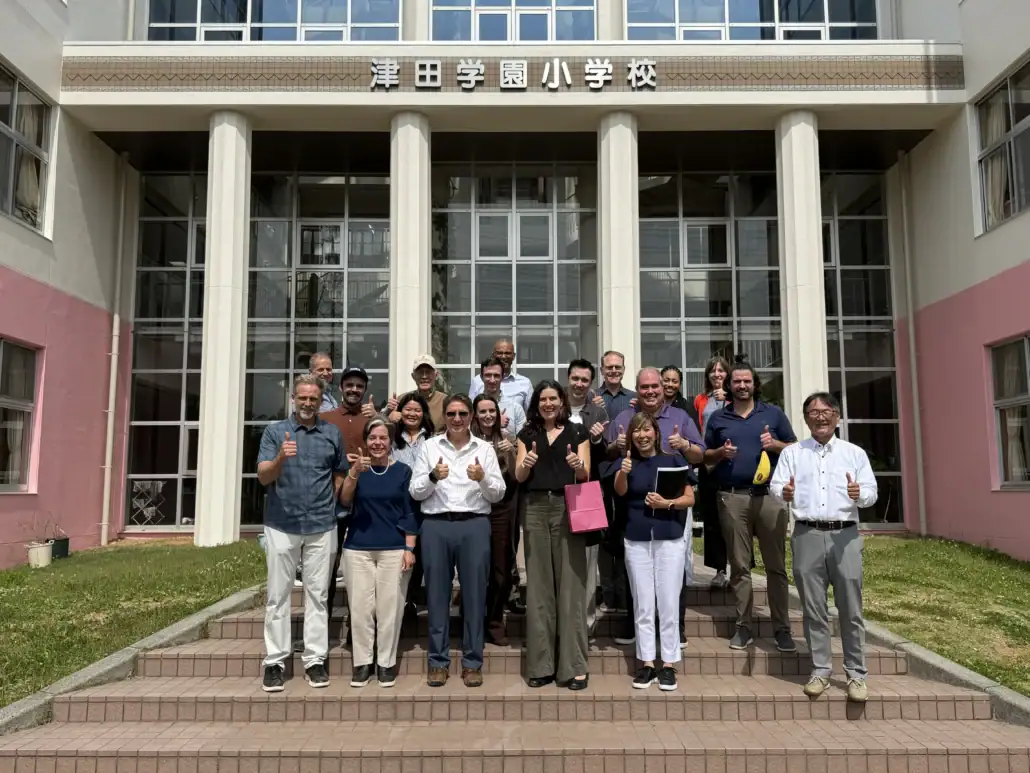
Since 2018, over 160 global leaders have joined me in Japan, from senior executives to internal change leaders and external consultants, coming as individuals and as leadership teams.
In this special bonus episode, I’m bringing you the voices of past participants, all of whom have also been podcast guests, to share what they learned and how the experience has influenced their leadership and organizations.
Many leaders come to Japan to see lean management and the Toyota Production System at the source and deepen their understanding of continuous improvement and kaizen.
What they discover goes beyond tools and processes.
They experience how Japanese companies put respect for people, purpose, and developing people at the heart of their leadership philosophy—and how these principles create the foundation for a people-centered learning culture and sustainable operational excellence.
You’ll hear:
✅ How going to see can drop your understanding from the head to the heart
✅ Why some of the greatest insights happen in the space between the site visits, including time with Toyota leader Isao Yoshino
✅ What changes when you step out of the familiar and into a beginner’s mindset
✅ How leaders have translated those insights into meaningful impact
✅ Why past participants call it a trip of a lifetime, and one of the highlights of their careers
If you’re curious about investing in your own leadership growth, I invite you to join me on the next Japan Leadership Experience, either as an individual or as a team from your organization. The May 2027 program is the only one I’m leading in 2027.
Listen Now to Chain of Learning!
Tune in to hear firsthand how experiencing people-centered leadership in Japan has transformed the way leaders think, lead, and create lasting impact in their organizations.
Join Katie Anderson’s Japan Leadership Experience
What could become possible for you and your organization if you stepped away from your daily responsibilities and gave yourself the time and space to reflect on how you lead?
That’s what Katie Anderson invites you to do through her Japan Leadership Experience.
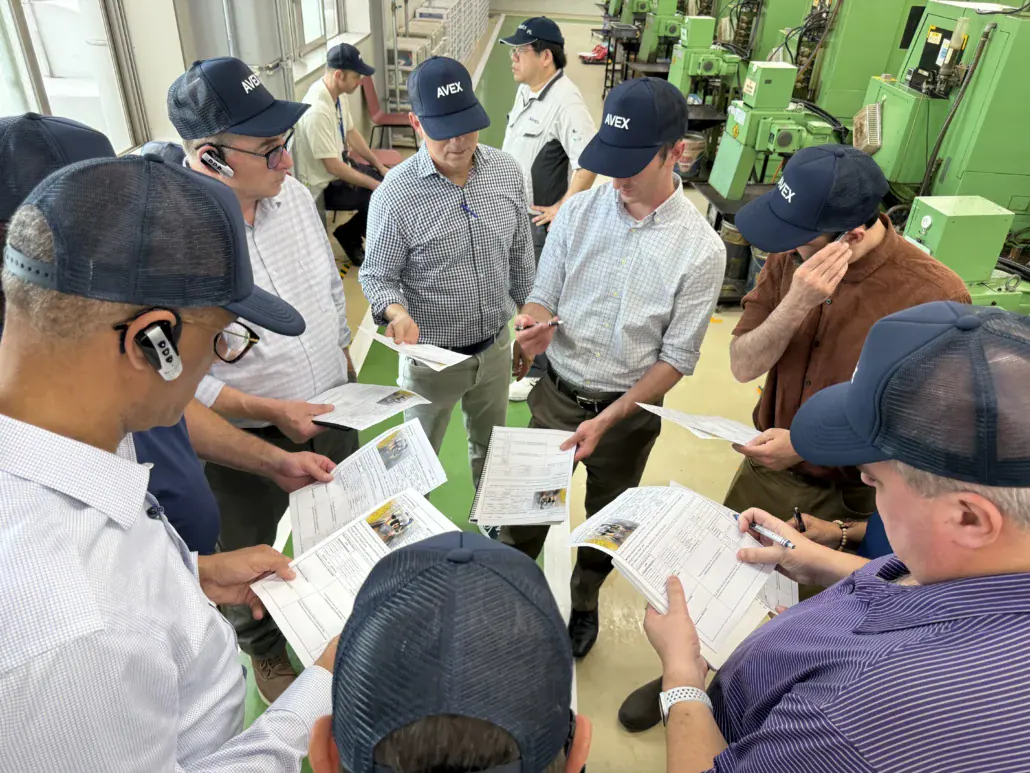
Katie has intentionally designed this immersive leadership development program to go beyond company visits. Through preparation, facilitated learning, daily reflection, and conversations with fellow leaders and former Toyota leader Isao Yoshino, Katie helps you connect what you experience in Japan to your own leadership challenges and opportunities.
And the learning doesn’t end when you leave Japan. Katie provides post-trip support to help you turn your insights into meaningful action.
Bring Your Leadership Team or Clients
Imagine the impact of experiencing the Japan Leadership Experience together with the leaders you’re working to influence.
You can explain the principles of people-centered leadership, share examples, and introduce new ideas. But there’s something powerful about seeing what’s possible together.
When you bring your leadership team or clients, you share the same experiences, conversations, and reflections. You return with a shared understanding of what you want to create and a stronger foundation for moving forward together.
As past participant and lean consultant Josef Procházka shared:
“Bringing my clients with me accelerated everything: watching them change in real time was something I could not have engineered any other way.”
Katie has created a guide to help you explore what bringing a group to Japan could mean for your organization or clients.
Download the Guide to Bringing a Group to Japan
Are you a change leader or consultant? Download the companion guide.
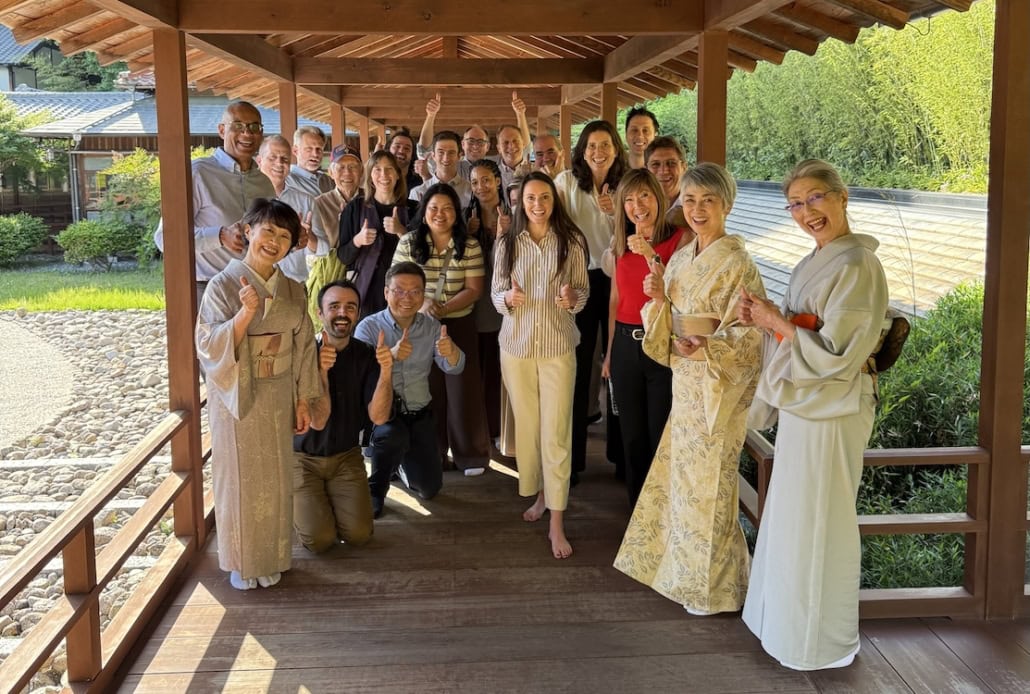
Join the Next Cohort!
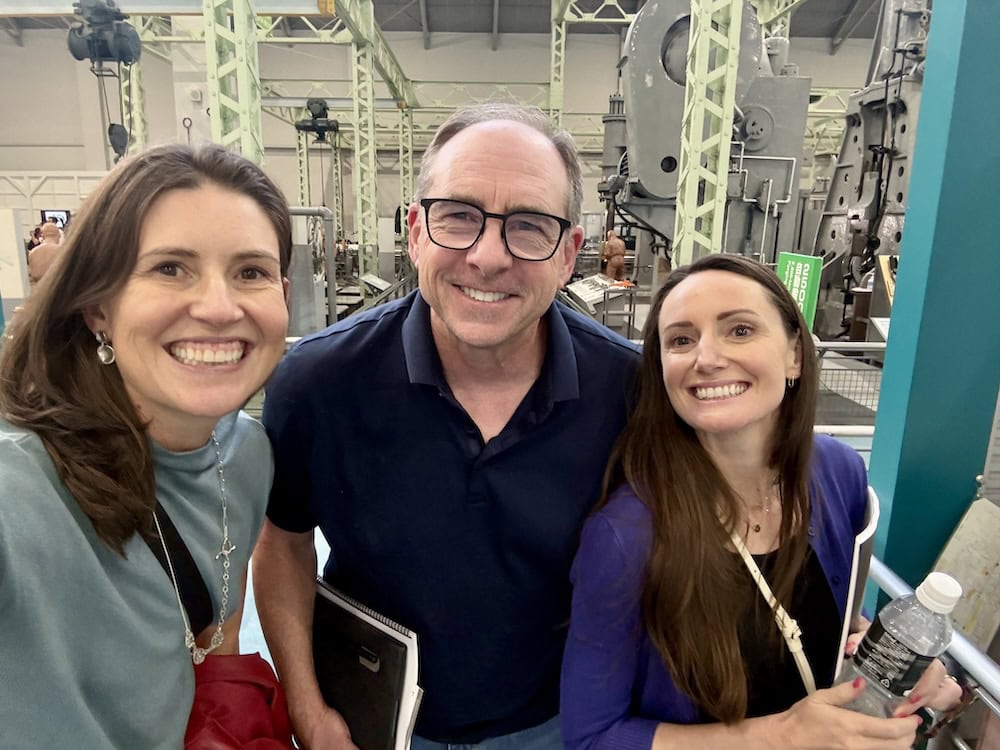
The next Japan Leadership Experience takes place May 9–15, 2027, and it’s the only cohort Katie is leading in 2027.
Participation is limited to 18 leaders, and spots are already filling up.
Whether you’re joining individually, with colleagues, or with clients, this is an opportunity to invest in your leadership growth and bring new perspectives back to your organization.
Learn More and Apply for May 2027
Considering bringing a leadership team or clients? Apply now to explore how the experience can support your broader transformation goals.
Important Links:
- Learn more about the Japan Leadership Experience and apply
- Follow me on LinkedIn
- See what people are saying about the Japan Leadership Experience on LinkedIn: #JapanLeadershipExperince and #ChainOfLearningJapan
- Subscribe to my newsletter
- Listen to more participant reflections
- Full episodes with the leaders you’ll hear:
- Episode 10 | Unleash Your Leadership Superpower with Shawn Carner
- Episode 12 | Beyond Appearances: Building Real Continuous Improvement with Patrick Adams
- Episode 17 | Leading Change from the Middle with Pennie Saum
- Episode 20 | How to Coach Executives and Influence Change with Brad Toussaint
- Episode 30 | Fostering Excellence Through Joy and Respect for People with Stephanie Bursek
- Episode 30 | When Crisis Strikes, Hold on to Your Purpose with Isaac Mitchell
- Episode 48 | Make Leadership Meaningful: From Tools to Purposeful Impact with Josef Procházka
- Episode 51 | Elevate Your Impact Beyond Tools: The Problem-Solver’s Toolkit with Elisabeth Swan and Tracy O’Rouke
- Episode 53 | Rediscover Ikigai: What it Really Means for Your Leadership and Your Life Purpose with Nicolas Kemp
- Episode 64 | Stop Doing Transformation—and Start Enabling It: Redefine Your Role as a Change Leader with Jill Forrester
Subscribe to Chain of Learning
Be sure to subscribe to Chain of Learning on your favorite podcast player so you can build high-performing cultures of continuous learning. And share this podcast with your friends and colleagues so we can all strengthen our Chain of Learning® – together.
FAQs About Katie Anderson’s Japan Leadership Experience
What are key leadership qualities emphasized in Japanese corporate culture?
Japanese companies featured in Katie Anderson’s Japan Leadership Experience emphasize respect for people, caring, trust, continuous learning, and a strong sense of purpose. Leaders demonstrate a deep commitment to developing people, creating environments where employees feel valued, supported, and empowered to take ownership of their work. Rather than focusing solely on financial results and performance metrics, these leaders prioritize employee well-being, long-term thinking, and creating positive experiences for customers and colleagues. As Katie highlights, effective leadership is about putting people first—not just in words, but through everyday actions that build a culture of continuous improvement.
How do Japanese companies implement people-first leadership practices?
Japanese companies featured in Katie Anderson’s Japan Leadership Experience put people-first leadership into practice by embedding respect, trust, and employee development into their daily operations. At companies like Toyota and Ina Foods, leaders reinforce a shared purpose, invest in developing employees’ capabilities, and encourage ownership and continuous improvement. For example, Ina Foods embraces the philosophy “Happiness is our purpose,” which guides decisions and behaviors throughout the organization. Leaders also create supportive environments where employees feel safe to learn, contribute ideas, and take responsibility for their work. These practices demonstrate that operational excellence is not simply about improving processes, but about developing people and creating a workplace where both employees and the organization can thrive.
Timestamps:
1:00 – What makes the Japan Leadership Experience different
2:20 – Why quality is about love and trust
3:00 – Seeing people as the heart of continuous improvement
4:10 – How purpose comes to life at Ina Foods
5:10 – What ownership looks like on the front line
6:10 – Why leaders need 1,000% conviction
7:10 – The power of learning and reflecting together
8:40 – Turning a chain of learning into a chain of impact
9:20 – Why Lean transformation takes time
10:10 – Applying Japanese principles without copying Japanese culture
11:10 – How putting people first changes business results
12:10 – Why preparation and reflection deepen learning
14:10 – Making time to step away and become a learner
15:40 – Leading with love and creating the conditions for growth
17:10 – How caring changes the meaning of 5S
18:10 – Thinking beyond results to build a lasting legacy
Full Episode Transcript
Brad & Patrick: [00:00:00] For me, it’s like going to my Gemba. Like, that’s, that’s the Gemba for me, and why have I never been there? Like, I need to be there. I need to see where everything originated. I need to see the culture. I want to talk to the people. I want to have a deeper understanding when, when I’m talking about, you know, these different concepts with team members here in the US, I want to be able to really understand, uh, how that concept originated, where that principle came from, and the importance behind it.
Josef Procházka: When I look back 10 years before Japan, you know, I rarely had impact on my customers, processes, business, whatever. Just, you know, I was happy with the invoice I was sending, you know. That, that was it. And then, having this context of the Japanese leaders and Japanese companies, it shifted my approach, shifted my optics towards my work.
Katie: Welcome to Chain of Learning, where the links of leadership and learning unite. I’m your host and fellow learning enthusiast, Katie Anderson. One of the questions I’m often asked is, “What is your Japan [00:01:00] leadership experience all about?” In this special episode, in a different format than usual, I’m bringing you the voices of some of the global leaders who have joined me in Japan, and who have all been guests here on Chain of Learning, to share the reflections on the experience and the impact it’s had on them, their teams, and organizations.
And as of November 2026, I’ve hosted 10 cohorts with over 160 global leaders from over 20 countries across six continents, in industries as diverse as healthcare, manufacturing, biotech, government, energy, mining, and technology. Their roles range from senior executives to managers, internal change leaders, and external consultants.
Some come as individuals, others come as an intact leadership team, or consultants bringing their clients to go see and accelerate their impact together. All are on a mission to learn about the essence of what makes companies like Toyota so impactful. So, what is the [00:02:00] Japan leadership experience actually like?
And what are some of the key learnings that have transformed how participants think? Rather than hearing it from me, I’ll let the leaders who’ve experienced it firsthand share some of the insights they’ve brought home.
Jill: The very first hour we spent at the Toyota Museum was defining quality as love. And then at the Toyota supplier that we visited the next day, they said, “Quality is trust.”
We don’t talk like that in North America, so I, you know, you absorb that and you think about it, and you realize that the relationships and the experience people have with, with one another is so important there, that quality isn’t the product. Quality is the impact you’re making on the person using the product.
You mull over that for a week, and it’s, it’s very profound.
Josef: I remember how they talked. He didn’t talk about KPIs. He didn’t talk about basically anything else than [00:03:00] people and creating energy, and this is something that, you know, was absolutely new to me. People are the center. You know, we work with people.
People are, are the treasure of the company. They are not the cost. I’m like, I’m, I’m missing something here. You know, I’m missing the big picture because through- throughout my career, my 10 year of career of consultant, I never touched that topic.
Katie: During the immersive week in Japan with me, you get to see that a culture of improvement and operational excellence is not just about how people work or how to improve processes.
It’s about a leadership philosophy and how they really live a company ethos like, “Happiness is our purpose.” How they embody the concept of respect for people and developing people as the foundation for an organization that delivers results for their customers. Going to see can drop your understanding from the head, that intellectual knowing, to the heart.
A healthcare chief executive officer who came with his entire leadership team [00:04:00] is the one who shared that phrase, that it dropped from the head to the heart, and also that their time in Japan learning together and reflecting on their own leadership was the catalyst for their executive team’s entire approach to lean in organizational transformation.
He called it the highlight of his life, and that it brought everything down to earth and made it real. Here are some more takeaways from past participants.
Isaac, Patrick, Brad: And he said, “Happiness is our purpose, and let’s create a good company.” And they talked about it at the beginning of the day, and we went through the training session.
We did, you know, the site tour, the Gemba visit. We had a wonderful lunch. And it was at the very last part of the day, we were at a, a board, um, on, uh, in their factory, and they were showing off their Kaizen, uh, and their improvements. At the end of the day, he asked the plant manager what the vision and purpose is, and he responded verbatim, “Happiness is our purpose.
Let’s create a good [00:05:00] company.” I just loved how that was translated throughout the entire organization there at Ina Foods.
I remember talking to one gentleman who was working on a, a press at one of the plants that we visited. Um, and it wasn’t full, uh, it wasn’t heavy manufacturing either. We also visited, uh, a healthcare, uh, industry.
We visited the school. We also went to the bullet train, and that was super amazing. So it wasn’t just manufacturing, but I just remember this one individual that was running one of the presses, and, um, I asked him, because he was running the press, and so I asked him, you know, “Who does your, your changeovers?”
Or, “Who, who takes care of your equipment for you?” And he was like, looked at me weird and was like, “I take care of it.” And I was like, “Really? So you do all the changeovers, you do all the maintenance, you do everything on this piece of equipment?” And he’s like, he just didn’t, it was, it’s almost like he didn’t, it didn’t make sense to him why I would be asking this question.
And, and then the, the, the team leader said they feel like these machines are their babies. That’s the way he explained it. Like, “This is my baby. I take care of this like [00:06:00] it’s my baby, so it runs smooth. It’s t- well taken care of.” Just the, the, the level of, uh, just respect that he had for his equipment and, um, it, and that paid off, right?
I mean, their equipment runs like a champ, so.
Was struck by, uh, Mr. Eguchi from Panasonic on our trip and how he talked about the, the law of half, uh, one over two, half, and the idea of 1,000% conviction of the leader. The notion really quickly is that a leader can have, uh, 100% conviction, and then when that translates down to the next level, it turns into 50% conviction, and so on, all the way down to the organization.
And it’s hard to really create that alignment and organizational conviction unless the senior leader starts with 1,000% conviction. So anyway, it’s a, it was a, so I’ve been thinking a lot about the 1,000% conviction and, and maybe how that needs to be reflected from the senior leader in [00:07:00] 1,000 ways.
Katie: This concept of conviction and the seriousness that leaders need to have on their vision and how they show up has made an impact on so many others.
And while the site visits and talking with Japanese leaders are powerful, some of the greatest insights come from the learning that happens in the space between, together. The daily facilitated reflections, conversations on the bus, sharing meals together, and of course, a highlight is the bonus exclusive opportunity to spend the whole week with Mr.
Yoshino, sharing meals, chatting on the bus, and in those reflections
Elisabeth & Pennie: Really nice memory of Mr. Yoshino that Tracy and I got to spend a good chunk of a week on a bus back in 2019. He’s just a, a rare human, and what an incredible presence. That was, that was a joy.
You know, we spend a lot of time with these leaders.
They are pretty much hand-selected. Where are they at in their lean [00:08:00] journey? What have they been doing? How have they been applying the work? And we want them to go to the next level of leadership in this work. I’ve heard so many different things, like leadership should only be trained by leadership people, and this should…
CPI should only be trained by CPI people, and equity, and da, da, da, da. The reality is, for things to be successful, CPI and leadership need to go hand-in-hand, right? EDI and leadership need to go hand-in-hand. And I think that this is so key, the i- the immersion that happens, what is seen in the organizations, the hands-on learning that they get, also the learning from the other organizations that are with you as well, the networking and collaboration, has taken some of our teams to the next level
Katie: And while of course, I endeavor for you to have a great experience, and actually not just a great experience, the greatest experience, the trip of a lifetime, it’s what you do with it when you return home that’s the real return on investment.
It’s how you take the Chain of Learning into the [00:09:00] chain of impact
Patrick & Shawn: The, the, the payoff, the ROI is, is massive. It has been in my company and, and for the, the companies that I work with, because I’ve brought a lot of that to them and, you know, been able to really show them, uh, where some of the principles came from, the tools, the background, and some of that, and it’s been just a, a game changer for me, so.
Ultimately, it felt like a, a trip of a lifetime from a lean practitioner standpoint, right? It’s like going to the source, really going to the Gemba, right? Go and see for yourself where lean started. Uh, and I really liked the, the sort of following the Toyota value chain, as well as seeing some other companies and like, what’s the secret to, to this lean thing?
How do they make it seem so easy? And I’d say one of my big takeaways, right, is we talked about coaching takes time to grow and build that whole conversation with someone. And the same thing from a lean standpoint is it, [00:10:00] it takes effort and time, and it’s not like Toyota just, you know, overnight became a lean company.
They’ve been doing that for forty, fifty, a hundred years. And so kind of the takeaway for me from the trip and, and something that you helped us explore is what artifacts of the lean culture are because of the Japanese culture. And then therefore, kind of my takeaway was, okay, how do we leverage the, the key principles in our culture, not try and become Japanese, but what are the things that, say, in the culture of Genentech or the culture of Accuvel or more broadly, are those cultural elements, and then align lean to that.
Um, because a lot of the things that we saw in Japanese culture have direct connections to how lean is practiced. But, you know, when we read the literature and we look at all the books, we [00:11:00] don’t see that at all. No one starts off with like, “This is the Japanese culture, so this is why they do these things in, in the lean framework.”
Katie: After seeing and hearing how these Japanese leaders really put people first, not just talking about it, but actually doing it, living it, being it, a senior leader who joined me in Japan, who came from a mining company in Brazil, rethought his whole company’s approach to the concept of respect for people.
They changed how their leaders talked about metrics across the company, from the front line to the executive team, and instead put people metrics before quality, cost, and delivery. And in three months, their people engagement scores went from about sixty-three percent to over eighty-five. And a manufacturing leader based in Europe, who came on the Japan Leadership Experience with his site leader and an external consultant, came back focused on how he would ask more questions and create more space for reflection.
Told me that within months they saw [00:12:00] operational numbers they’d never seen before because he saw that people were finally feeling safe to try. And he reflected it took them seeing this in action in Japan to really understand, not just from the head, but in their hearts, about how to show up personally to create this culture.
I intentionally design and facilitate the program to take you on a learning journey.
Brad & Patrick: Yeah, it’s part of the journey, and it’s, it’s not just the, the five or six days of going and doing stuff in Japan. It’s the preparation and the forcing function of, “Okay, I’m, I’m gonna read these books to prepare. I’m gonna do some thinking.
I’m gonna prepare questions for these different sites and these different leaders.” That’s a really important part. So it, just the curation of the whole experience that is really, again, you’re sort of the lighting the fuse of learning and, and reflecting that that fuse will go on for a long time. But it’s, it’s a never-ending journey, and so the, but it’s, it’s sort of [00:13:00] a supercharged part of it.
I can’t say enough about the forced time to, to think about this stuff and reflect and, and really focus on learning instead of just the busyness of the day. We’re all victims of the urgent rather than what’s important, uh, so how do we, how do we flip that?
I did pull out my, my study book, uh, that I was given, uh, my workbook during the, the study trip, and, um, I actually refer back to this frequently because there was so much that came out of the trip.
I mean, just so many amazing lessons learned. I’m, I’ve considered myself a, a lifelong learner, and this trip was so impactful for me because, uh, obviously I, I coach and train people on the Toyota Production System and, and on Lean and, but me personally, I had never been to Japan. So I was thinking, like, it’s, for me, it’s like going to my Gemba.
Like, that’s, that’s the Gemba for me, and why have I never been there? Like, I need to be there[00:14:00]
Katie: How often do you have time to step away from your daily and weekly responsibilities to focus on learning? There’s power in stepping outside the familiar, immersing yourself fully in a new experience with like-minded yet diverse leaders, putting yourself in the beginner’s mindset to gain new perspective and insights about the leader you want to be and the impact you want to create.
Nick Kemp: I think leaders need this because leaders tend to be extremely proactive, that they have something always going on their mind. They’re, they’re ambitious. You know, if someone says, “I need a break, I’m stressed, I’m sick,” you’re gonna have a, “But, oh, okay,” to their employees. But rarely-
Mm …
Nick Kemp: as a leader do you take time off.
You kinda have this tendency to push through. Yeah. So I think you providing this opportunity to say for a week you’re going to put aside all these roles, you’ll have a new [00:15:00] role essentially as a student participant, and then see what you’ve, um, studied or see a different- Mm … way of doing things to what you’re doing in your home country.
Yeah, it must be, uh, well, we know the impact it has. Mm. Uh, it’s sort of life-changing. It’s transformational. I think it’s essential is what I’d say. Yeah.
Tracy: And that’s just so not how that works. It was just a very different cultural change that I remember vividly, and I had so many good experiences. I honestly could say that that was one of the highlights of my career, Katie, is going on that trip with you.
I mean, I’ve been doing this 25 years, and that was just incredible. I, I, if I could go every year, I would go.
Katie: It’s life-changing, transformative. It’s about understanding the essence, holding precious what it means to be human
I mean, I was exposed to these wonderful companies in Japan that talked about [00:16:00] joy and talked about love and talked about work and harmony with life.
You know, that just really touched me. And I thought that, you know, we, we’ve got to get better. So I think the change has been that I am doing everything with love. And I want to create an environment that, where people feel safe, where they experience abundance, and all of those things. And it starts at the top.
It starts with the leadership team, and I am blessed with a leadership team that understands that we, we’re gonna model good behavior, but we also have to create an environment that allows everyone to be their best. And that is challenging sometimes, but it’s also worth it. Once you do that, the results start to come.
Jill & Shawn: And now, you know, after spending a week there, that’s how I think about it. And it took a while for that to resonate. But once you go through the tour and you see, you see it applied and [00:17:00] people thinking like that and, and planning with that in mind and designing their processes and designing their lives to have a positive impact on other people, it really just sort of sinks in and, and becomes how you think about things.
So it’s really, like, wouldn’t it be wonderful to just surround people with that feeling of safety and caring and support? And, like, that’s 5S to me. It’s so profound, and when you see that at work in Japan, when, you know, the trains run perfectly and the… And everyone knows where to stand, and there’s no, like, sort of…
They don’t… They care so much about their daily experience that they don’t have chaos, and they don’t have, like, they care enough to say, “Well, if you stand here and I stand here, we won’t bump into each other, and won’t that be great?” You know? Uh, so all these micro-experiences through the day that are just so organized, but so kind.
You get to [00:18:00] realize it’s rooted in kindness, and it’s rooted in caring for one another, and it’s like, that’s what I got out of Japan, is like, that’s why we’re doing this, and I’m just so much more able to describe it. And good workplace produces good products, right? And the idea that your products will change, but your workplace and the people you’re building and the systems you’re building and the culture you’re cultivating, that will nurture you and sustain your company for decades.
I love the long-term thinking we saw. Like, and again, the p- the power of thinking beyond, you know, the next five years, the next three years, the next one year, and thinking about the role you’re having, the fact that you as an individual will not always be here, but you want your company to be helping other people in the long term.
So what… It shifts, again, it shifts your thinking and shifts what you spend your time on.
It really is about the people. I mean, even Toyota, what’s, what’s the [00:19:00] quote, right? “We make great people.” ”
Katie: We make people so that we can make cars.”
There you go. And so, you know, and that’s like plastered all over the place, and that was kind of an aha as well, that, yeah, we happen to make, you know, cancer-saving drugs, but what we’re doing is developing people, especially as leaders, and the, the manufacturing of the medicine is not secondary, but is the outcome of that great activity.
Katie: All the voices you’ve heard today have been guests here on Chain of Learning. Thank you to each and every one of them, and to everyone who’s joined me in Japan, many of whom invested their own money to make the experience happen. And to the companies and leadership teams who know that the investment in their leaders and team members will create even greater impact after they return.
This is really a global Chain of Learning that we’ve built, and are building, united in an experience in Japan together. Chain of Learning is not just a phrase. It’s the [00:20:00] meaning and impact that comes out of our connection together. If you’re curious about investing in your own leadership growth, I invite you to join me on the next leadership experience, either as an individual or as a team from your organization or with your clients.
I’d love to host you on the learning experience of a lifetime. Carpe diem. Learn more and apply today at kbjanderson.com/japantrip. And I’ve put the links to all of these guests’ full episodes in the show notes, plus a link to more testimonials on my YouTube channel. Thank you for tuning in to this bonus episode of Chain of Learning.
And as always, thank you for being a link in my Chain of Learning. I’ll see you next time. Have a great day.
Subscribe to Chain of Learning
Be sure to subscribe or follow Chain of Learning on your favorite podcast player so you don’t miss an episode. And share this podcast with your friends and colleagues so we can all strengthen our Chain of Learning® – together.