




The Leadership Shift Behind Joy at Work
Joy isn’t a perk. It’s a business strategy.
Have you ever wondered whether work has to feel this hard? Whether the team you’ve built can actually function without you? Whether there’s a way to lead that doesn’t leave you—or the people around you—exhausted?
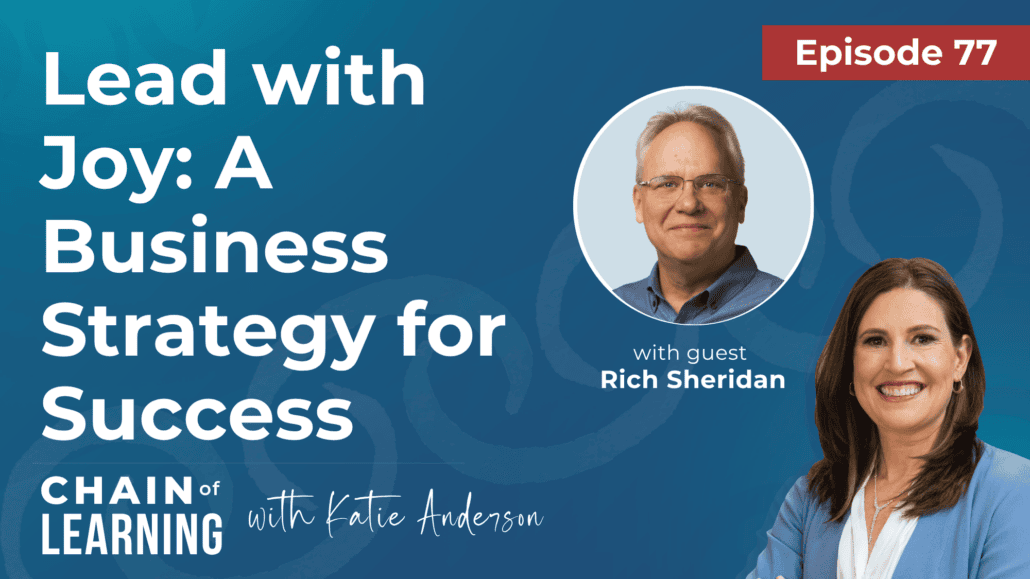
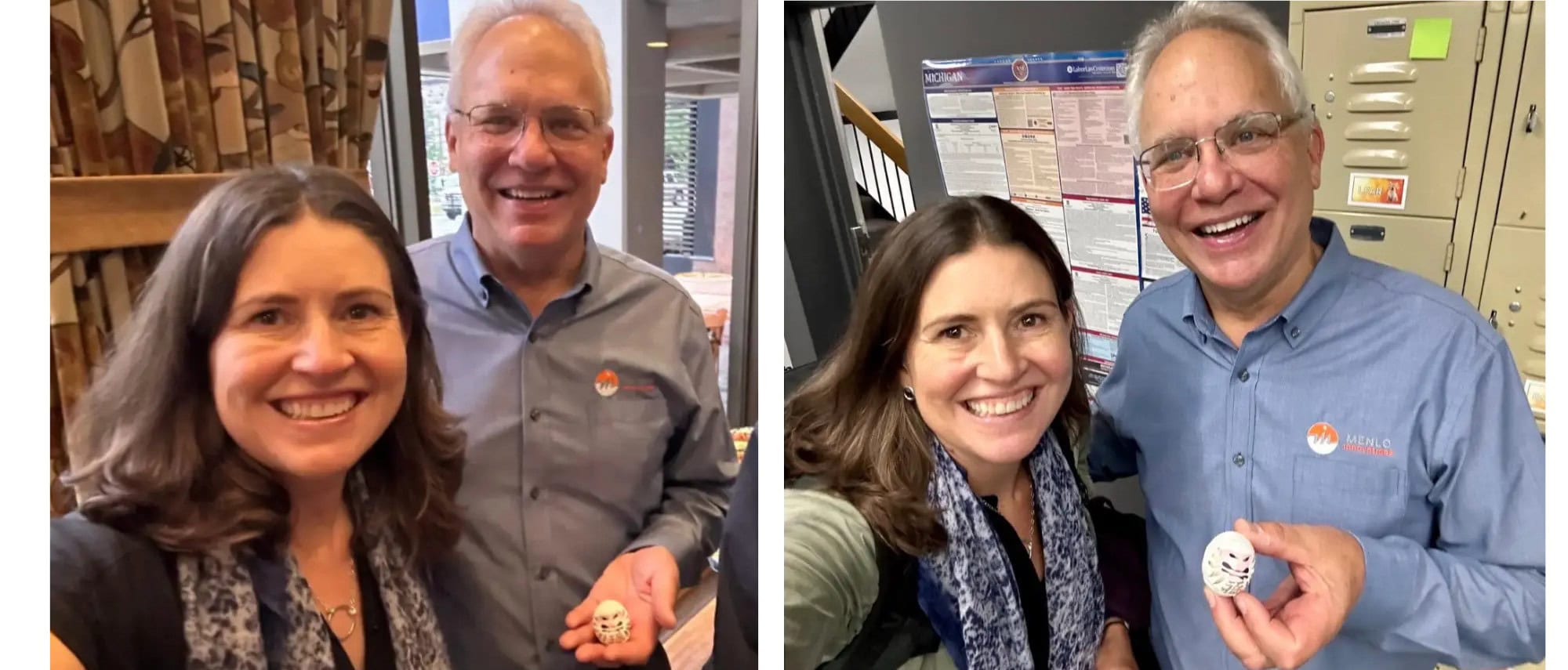
Rich Sheridan built Menlo Innovations around one bold idea: ending human suffering in the workplace. The result is a company where joy isn’t a slogan. It’s embedded in how people work together. A place built on collaboration, human energy, and pride in what they create.
Joy isn’t about being happy all the time. It’s the long arc of meaning and contribution alongside people who care. And it becomes possible the moment you stop being the center of every problem and start creating the conditions for ownership, continuous learning, and yes, joy.
You don’t have to change the world. You just have to change your world.
In this episode, you’ll learn:
✅ The mistake most leaders make about mistakes, and why more mistakes can get you ahead faster
✅ Why what looks like a questionable decision from below makes sense from above
✅ The difference between joy and happiness, and why most leaders are chasing the wrong thing
✅ Why running a small experiment will move you further than creating the perfect plan
✅ What it really takes to build a company designed to last a hundred years
Listen Now to Chain of Learning!
Tune in to hear how Rich Sheridan built a company where joy isn’t a perk, but the result of creating the conditions for people to think, learn, and grow together.
Watch the conversation
Watch the full conversation between me and Rich Sheridan on YouTube.
 About Rich Sheridan

Rich Sheridan is the co-founder, CEO, and Chief Storyteller of Menlo Innovations, a software development and consulting firm known for its people-centered culture and focus on joy in the workplace. He is the author of Joy, Inc. and Chief Joy Officer and was inducted into the Shingo Academy in 2022 for his contributions to organizational excellence.
Reflect and Take Action
What creates joy at work?
Rich challenged the idea that joy is happiness in every moment. Instead, he described it as the long arc of meaningful work done well alongside other people who care.
As I reflected on our conversation, I kept coming back to the moments that changed both of us. For Rich, it was realizing he had become the center of every decision. For me, it was seeing how often I stepped in with answers.
We both cared deeply about the people around us and the results we wanted to achieve.
But when caring becomes carrying, we can unintentionally inhibit the very growth, ownership, and capability development we want for others.
Where are you defaulting to the doer?
Are you stepping in as the hero, the expert, or the rescuer when stepping back might create more capability for those around you?
And what’s one small experiment you could run to test what happens when you don’t jump in?
Important Links:
- Connect with Rich Sheridan
- Follow me on LinkedIn
- Subscribe to my newsletter
- Check out my website for resources and working together
- Join us on the Japan Leadership Experience
- Purchase a copy of Rich’s books: Joy, Inc. and Chief Joy Officer
- Learn more about Menlo Innovations
- Tugboat Institute
- Episode 13 | 3 Ways to Break the Telling Habit® and Create Greater Impact
- Episode 40 | Escape the Doer Trap: 3 Simple Shifts to Instantly Get Unstuck
- Episode 71 | Own the Thinking Process, Not the Thinking: How Leaders Build Problem-Solving Capability
Listen Now to Chain of Learning
Listen now on your favorite podcast players such as Apple Podcasts, Spotify, and Audible. You can also listen to the audio of this episode on YouTube.
Timestamps:
02:37 – When work no longer feels sustainable
05:26 – The moment Rich realized the problem wasn’t technology
07:27 – What an 8-year-old noticed about leadership
08:23 – Why hero-based organizations scale through exhaustion
09:39 – When caring becomes carrying
11:18 – The first emergency that didn’t need Rich
12:21 – The codependency leaders develop with crises
14:09 – What joy at work actually means
17:13 – Working with pride and delighting customers
19:17 – Why human energy is a leadership responsibility
21:00 – What’s the cost of not having joy?
23:28 – From constant firefighting to two emergencies in 25 years
25:24 – Joy vs. happiness: What’s the difference?
27:02 – Why joy isn’t happiness every day
31:15 – The leadership habit Rich had to unlearn
32:17 – The phrase that keeps Menlo moving forward
33:27 – Why Menlo prefers mistakes over meetings and the role of continuous learning
34:15 – The leadership lesson Rich learned from flying
40:39 – Why Menlo isn’t chasing exponential growth
43:02 – The book that changed Rich’s career
45:18 – Why crisis practices work when there isn’t a crisis
46:27 – Start here instead of trying to change everyone
47:28 – Why your system keeps producing the same results
49:38 – The shift from carrying to creating conditions for change leadership
51:46 – Why stepping in can hold people back
Full Episode Transcript
Rich: [00:00:00] I think when you become the hero-based person, whether you’re a leader or, you know, just the tower of knowledge type of person, you almost develop a codependency with emergencies.
Katie: Welcome to Chain of Learning, where the links of leadership and learning unite. This is your connection for actionable strategies and practices to empower you to build a people-centered learning culture, get results, and expand your impact so that you and your team can leave a lasting legacy.
I’m your host and fellow learning enthusiast, Katie Anderson. Have you ever caught yourself being the hero in your own organization? The one with the answers, the one everyone comes to before they make a decision, the one running from emergency to emergency, constantly putting out new fires, but never actually getting to your real work.
It can feel rewarding, like we’re valuable and important, but it’s exhausting, and it’s a trap, what I call the doer trap, and I’ve been there [00:01:00] many times, and so has today’s guest, Rich Sheridan, co-founder and CEO of Menlo Innovations, a software company in Ann Arbor, Michigan, that he built around one bold idea: ending human suffering in the workplace.
I invited Rich to Chain of Learning to talk about what it actually takes to lead differently, to step out of the hero role, to create the conditions where joy, ownership, and meaningful work become possible for the people you lead and for yourself. Rich is not just a senior executive, but also a self-proclaimed chief storyteller, and is the author of two excellent books, Joy Inc.
and Chief Joy Officer, and was inducted into the Shingo Academy in 2022 for his work supporting the principles of organizational excellence. Rich and I first met back in 2014 at the very same conference where I met Mr. Isao Yoshino, the Toyota leader at the heart of my book, “Learning to Lead, Leading to Learn.”
Rich was an early supporter of that book, and over the years, he’s become a [00:02:00] mentor to me on leadership, on writing books, and what it looks like to lead a company built on something different. Not leading based on a methodology, but on a deep belief that work can be the place where people thrive. We started off our conversation with this question: What was your leadership philosophy in the early days of your career, and what shifted for you?
Let’s dive in
Rich: Yeah, I think for me, you know, and probably for most of us, there’s this like fundamental truth living inside of us, and we often don’t get to live that truth in our work lives. And maybe the gap is narrow, maybe it’s wide, maybe it oscillates back and forth over time. Uh, but I found that the distance between what I believed should be true in my work life and my leadership life and my technology life ’cause, uh, you know, I was a programmer for a lot of years and then started leading teams of programmers, and [00:03:00] the gap, the delta, the tension between what I believed should have been true and what was actually happening, uh, really started to tug at me.
Probably tugged at my heart, my gut, my brain, probably caused me some sleepless nights because, you know, I, I think the easiest way to describe it is I just had this fundamental belief That things could be better, just a whole lot better. Different than what I was experiencing. And, you know, and part of it, I was leading these efforts, so it wasn’t like I wasn’t enough in control that I should’ve been able to do something about it.
And, you know, maybe I was not cognizant of some of the external forces that were causing things to go awry. Uh, so I’m sure in the early days, I just thought, “Well, maybe I’m not experienced enough. Maybe I’m not good enough. Maybe, maybe I’m not as good at this software thing as I, I thought I was.” [00:04:00] But I just kept seeing this delta, and the delta was pretty easy to describe.
I was watching projects go past budgets, go past deadlines, deliver poor quality, create unhappy users, create unhappy business sponsors , create unhappy me, create unhappy team. And after a while, I thought, “I, I don’t even wanna be in the profession anymore. I want out.” But, you know, the trouble was, every time I’d come home and see my wife and my three daughters in the house over our heads, I realized I was actually kind of trapped.
You know, I was trapped in a profession that I thought could carry me well for a lifetime, and it should have. But, you know, even my wife would look at tired me, and she’d say, “Honey, you look… don’t look happy. What…” And I’d say, “I’m not.” And she’s like, “What are you gonna do about it?” And, and I would honestly say, “I don’t know.”
And I’ll say I was a bit scared because I kept looking ahead. I, I have this ability to sort of cast myself forward [00:05:00] 20, 30, 40 years and realizing I, I can’t do this for the rest of my career. And so those were the moments that was at least setting me on a path, setting me on a journey that said, “There has to be a better way.
Go find it.” And so my journey out led me to authors and books, but not books on technology, ’cause what I realized was the problem was not a technological problem. It still isn’t. It’s how do we organize the people more effectively? How do we lead them in a better way? And that became a journey for me. That became a, a journey of learning, of discovery, of trying things and not really…
You know, making small incremental changes, but not the size of changes I actually needed to make in order to truly succeed the way I thought I should. Kind of the click moment happened in 1999. I’d been VP for a couple of years, and I read a book, and I saw a video, and [00:06:00] I met a gentleman who would eventually become my Menlo co-founder, James Gobel.
And, uh, literally those three things happened within quick succession, and it was like, boom. 1999, I knew where I was going, I knew how I was gonna get there. That was, you know, 27 years ago now, and I’ve not looked back since. So, you know, the next two years were gonna be formative. I created a prototype for what would become Menlo Innovations inside of a tired old public company, and then the dot-com bubble burst, and I was out of work for the first time in my career.
And, uh, while I lost everything, they couldn’t take away what I had learned in those two years, and that became the basis for Menlo.
Katie: Such a powerful story, and I wanna dive into sort of what that leadership looks like for you now. But if you look back, you know, at yourself, sort of maybe those mid-’90s before that transformation and, you know, you were feeling frustrated and unhappy, what are some of the things that, like, with the perspective of time you look back on that you were doing that weren’t effective or [00:07:00] that you were stuck in?
Because I bet a lot of people listening can really relate to that, the previous you, and, and yeah, I’m curious sort of what was happening.
Rich: And I’ll tell you, Katie, I know that’s true because, as you know, like you, I give talks all over the world on the subject of joy in the context of work. And when I… And I always tell the backstory, and I have people come up to me and they’re like, “You just told my story.”
I’m like, “Oh, I know,” uh, you know, ’cause there’s just millions of us out there that are leading lives of quiet desperation at work. You know, I will tell you the, the, the sort of the other key moment was 1997. I’d just become VP. I didn’t know what I was doing. I just thought this was a perch from which I could try a bunch of experiments.
Took my daughter, Sarah, in to work with me. She was my youngest. She was eight at the time, and it was one of these take your child to work days. And, uh, she sat at my task table dutifully all day. Fortunately, she was wise enough to [00:08:00] bring coloring books, cri- stickers, and crayons, because what on earth is she gonna see, right?
These are, this is, uh, supposed to be a day that inspires kids to a career of their own, and she’s gonna sit and watch a VP doing email all day and get excited? Come on. Uh, so at the end of the day, I asked her, I said, “So Sarah, what did you see today? What did you learn?” ‘Cause I knew her teacher would ask her the next day.
And she said, “Well, what I saw, Dad, was you’re really important here.” Like, “What? What do you mean?” She said, “What I saw is nobody here could answer a question without asking you first.” Oh, she was dead on accurate.
Katie: Mm.
Rich: I realized in that moment, in terms of what I was doing wrong, I had created a hero-based organization, and I was the number one hero.
And the only way to scale a hero-based organization is to scale the heroes, and the only way to do that is overtime. And I’m looking across the table at this eight-year-old thinking to myself, “I don’t wanna miss the best parts of [00:09:00] being a dad.” ‘Cause I didn’t wanna wake up someday and realize I’d been career successful, but I didn’t know my family, didn’t know my daughters.
And so I knew in that moment, regardless of where I was going and how I was gonna get there, I knew the change had to start here first. It had to start inside of me. I had to become a different kind of leader. And, um, so, you know, that was where the journey began really.
Katie: I had a similar, different, different moment, but something similar for me earlier in my career.
It was probably 15-ish years ago now, where, you know, I got some feedback from my coach. Not my d- not, not a child, but, uh, some- the same sort of holding up the mirror of, like, how much I was interrupting and telling and jumping in. And I think what’s shared about how we were showing up is a little different, but the, it came both from places of, of caring.
Like you care about the team, you care about the results, you care about it. But unintentionally, we’re stepping into owning and doing and burdening ourselves with that [00:10:00] responsibility. You’re feeling burnt out, but also taking away that capability and responsibility for other people too. And so it’s like how do we have this identity shift that we don’t have to be the hero or the one with all the answers, the one who does it all, to actually be more effective?
So what did you do with that information? I mean, it was two years later, you know, you said the other epiphany happened, and so you had this internal realization, and then how did that seed the culture of Menlo?
Rich: You know, I’m sure in those first couple of years when I was still searching, I tried the traditional path that almost everyone tries.
I’m just gonna try harder. And, uh, try harder- It’s good. You know, you bring some energy to work with you. I had rediscovered, uh, some, a well of energy that, that helped me, and I started to become, you know, a little more, you know, as you say, uh, trying not be the, the first one to speak up. You know, trying not to be the loudest voice in the room, which quite frankly often gets us promoted, right?
It’s almost, uh, you know, um, [00:11:00] prophetic that you’re gonna, “Oh, Rich, he always is the one with the ideas.” Like, well, that’s, that’s neat till you get the promotion, and then when you realize, well, you’ve muted everybody else, Rich. You’re not actually leading a team. You’re not doing the best job the company can do.
You’re just doing the best job you can do. And so I just started trying to stay a little quieter and, um, and it’s hard when you’ve done it as long as you have. But the real changes started to come in 1999, a couple of years later when I had that click moment and, and really started to Changed things dramatically.
You know, and I remember a day shortly after all of that was in place, and one of my team members was walking down the hallway. His name is Dave, and Dave called out, said, “Hey, Rich, just want to let you know we had an emergency today. Everything’s fine. We took care of it.” And I, and I’m like, “What? There was an emergency [00:12:00] and I didn’t know about it?
I w- I wasn’t called to the meeting and you guys just took care of it?” And, and he was literally just, like, waving at me as he walked by to kind of let me know something had happened. And, and really right there, I thought a new day had dawned in my leadership life when that started to happen.
Katie: That’s amazing.
You’re like, but it’s this identity shift, right? You had to step away from being like, “They didn’t ask me to be the superhero to rush in to save the day,” but they did it, and how great, ’cause I got to go home.
Rich: Right. And they felt good about it, of course. And you know, and I will say, I’ve never said it this way, so this is a first.
I think when you become the hero-based person, whether you’re a leader or, you know, just the tower of knowledge type of person, you almost develop a codependency with emergencies, right? Where you, you thrive on that energy of like, “Oh, I’m gonna stay really late tonight. I’m gonna work through the night.
They can’t live without me,” right? And we [00:13:00] take that as a reward, when in fact, if, you know, if somebody outside was looking in, like your mother or something, and just saying, “Hey, you’re kind of aging prematurely here, you know? You don’t seem as happy as you used to be, and you don’t seem to know your loved ones like I hoped you would.
And, and, and you never call your mother, you know?” So…
Katie: Yeah, totally. I mean, I, I’ve been starting to call this, this shift that we need to have as, like, the art of unburdened leadership. ‘Cause you’re not only creating capability in the organization, but you’re also unburdening yourself from the responsibility and truly the weight of having to do it all, which is, you know, prematurely aging you or keeping you away from the family.
And it, but it’s a real identity shift, and it’s, it’s a hard one to let go of, uh, like, seeing your role and where your value is created and what you bring to a team is something totally different, um, than you being, like, the excellent programmer who just gets it all done and saves the day. So you brought this in the Menlo.
It’s [00:14:00] been s- it was so great. It was, like, two years ago, a year and a half, that I finally got to go, um, visit Menlo in person. I mean, we were even just talking before recording this of there’s always just this energy and vibe around the workplace ’cause there is energy, there is joy, there are people collaborating, working together.
So talk to me about how you created truly this organization built on joy, and what does that mean and look like tangibly?
Rich: Yeah, and, you know, it, some of this, it’s not revisionist history, but it, way I’ll describe it now is the result of all the years of thinking about what was I trying to do and how do we, how do we frame it in terms of what we created?
And so yes, we use the word joy now. That was only s- marginally present in the first few d- years of Menlo. We had a mission poster, and it said, “Our mission is to return joy to what we believe is one of the most unique endeavors mankind has ever undertaken,” the, um, creation of software. And, um, but [00:15:00] we didn’t…
It wasn’t like we touted joy. It wasn’t like we s- we started there. We didn’t start with that message. But now we do. You know, so people will ask me, “Well, define it. What is joy?” And I s- said, “Well, joy is purpose-driven, and it should be able to answer two questions: Who do you serve, and what would delight look like for them?”
And so it should be externally focused, whether you’re a unit within a company and you’re serving others within your organization, or you’re, or like me as a CEO, I’m looking at Menlo and saying, “Who do we serve, and what would delight look like for them?” And for us, it’s very simple. I, you know, I think the value of the thought process that any of your listeners are going through is you are deep in the lean community, I’m deep in the software and agile development community, and, and a lot of people chase those things as if they are a goal in and of themselves.
But they’re not. [00:16:00] They’re tools and practices and thought processes and philosophies we use to produce a different kind of result. And so everybody should begin with the end in mind. What kind of results are you trying to produce? And for us, it was very clear. We wanted the people who used the software that we design and develop here at Menlo to have one conclusion: I love this software.
You made my life better because of the work you did. And if we get that result, and we do all the time, it is joy for us. Joy is creating that, the work of our hearts, our hands, and our minds creating delight for others. Almost all of us are in a service-oriented occupation of some sort. If you build cars, you’re building it for the people who are gonna drive them.
If you’re a teacher, you’re creating experiences for the students. You know, for us, we wanted to create software that delights. And, and delight is, [00:17:00] is interesting, right? It’s not only delight like I love using it, it seems to work the way I expect it would But also it just works. It does what it’s supposed to do.
It doesn’t lose my data. It doesn’t mess up. It doesn’t crash at unexpected times. It doesn’t cause security problems for my corporation. All of those things have to be embedded as well. So there’s, there’s this end user focus that says we’re gonna delight the people who use it. And then there’s this engineering discipline process focus that says, “No, we’re gonna create incredibly solid working software.”
And, you know, you and I both know Deming very well, and, uh, he had a great quote around this. He said, “All anyone asks for is a chance to work with pride.”
Katie: That’s such a– I mean, that gets back to the essence of respect for people, like holding precious what it means to be human, like having pride and feeling respected.
And I just, uh, that, that’s such a powerful phrase. [00:18:00] And as you’re talking, it really reminds me of this word in, uh, Japanese that I, I think of often, which is omotenashi, which is often translated as, like, hospitality or customer service, but it’s, it’s really much more of what you said here. It’s like, how do I delight the other person, think of them, and what I need to do to create a delightful experience that is not about what I want, but it’s about what they need and on so many levels.
And if we can all be delighting each other, then, then there’ll be joy in the world, right? So it’s this like, uh, this like positive, virtuous cycle of we show up with that mindset and, um, it, it’s, it just keeps manifesting.
Rich: Omotenashi? Is that, did I say that right?
Katie: Uh, omotenashi.
Rich: Omotenashi.
Katie: And I know you went to Japan, and you’ll ex- you experience it, like people being so kind and nice and generous or opening the door for you or those small little moments, and it’s just, like, imbued in a lot of the s- uh, the society.
Um, and it, and it’s, it’s special. And I think if we take that from [00:19:00] a leadership lens, that is describing what you’re creating or what you’ve created at Menlo. It’s the spirit of omotenashi and, and delighting customers truly and then having a joyful experience. I mean, you always at, at, in doing the work, right?
I mean, you’re– the way you’ve created the work process, I think this is important, too. Like, it’s, it’s both individual behaviors, but then how do we create the systems and structures that enable that within an organization? And you had a great opportunity to rethink the structures that would enable that joyous work process also to, um, happen.
Rich: Yeah, you know, we talk a lot about keeping the lift of human energy high here, that, you know, that’s one of the most squandered energy forces on the planet because, you know, sixty to seventy percent of people apparently are disengaged at work, and that’s a fundamental failure of leadership And if we don’t create the right environments to keep human energy high, we will never get to joy in the room.
And I don’t believe it’s [00:20:00] possible to produce joy in the world unless there’s joy in the room where the work is being done. We spend a lot of attention on that. And interestingly, it’s kind of minimalist. You, you’ve been here, you know. There’s no fancy cubes or offices. They’re all out in a big open room, including me.
Uh, it’s noisy. Uh, people are collaborating one end of the day to the other. And this was a dream I had even as a youth in terms of just where did I wanna work someday. And I wanted to work in a place that was full of camaraderie and human energy and laughter and just that joy of working together to- on something probably pretty hard.
You know, it’s not avoiding hard work. It’s the hard work done well when we work together and work on something that’s bigger than ourselves.
Katie: And feeling that connection to purpose as well, as you started off saying, like, a purposeful and meaningful organization, and people have that connection as well.
When, when we had an earlier conversation, Rich, you said something that stayed with me, that you’ve often get the question, like, [00:21:00] “How much does joy cost?” So, like, what’s your answer? And, and then what does it cost the company not to have joy?
Rich: Yeah, I remember the very first time… We, we do a lot of tours, uh, Katie, as you know.
We get two to three thousand people a year travel from all over the world just to come see what’s going on in the room behind me, which is delightful. But the first time on one of those tours where I started talking about joy, they were coming on a tour. We’d been doing the tours for a decade at that point.
But I thought today I was gonna do the Simon Sinek thing. I was gonna start with our why. And so I said, “Welcome to Menlo. You’ve come to a place that has very intentionally created a culture focused on the business value of joy.” And right then everybody was like, “What? What are you talking about? We’re here to learn about your work practices and this crazy pairing thing you do and your visual management system.
Why are you talking about joy? I mean, what difference [00:22:00] would joy make?” And I said, “Well, pretend you’re bringing us a software project. Pretend this room of people was gonna work on the project for you, and pretend for some odd reason, half of this room that I’m gonna take you to, the people on one half have joy and the people on the other half don’t.”
I said, “Which half would you want working on your project?” And they’d say, “Well, we, we’d want the joyful half, of course.” I said, “Why? What difference would it make? Why would you care?” They said, “Well, they produce better outcomes. They, they’d be more concerned about the results. They’d be easier to work with.
They produce higher quality.” You know, and, and I’m like, “Okay, so you’re with me. There is in fact tangible business value to joy.” And people, I mean, we all truly understand that. I mean, you know, if you go to a restaurant and every waiter and waitress and maître d’ and cook in the place is, is pissed, you know, it’s like there’s no way you’re gonna stay there.
You’re gonna get a crappy meal. But if [00:23:00] they’re… If you see them interacting with each other, if they s- if you see how they emotenashi. Is that what’s the word I’m gonna keep- Emotenashi, yeah … emotenashi. You know, if you’ve… You know, that’s a word you can actually sense, right? You can feel it in the place.
And when you do, there’s so much of this that’s just pure human connection. How does one mind connect with another? How does one soul connect with another? And it is in those moments of service to others, of someone who’s clearly there to try and bring delight to you. And so if I look at our history, you know, one simple statistic that I, I think it’s a, I think it’s a record, I’m just gonna say we’ve been in business for 25 years, and we have had two software emergencies in 25 years.
My old life used to be running from fire to fire to fire every single day, [00:24:00] and I’d get home and I’d be exhausted, and my wife would look at me and she’s like, “Honey, you look really tired. Did you get a lot done today?” And I realized, “No, I got nothing done today. Nothing.” Right? I was busy from one end of the day to the other, but absolutely nothing done ’cause I was answering phone calls from angry customers.
I was in meetings triaging bug lists and all that kind of stuff. When you start to take all of that out of the equation- Quality begins to soar. Human spirit rises. People just do better work. So there’s no way there’s a cost to joy. In fact, just the opposite. It pays dividends every single day.
Katie: I know.
It’s, it’s so interesting. I, you know, I’m about to, as we’re recording this, I’m about to lead another learning experience to Japan, and a lot of people wanna go to Japan to learn about, like, the technical side of the Toyota production system. But I f- my focus is on how do you see that human side? Because that is the secret to the succe- success, and there’s so many organizations in the same way that are saying the [00:25:00] exact same words that you are, Rich.
And I, I think that that’s really powerful, that it’s not a Japanese thing. It’s not a U- It’s, it’s, it’s fundamentally about human connection, heart, spirit, and how do we have a place where we have that meaningfulness at our work? It was interesting. There’s a company… And I’m, I’m curious on your distinction between joy and happiness.
So there’s a company that I, that’s a cornerstone of my program, and they say, uh, happiness is their purpose. And they, and someone similarly asked them, I mean, so would you go… It’s, they have a similar vibe, but d- well, very different company. But, like, this, you just sense that people are joyful, happy, like, content.
But someone on one of my programs said, “How do you measure happiness?” Like, “What survey tool do you use?” And the, the CEO was so confused by this question ’cause he’s like, “What do you mean? Like, you just know if people are feeling this, like, this spirit.” And for those of you listening, I’m, like, kind of, like, motioning to my chest.
It’s something about heart, mind, and spirit together. Yeah. You don’t necessarily measure that. [00:26:00] Um, I mean, you can, you can try, but that’s not, it’s really about being there, and you’re experiencing the joy with your people, too. I’m curious, though, ’cause you and I have talked about this, so you see a distinction between happiness and joy, and how do you define that difference?
Rich: Yeah. Given I’ve written two books on the subject of joy, I guess I get to be a little bit of an expert for a minute.
Katie: You are, yes, and we’ll put the links to all those books in the, in the show notes for sure. They’re great. Go and read them ’cause so many stories in there.
Rich: You know, for me, I think they’re both important, both happiness and joy, but they are different.
And my definition of them is simply this: happiness, we all want it. It’s very unlikely we would have happiness every minute of every day in our work lives without medication. Because when you’re doing hard work, sometimes there’s a seriousness that gets in, a, a weight of responsibility that enters in, and we feel that.
You know, you’ve raised two boys, or you’re raising two boys, and you [00:27:00] love them to death. You know, you, the, you, you know, that’s the thing you will protect more than anything else on planet Earth. They’re your boys. But being a parent is not happiness every minute of every day. But the long arc of joy is always there, right?
When you see something happen in their lives and you’re just like, “I think I set the preconditions for this,” you know? You know, I, I liken it to that moment as a dad. I’ve watched all three of my daughters say I do to the man of their dreams, and, um, you know, there is that long arc of parental joy that happens.
And, you know, I have good girls, but they weren’t happy, they weren’t happy moments every minute, right? No, no. And, um-
Katie: No …
Rich: uh, but, you know, so for us, when we look at joy, joy is that long arc of work done really well over a long time, shoulder to shoulder with other people, and that proud moment when we did it, we got something done.
[00:28:00] Much like running a marathon. Most people don’t look happy when they complete a marathon, but there is absolute joy in knowing all the training, all the preparation, all the test runs you did of seven miles, eight miles, nine miles, you know, all those long runs, all the time you were alone by yourself with that singular goal of crossing the finish line.
No way there’s happiness there, but there absolutely is joy. And, and I’m… But I, I wanna be clear, happiness is important, too. And, you know, we should be, there should be that camaraderie. You know, the, to me, that’s very important. When a lot of people walk into Menlo, literally the first time, they, they can feel the human energy and, and the word I’ve heard most for people who m- come here for the first time is, “Wow Simply ’cause they can feel it.
You know, and much like your colleague who’s like, “I don’t get the question.” That you just [00:29:00] sense what we have here, and, you know, and people can. And, um, you know, and, and they’re wowed by it. But ultimately, the way, you know, if we were gonna measure either one of them, I’d say happiness is laughs per hour. Uh, and we have a lot of happiness here in that regard.
There’s always a lot of laughter here. And joy is measured by, in some ways, the anecdotal delight that we collect when people find out that we were the ones who created the software they’re using every day, and they’re like, “Oh my gosh, you made my life better because of the work you did. I love this software.”
Almost nobody says that about software. We get it all the time.
Katie: True joy, real purpose, meaningful impact, you know? That’s what it’s all about.
Rich: Yep, yep.
Katie: When we talked, I’m, it’s exciting to hear you are in a real phase of growth right now, and you’re also in a transition phase, you know, with, uh, how you’re of the leadership team, and you mentioned that you’re growing the next layer of leaders right [00:30:00] now.
And I’m curious, what are you learning about how to develop those layers of leadership, especially in people who’ve come up through more technical roles, so they don’t have the same, uh, maybe timeline of, of learning that you had?
Rich: Yeah, and, you know, I came up through a technical role as well, and what I see in them is the same thing that probably helped me along, is just that they’re, they’re good students of leadership.
They, they lean on me for coaching and mentorship. They, they watch others. They, they are thoughtful to listen to the feedback they get from me and others. Um, and they’ve all been here for, all of them, between 10 and 20 years, and so steeped in the Menlo traditions, uh, and ready for leadership. And I do find, uh, uh, delightfully that, um, when we are having what we call SLT meetings, our senior leadership team meetings, I am often the last one to chime in.
I’m sitting [00:31:00] there listening to, uh, them speak, and I know I’m doing a good job of listening when finally somebody on the team looks and says, “Hey, Rich, it looks like you might have some thoughts. What are your thoughts on this?” And I think, “Oh, good. I, I, I stayed back enough that they did it themselves.”
Katie: Yeah.
Rich: And I’m happy to share my thoughts, but if I’m always leading-
Katie: Mm …
Rich: the room, I mean, it’s just a natural thing. Especially, you know, title of CEO and co-founder, people are like, they’re gonna defer to me. I don’t care who they are, right? They’re just like, “Oh, you’re the guy who founded this thing. Of course we want your opinion.”
And then I need to make sure they have their room to, quite frankly, make their own mistakes along the way. Not catastrophic ones. If I think they’re making some really dumb mistake, step in. But, you know, it, it… And, and honestly, I mean, if there are times where I thought, “Mm, not sure I’d make the same decision, but I don’t know how this is gonna turn out.
Let’s, let’s run the experiment,” which is a [00:32:00] famous phrase here at Memo.
Katie: That’s a great one, and that’s, that requires so much, like, forward thinking of what is the real, the bigger impact that I wanna have? You want to have that person have the ownership, the learning, the, the, you know, all, all of those things, and it’s a safe space to be having maybe some experiments that don’t go necessarily the way they expected them to go.
And, and there, but there’s, there’s purpose and meaning in that as well.
Rich: Well, and let’s grab from our friend Mike Rother, you know, in Toyota Kata. You know, the experiments never go the way you expect them to.
Katie: No, of
Rich: course not. That’s, that’s why it’s great. It, it’s why you call them experiments. And so, you know, everybody wants to believe, oh, you know, from current condition to imagined future condition, it’s gonna be a beautiful straight line.
And whenever Mike draws it, it’s the realistic one that’s like whoop, whoop, whoop, whoop, whoop, whoop, whoop, whoop, whoop, whoop, whoop. Oh, yeah. And this is what I appreciate about an iterative and incremental approach to anything, is don’t make… You know, what we say is, “Make mistakes sooner,” uh, [00:33:00] is one of our phrases here.
And the idea is, you know, it’d be neat to go through life and not make any mistakes. But this side of heaven, we’re human, we’re gonna make mistakes. So we have to make a big leadership choice around mistakes. We’re either gonna make small ones that we correct before they harm us, or we’ll make really big, slow, expensive mistakes.
And which one do you prefer? And I think most people would say, “Oh, I want the small mistake version.” Well, that’s, you know, that’s a make mistakes faster, run the experiment kind of mentality. It’s also, what I appreciate about it and the way we talk about it here is, we wanna take action versus take a meeting So if somebody has an idea and, uh, somebody else says, “Ah, naturally that’ll work,” our statement is, “Yeah, I get it.
I don’t know if it’ll work either, but why don’t we run the experiment and try?” Versus, “Oh, let’s form a committee to write a [00:34:00] policy on this.”
Katie: Yeah. We, uh, we’ve had so many great conversations over the years and, and another thing that stuck out to me in our, in our most recent chat, ’cause we were talking about having empathy for the, your leadership team at different lev- levels of the organization.
You don’t always know the purview of the other person. And you were reflecting back to me, and sort of do it, like, with some laughter too, uh, that you said that, like, every step of the ladder you were sort of convinced that the person above you was an idiot, and you… Those are your words.
Rich: Yes. Yes, they are.
Katie: Until you got there yourself and then thought, “Oh my God, this is really hard.” What, so what did, what did sort of that a-ha as you grew in your leadership experience, what did it teach you about, about leadership and, and, and empathy as well?
Rich: I, I have a private pilot’s license. I haven’t flown in a long time, but one of the things I always appreciated about being a pilot was when you got up at 5,000 feet or more, the world just started to make more sense at altitude.
Katie: Mm.
Rich: You could see how [00:35:00] roads connected from town to town, what impact a river had on the shape of the land and, and the, and even the shape of the communities around the river, and suddenly things started to make more sense at altitude. Well, I think when you’re lower down the managerial ladder You’re seeing stuff going on, and it doesn’t always make sense because you’re not privy to all the things the leadership team is talking about, and you really can’t be.
I mean, you know, I don’t care how transparent an organization is, you don’t want everybody having all information all the time. And, um, so you look up and you’re like, “Well, that seems like a really dumb decision. I wouldn’t have made a decision like that. I think that’s really stupid.” But you don’t, you don’t have that, that, uh, the grace of altitude, uh, that you can look down and say, “Oh, I see why decisions like that are being made now.”
And so each time I climbed the rung of the ladder, I started getting that higher and higher perspective, and I started having a lot more empathy for the people who y- you know, [00:36:00] were leading me at the time. And, you know, and again, I’m not gonna be, you know, 100% forgiving of every leader I’ve ever worked for, ’cause there were some bosses I worked for that I just thought at the time they did stupid things, and I still think they did stupid things then.
And my conclusion about that stuff was, you know, Rich, as, as much as you can, make a list. Make a list of the good stuff, make a list of the bad stuff. For your own personal leadership journey, do more of what you think is the good stuff and do less of what you think of the bad stuff. And have some personal grace towards yourself about, and you’re gonna do dumb things along the way, too, and people are gonna think you do dumb things.
And if you really do, and they, and they see it, apologize. Be human enough to say, “I’m sorry. I messed up.”
Katie: Oh. Really appreciate that comment, too, about having grace for ourselves, because we are imperfect humans, and if we… We’re, we’re always gonna be pulled into different ways of being, but it’s about creating more [00:37:00] intention and showing up with that, holding back and not always jumping in, the things that might be getting in the way of, of really what you’re trying to grow, grow and create.
One of the things I learned recently was about the Tugboat Institute and the organization you’re involved in. I’ve actually been doing some reading about it, and I’m really excited by this organization about, you know, h- a different model for what businesses can be. And I, I really believe that’s the essence of a lot of the organizations I take people to in Japan, too, these privately held companies that have a long-term view, the 100-year calendar, that are focused on purpose and happiness.
So tell me a little bit about, like, what, how this sort of philosophy fits with you, and what gives you hope right now, maybe where leadership and organizations are going, or are we h- or we want them to be going?
Rich: Yeah. You know, i- in terms of, uh, you know, there has to be a better way, you know, I applied that thinking to my technical career and, and the ability to do, uh, better things with the teams I [00:38:00] was leading to produce the kind of software I wanted to produce.
But as I became an entrepreneur and as I got up in years, I started thinking about, “Geez, I’m not gonna live forever. What, what happens next for Menlo?” And the typical thing that a founder like I would do is sell the company to somebody else. We’re not the kind of company that would go public, so it’s gotta be some sort of merger or sale of the company to another usually much larger organization ’cause that’s where the money is and that sort of thing, and I get a big check and, quote-unquote, “sail off into the sunset.”
But I also had this sense just from having watched so many others go through this, that that’s a very broken process. And, um, there are very few companies, I’m not saying zero, but the percentage is low of companies that do mergers or acquisitions well. And for a culture-based company like ours, I was pretty convinced that if we sold [00:39:00] Menlo to one of the big five consulting firms, they’d probably even unintentionally, and not with malice and forethought, crush the spirit and energy of our little team and dismantle it over time, even though they might have even bought it for what we had created and wanted that, you know.
And so I kept thinking, gosh, is, is there a different way to do that? You know, is there a different way to successfully transition the company? And then I found Tugboat and basically Dave Wharton, who founded it, who has written a book intriguingly called The Better Way, you know, A Better Way.
Katie: I’m reading it right now.
Rich: Yeah. And, uh, you know, it’s a great book. I would highly recommend it. And Dave was m- kind of like me. I mean, he was former… I mean, not same role, but just this transition moment. He was in venture capital community, and one day he woke up and he said, “We’re destroying more value than we’re creating with the people and with the companies, and things get destroyed after they get acquired.”
Which was… You know, when you’re doing [00:40:00] VC, the, the whole goal is to get require- acquired. So he watched that and he’s like, “No, there’s got to be a better way.” And so he formed Tugboat Institute, and it’s a consortium. It’s a set of member companies like Menlo. We’re privately held and intend to stay that way if they can.
And the thing about it, you know, and it’s not just, uh, you know… Uh, actually, it’s not a better way, it’s another way.
Katie: Yeah, it is another way, but it is the better way.
Rich: Yeah, yeah. Again, I would say from Dave’s view, you could go public, you could get acquired, or you could take this other way, which is slightly less, less well defined, right?
There’s a lot of different ways to go in that other direction. And so what Dave did, which I appreciate, was he created a principle-based environment on seven Ps, as he called it. You know, privately held, profitable, ’cause that’s important. Uh, perseverance, uh, you know, we’re all entrepreneurs here. Um, what I really loved was the term they used, which was [00:41:00] paced growth.
Katie: Mm.
Rich: And, uh, you know, for me, that makes a lot more sense than exponential growth. We’re growing, we’re growing really fast right now, and it’s stressful. More stressful than it should be. We’re, you know, we’re l- it feels like we’re at the all you can eat buffet right now, and we’re, we’ve been hungry for a while, so, uh, we’re taking it in, but w- we’re not gonna keep this pace for, uh, forever.
Pragmatic innovation is another one of the Ps. People first, another. And so all of these Ps lead up to this idea that, hey, if you, if you’re operating on the right principles, you can create a company that lasts at least 100 years. And, uh, we’re 25 this year, so we’re a quarter of the way there. But the idea of the 100-year timeframe is it’s gonna outlive the founders.
And so you have to figure out how to transition from a founder-led organization to one that’s, uh, got a, a strong enough sort of definition of [00:42:00] leadership that the leadership can carry on after the founders leave, and that’s, that’s what we’re working on right now.
Katie: Awesome. I’m, I… It, it so aligns with everything I’m learning and doing and talking about.
I actually have this 100-year calendar behind me that this company that has happiness as their purpose, they also, their, their founder wrote a book called Tree Ring Management, and it’s the same thing. It’s a steady growth year after year. Some years are bigger, some years are smaller, but it’s about growth, and it’s so, so aligned with that.
Rich, I’m gonna get you a 100-year calendar from Japan and send it out to you. I can tell you more about it. It’s the, it’s the same thing. It’s, uh, it’s like, you know, each day is just a day, and we don’t know when our days are gonna end, and it’s also, it is gonna outlive a founder or any one person, and so how do we…
It’s not to be, like, this dark side, but actually, how do we embrace that from this, this long growth? So if you go back to your younger self, maybe before your epiphany, at the beginning of your leadership journey, what’s one thing you wish you had learned earlier that could have saved [00:43:00] you years of the stress and heartache that you described at the opening?
Rich: Yeah. I think I might have gotten into reading earlier.
Katie: Hmm.
Rich: In asking the people who I admired what books they were reading. Uh, eventually reading became just a strong part of my leadership journey, and it really opened my mind to, um, you know, y- you know, a book in general is just this wonderful entree into the world of imagination and, and inspiration.
And so, uh, I would say that would probably be where I would begin is, uh, just starting. Now, I, I will say, though, sometimes the books even that I read today don’t make sense until the time is right. So I don’t know, maybe the time wouldn’t have been right back then.
Katie: I’m curious ’cause you mentioned a book in, I think it was 1999.
You, like, read a book, you met your co-founder, all these things. What was that book that was like, helped you on that epiphany?
Rich: It was a book, uh, by a gentleman named Kent Beck, another programmer, on something he dubbed Extreme [00:44:00] Programming.
Katie: Mm. I’ve heard it, yes.
Rich: Yeah. And you know, Kent, uh, yeah, I just actually spoke with him a few weeks ago.
You know, I thanked him for the impact he had on me because it was profound. And what he didn’t do was invent a bunch of new ways of doing things. What he did do was, he was equally frustrated in his own career. He said, “But I wasn’t frustrated 100% of the time. Sometimes I succeeded really well.” And all he did was look back and say, “What were the conditions under which I did my best work?”
And he kind of started to see these patterns, and he cataloged them, and he came up with, I think, 14 principles of extreme programming. One of them was pairing, which, you know, we do here. The other was working in short cycles, iterative and incremental development. Another one was writing tests before you write the code, and then write the code, and mine the test as much as you mine the code and that sort of thing.
Um, uh, and so, uh, in working in a big open environment, you know, you’ve, the obeya room kind of [00:45:00] philosophy, right? You know, and, and his premise was simple. He says, “You know, we do a lot of these things when we’re under a- an incredible amount of pressure.” Right? You think about the, the war room type, uh, uh, approach where you’re like, “Hey, everybody, come on.
We’re gonna book this conference room for the next six months so we make sure we hit our deadline.” And then you hit the deadline, and what happens? Everybody goes back to their cubes and offices. And his premise was a simple one. He says, “If it worked under a crisis, might it work well all the time?” And that resonated with me, and I’ve been a subscriber to most of those practices ever since.
Katie: Yeah, it’s like, how do you have those conditions for success that help in a crisis, but not have the crisis mentality? So, like, that same level of stress that over, um, lays it. And I love this word, and it… or the phrase, which I, I use often, it’s like, how do we create the conditions? And so, like, understand the conditions that actually lead to success, and then how do we create those conditions within our organizations, for our people to be the most successful or to learn or to [00:46:00] grow or to be aligned or whatever that is.
So yeah, we, we shift from doing the doing to creating the conditions. And as we, as we wind up today, we could talk for so many hours, Rich. I, I always love my conversation. So many more stories to be had. But for the change leaders or executives or, you know, senior managers listening right now, someone who senses they need to lead differently but not quite sure where to start, what’s your suggestion for, for where to start, the first move?
Rich: Yeah, I think what prevents a lot of people from that beginning point, you know, and change is hard. Uh, you know, it just is, right? Anybody who’s, you know, made 14 resolutions on December 31st, you know, by January 7th, like, next year, next year I’ll get to those. And, and change is hard. So, you know, start small.
Make incremental changes. But I would say, too, um, adopt an attitude that isn’t, “I have to change the world.” You don’t have to change the world. You just have to change your world. Start within, like I did. My, you know, [00:47:00] daughter saying, “Hey, Dad, you’re really important here,” knowing I had to change because, you know, I would say most change initiatives fail because the person leading them says, “Man, it’s so hard to get all these other people to change.
I- I’m fine. I, I, I, I know I’m right where I need to be.” Eh, probably not. Be very self-reflective and, and start to see from a condition standpoint how much are the existing conditions created by something you are doing? Even benevolently, like me trying to answer everybody’s questions or to be the loudest voice in the room.
Uh, I love this quote from the folks at what was then termed VitalSmarts. Now they’re called Crucial Learning. Uh, they wrote two great books, Crucial Conversations and Influencer. And it, uh, the quote was, um… I’ll look it up. I can’t believe I’m not remem- we have it on posters all over the room.
Katie: What’s the essence of the quote?
Rich: The essence of the quote is that the, uh, the problems you are currently experiencing are [00:48:00] created by the system within which you work, and so you’ve basically created the problems yourself, that, uh, you know, all the problems you’re currently experiencing are a result of the systems within which you live, and so if you wanna change the outcomes, you gotta change the systems, and that’s not easy.
It’s easy to say, but the, the good news and the bad news is y- the bad news is you’re doing it to yourself. The good news is because of that, you have the power to change.
Katie: Right. It’s… The only thing you really can truly control is yourself and the immediately space around you, and the con- or the conditions that you create around you.
But what people do in that space is, you know, that’s truly up, up to them. But yeah, own, own yourself and create those conditions for a success.
Rich: Yep. And it’s, I mean, it’s, you know, right along the lines of the Viktor Frankl quote, “Between stimulus and response, there’s a gap. And in that space, in that gap, there’s your opportunity to choose, and the choices you make make all the difference.”
Katie: Absolutely. Well, we’ll, we’ll leave on that note, Rich. [00:49:00] Thank you for being the chief joy officer and showing that there is a different and better way for leadership, and it doesn’t have to be labeled as any one thing or methodology, but it starts really with, like, the human spirit and purpose and joy and respect and meaning and delight, and, um, I, I love that.
So thank you for, uh, being such a mentor and inspiration for me as well.
Rich: Well, I’ve learned a lot from you as well, Katie. Thank you.
Katie: It’s always such an energizing experience to talk with Rich. He truly embodies joy in all he does. As I reflect on our conversation, what sticks with me is the essence of what Rich has created and how he shows up.
It’s about leading from a place of service, connection to others, to delight. It’s this concept of omotenashi that I talked about, of real service. It’s where the joy of work is restored, where respect for people is embodied, and how companies and people are [00:50:00] revitalized. And while we need to create the systems and structures that enable that work to happen, it’s important for us also to look in the mirror or have that mirror held up to us, like Rich’s eight-year-old daughter did for him, like my coach did for me.
It was these aha moments that finally crystallized for both Rich and me, as we shared here, the disconnect about what was in our hearts and how we were actually showing up. It’s an identity shift in how we see the value that we bring. And this goes back to one of my core phrases: intention equals heart plus direction.
To realize our intention, we have to align our actions with the impact we want to have, what’s in our heart, our real purpose. We usually come from a place of caring, but when we step in as the hero, the rescuer, the expert, just some of the doer traps that I named back in episode 40, and that are central to the upcoming book I’m working on, this is when caring becomes carrying.
It leads to our own burnout and exhaustion and [00:51:00] inhibiting the very growth, ownership, and capability development that we really want for those around us, what’s in our hearts. And that’s the gap that Rich and I both clearly saw in those aha moments for ourselves, and it was those moments that accelerated our personal transformations.
Rich started with what he could actually control, himself. He put intention to stop being the loudest person in the room, to step back so that others could step up, and he worked on creating both the conditions and structures that enabled something powerful: joy. Not happiness in every moment, but the long arc of meaningful work done well alongside other people who care.
And that’s the invitation for all of us. So what I want you to think about and reflect on this week is where in your leadership are you defaulting to the doer? Whether it’s the hero running to put out fires, the expert with all the answers, or the rescuer who solves the problem because you don’t like seeing someone struggle to what you believe is the [00:52:00] right answer, when actually stepping back would create more capability for those around you.
And as Rich framed so well here, what’s one small experiment that you could run this week to test what happens when you don’t jump in, when you hold back a little bit? Personal transformation starts with the realization, and then small steps, experiments to learn our way forward to better, and this is the art of unburdened and joyful leadership.
If this conversation resonated with you, I recommend a few related episodes: Episode 13, Three Ways to Break the Telling Habit, where I unpack my own aha moment, and Episode 71, Own the Thinking Process, Not the Thinking. These and other episodes that I mentioned today, as well as links to connect with Rich and Menlo Innovations, I highly recommend a tour, and Rich’s books are also in the show notes.
If you enjoyed this episode of Chain of Learning, I’d love for you to share it with friends and colleagues, and if you haven’t already, leave a rating or [00:53:00] review on Apple Podcasts, Spotify, or YouTube to help connect the show with other leaders and change leaders who could benefit, and it helps grow our Chain of Learning together.
Thanks for being a link in my Chain of Learning today. I’ll see you next time. Have a great day.
Subscribe to Chain of Learning
Be sure to subscribe or follow Chain of Learning on your favorite podcast player so you don’t miss an episode. And share this podcast with your friends and colleagues so we can all strengthen our Chain of Learning® – together.