




How do you build a culture of continuous improvement where people surface problems instead of hiding them?
In most organizations, senior leaders are aware of only a small fraction of the problems on the front line, because people don’t feel safe surfacing them. Building a culture of continuous improvement, and the psychological safety underneath it, comes down to one thing: how leaders respond when someone brings bad news. Welcome the problem and help, and people bring you the next one. Blame it, and they learn to bury it.
Toyota created this culture of improvement based on two mottos, “bad news first” and “no problem is a problem,” and a practice called andon: a signal anyone can raise when something is wrong. But the signal is only half of it. What makes it work is the response on the other end. That means two shifts for every leader, from the shop floor to the boardroom: respond down by helping instead of blaming when someone surfaces a problem, and signal up with the courage to raise your own hand when something is off course.
Toyota’s Leadership Lessons on Mistakes, Trust, and Learning
How many problems are truly visible in your organization?
Research suggests senior leaders see only about 4% of the problems in their organizations. The other 96% remain hidden. And some aren’t even recognized as problems anymore because they’ve become part of the way work gets done.
We all say we want psychological safety. But it isn’t created by saying the words.
People-centered leadership is about creating the conditions where people feel safe to speak up and surface problems through how you and leaders across your organization respond.
Recorded live with a group of global leaders during my Japan Leadership Experience in May 2026, this special episode celebrates the sixth anniversary of Learning to Lead, Leading to Learn.
You’ll hear Isao Yoshino, a 40-year Toyota leader and the subject of my book, reflect on three of its most memorable stories.
Together, these stories bring two of Toyota’s guiding principles—”bad news first” and “no problem is a problem”—to life, revealing how a leader’s response creates a culture of learning:
- How his manager’s response to a major paint-shop mistake early in his Toyota career shaped his understanding of leadership
- How andon—signaling a problem and stopping the line—helped transform the culture at NUMMI
- How he found the courage to share bad news about his struggling water ski boat business with President Fujio Cho
Whether you’re leading on the front line or in the boardroom, creating the conditions where bad news comes first (and support follows) is what builds a lasting culture of learning and excellence.
In this episode, you’ll learn:
✅ Why a leader’s response to a mistake is fundamental to effective leadership and matters more than the mistake itself
✅ The two actions behind a bad-news-first culture: respond down to help, not blame, and signal up when something’s off course
✅ Why andon is a leadership practice, not just a factory signal, that works from the shop floor to the executive suite
✅ What the NUMMI turnaround shows about culture change: people adopt a better way when they discover it, not when they’re told
✅ Why “thank you for this mistake” is the keystone move for building psychological safety
Listen Now to Chain of Learning!
Tune in to discover why a leader’s response, and not the mistake itself, determines whether people hide problems or surface them.
Watch the conversation
Watch the full conversation between me and Isao Yoshino on YouTube.
About Guest

Isao Yoshino spent forty years at Toyota, from the late 1960s to the early 2000s, where he helped shape the people-centered learning culture the company is known for today. He was a key leader in the Kan-Pro senior-management development program and led the training of the American managers at NUMMI, the Toyota-GM joint venture, where he hired John Shook.
He is the subject of Katie Anderson’s Shingo Publication Award-winning book, Learning to Lead, Leading to Learn.
Join Mr. Yoshino and Katie Anderson in Japan
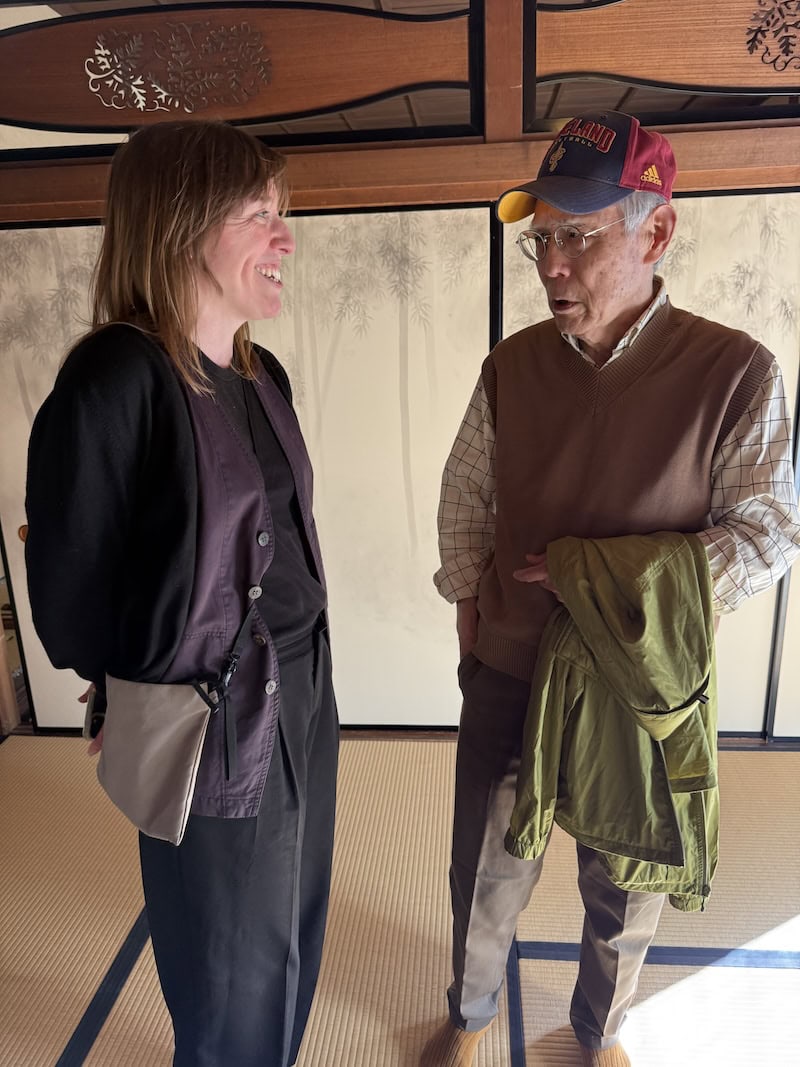 Some of the deepest learning happens when we stop talking about leadership and experience it for ourselves.
That’s what makes the Japan Leadership Experience different.
Throughout the week, you’ll learn directly from Mr. Yoshino, visit organizations that bring people-centered leadership to life, and step into real problem-solving in the gemba.
Working alongside a global cohort of leaders, you’ll experience how teamwork, visual management, continuous improvement, and thoughtful leadership come together to create better outcomes.
You don’t just hear about these ideas. You learn by doing. You experience what people-centered leadership feels like in practice and reflect together on what it means for your own leadership.
Join me, Mr. Yoshino, and my program partner Tim Wolput in Japan for an immersive leadership experience that helps bring these concepts from your head to your heart.
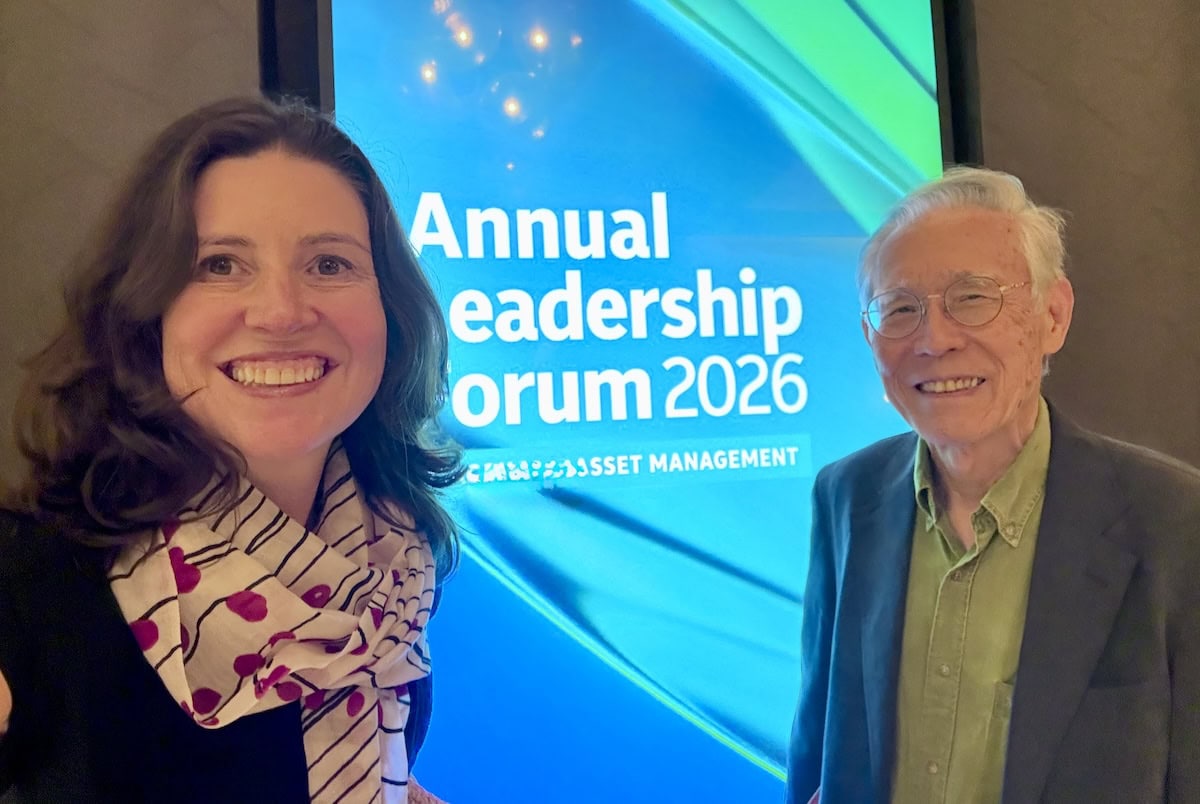
Katie and Mr. Yoshino on Stage
Just days after recording this conversation during the Japan Leadership Experience, Mr. Yoshino and I took the stage together in Tokyo for a global leadership forum with senior executives from across the Asia-Pacific region.
Together, we explored what it takes to create a culture of continuous improvement where people surface problems early, leaders respond with curiosity instead of blame, and learning becomes the foundation for lasting organizational success.
Whether I’m speaking to global executives, change leaders, or operational excellence professionals, I help leaders move beyond concepts to practical leadership behaviors that create the conditions for people-centered leadership, continuous learning, and stronger business results.
Interested in bringing me to your next conference, executive meeting, or leadership event?
Learn more about my keynote speaking and leadership programs.
Reflect and Take Action
What is your response teaching people to do?
Most of us want people to speak up when something is wrong. But I’ve found that what people learn over time comes less from what we say and more from how we respond.
Mr. Yoshino’s stories remind us that a culture of learning isn’t created by eliminating mistakes. It’s created by how leaders respond to them. At Toyota, “bad news first” isn’t just a slogan. It’s a practice built through everyday interactions that encourage people to surface problems early so they can learn and move forward together.
As you go through your week, pay attention to two leadership practices:
- Respond down. The next time someone brings you a mistake or concern, pause before you respond. What does your first reaction teach them—to surface problems sooner or to hide them next time? What would change if your response sounded more like Mr. Yoshino’s manager?
“Thank you for making this mistake.”
- Signal up. Where are you hesitating to raise a concern because it feels easier to wait? Whether you’re leading a team or reporting to senior leaders, what conversation could happen sooner so others can help before a small issue becomes a much bigger one?
Creating a culture where bad news comes first doesn’t happen because people are told to speak up. It happens because leaders consistently respond in ways that make it safe to do so.
As you go through your week, ask yourself:
What is my response teaching people to do—surface problems, or hide them?
Important Links:
- Order your copy of Learning to Lead, Leading to Learn
- Follow me on LinkedIn
- Subscribe to my newsletter
- Check out my website for resources and working together
- Join us on the Japan Leadership Experience
- Episode 21 | Leading to Learn Part 1: Build A Chain of Learning with Isao Yoshino
- Episode 22 | Leading to Learn Part 2: The Power of Reflection with Isao Yoshino
- Episode 47 | Develop Leaders the Toyota Way: Lessons from Kan-Pro with Isao Yoshino
- Episode 48 | Make Leadership Meaningful: From Tools to Purposeful Impact with Josef Procházka
Listen Now to Chain of Learning
Listen now on your favorite podcast players such as Apple Podcasts, Spotify, and Audible. You can also listen to the audio of this episode on YouTube.
Timestamps:
02:18 – Andon: Why a leader’s response matters
03:16 – The paint mistake that shaped Mr. Yoshino’s leadership
05:28 – Why Mr. Yoshino was thanked for his mistake
09:34 – The leadership lesson that lasted 40 years
11:22 – Why Toyota starts every leader on the front line
12:18 – Inside the early days of NUMMI
17:13 – Why workers were afraid to stop the line
23:34 – What changed the culture at NUMMI
24:40 – Why leaders only see 4% of problems
25:16 – Responding down instead of blaming
25:50 – Asking for help at the leadership level
28:43 – Why President Cho flew to a failing business
34:17 – The power of bad news first
35:54 – Mr. Yoshino’s biggest leadership regret
38:19 – When doing it yourself becomes the problem
39:05 – The response that creates culture
40:28 – The two behaviors every leader needs
42:02 – Two questions to reflect on this week
Full Episode Transcript
Isao: [00:00:00] So there is no secret of, of Toyota’s success. No secret. Always share and always be open, and don’t be afraid of making mistakes.
Katie: Welcome to Chain of Learning, where the links of leadership and learning unite. This is your connection for actionable strategies and practices to empower you to build a people-centered learning culture, get results, and expand your impact so that you and your team can leave a lasting legacy.
I’m your host and fellow learning enthusiast, Katie Anderson This month marks the sixth anniversary of “Learning to Lead, Leading to Learn,” and I can’t believe it’s that long since the book came out in the world. This book was created from years of conversations and reflections with my mentor and friend, eighty-two-year-old former Toyota leader Isao Yoshino.
And to celebrate the six-year anniversary, I wanted to bring you something special, I recorded live in Japan this past May during the [00:01:00] ninth cohort of my Japan Leadership experience. Getting to hear directly from Mr. Yoshino is one of the great opportunities of my program, and I wanted to share it with you, too.
If you don’t already know him, Mr. Yoshino is the subject of my book and spent forty years at Toyota from the late 1960s to early 2000s, and we’ve been partnering and learning together for over 11 years now, ever since I moved to Japan back in 2015 for 18 months. On this most recent Japan leadership experience, Mr.
Yoshino and I were also preparing for a private keynote and fireside chat the following week in Tokyo for a global asset management group’s annual leadership event for their senior executives in Asia Pacific about what it takes to create a culture where mistakes are welcomed and people feel safe to surface problems instead of hiding them.
We anchored our talks on the concept of andon, the Japanese word for signal, and at Toyota and many companies across Japan, this [00:02:00] is the signal that a frontline worker gives when something is wrong or they need help. But what matters most isn’t the signal, it’s the response. In this bonus episode, captured live from my participants as a preview for our leadership session, Mr.
Yoshino shares three pivotal moments from his career: a mistake in his first months at Toyota, how he led the NUMMI training program in the 1980s with recent guest John Shook, and asking for help to Toyota’s senior-most executive about a failing business in his final years. And it gets to the heart of a culture of welcoming bad news, mistakes, and learning, and a leader’s role in creating these conditions, in creating that culture.
The concept of andon is the thread through all of these. The leader who responds down and the leader who has the courage to signal up, whether a physical signal or a verbal request for help. You’ll find these stories in more [00:03:00] detail in the book “Learning to Lead, Leading to Learn,” and now you get to hear from Mr.
Yoshino directly. We started at the very beginning of his career at Toyota with the paint story, the big mistake he made. Let’s dive in.
Isao: Actually, it’s very interesting to know about how Toyota, um, train new people from out- outside of university. We are university graduate, we’ll be working in, in office.
However, first, uh, several months we have to, uh, have the orientation. Same time we have to work, actually work in the shop floor, uh, because we are car manufacturers. So my first assignment, I was not assigned to anybody, but in the under training department. I was assigned to Motomachi plant where we are making, uh, Cressida or small-sized car.
And, uh, my job is to, uh, prepare some paint. And from paint shop and send it, uh, through pipes to [00:04:00] actually paint preparing shop and, uh, uh, the mixture of the paint and the mi- uh, the solvent goes through the pipes to the painting shop. There it is sprayed. So my job is to prepare paint and solvent, put things together into the mixer.
And, uh, but I was so new because, uh, I was not hired to, uh, to do those paint work, but still that part of a training program. Anyway, I made a mistake. Actually, uh, I did not notice that I made a mistake, but, uh, uh, at certain timing, the paint, painting guy just rushing to painting, paint preparing shop and now something’s wrong.
The paint does not stay on the body. Something is wrong. So then my boss, my, uh, c- we call Kumicho. Kumicho is, is a group leader. And, uh, on the paint preparing shop. And so Yoshino saw, “Okay, something’s wrong,” they said. “So how did you do that?” And then I showed, “Oh, yes, sir. Just I [00:05:00] put this paint in the mixer, and I put this solvent in the mixer,” so because that was what I was told.
Then I found out I put the wrong solvent.
Katie: Mm-hmm.
Isao: Then I found out that it’s very, very similar. It looks very the same, you know, solvent A, solvent B, solvent BC. All they look the same. Same colors, only small A, B, C, or something. Small difference. So I could not notice that. So I put, you know, paint A, but I put, uh, solvent B, so it does not mix up.
But it takes a long time, maybe 10, maybe 15 minutes or 20 minutes because it goes down to the paint shop. That’s why they find out it, uh, something is wrong. Anyway, the first reaction of the paint sh- preparing shop boss, which is we call Kumicho, is a group leader. And he said, “Oh, hey, Yoshino, how, how, how did you do that?”
So he did not get excited. He did not blame me, but he just asked me, “How, how [00:06:00] did you do that?” So, “Uh, yes, sir. Just I put this, just like I was assigned. I put, uh, uh, paint A and solvent A, sir. That’s what I did.” Then I found I put the wrong solvent and, uh, in the mixer, but I did not notice that. So the boss says, “Okay, you put the wrong solvent.
Okay,” then he take a closer look. “Okay, no wonder because you are new.” So it’s not a mistake, it’s our mistake. You have, we have to prepare some newcomers to find out the right things, but we are so used to that for 20 years working here. So it was not a- it’s, it’s, it’s our mistake. So that is a reaction of the ku- kumicho, which is a, a group leader.
But before he start talking about that, I was so scared because it was… I was so new. And, uh, so they get fi- I get fired or, well, not fired, but as I- they give a very hard time, but they didn’t. [00:07:00] They didn’t say anything about, you know, about blaming somebody, but he called all the members, “Let’s, let’s get together.
Yoshino made a mistake, but it’s not his fault. Maybe it’s, it’s our fault. We have to make sure that it, that it, it will not happen again anymore.” So their reaction was so different from what I imagined. So that was my first, uh, encounter of a kind of Toyota culture. And, uh, and anyway, to make a long story short, probably, uh, close to 100 cars needs to be repainted.
It’s a lot of cost And, uh, so that what happened to me a long time, it’s 1966, uh, in a very hot summer, uh, maybe July or something. And then I shared with, uh, shared my story about, uh, other, uh, newly hired, uh, uh, university graduate. Then they had a similar experience in the welding shop and in other shops.
So it’s [00:08:00] not uncommon that we make mistakes, but first reaction of the people working over there, they don’t start blaming somebody because they know, we know that blaming somebody does not create anything, does not help anything. So that is first, first, uh, incident that I ran into about why it’s actually a part of Toyota culture.
Why these guys focusing on the cause of the problem, not focus who did stupid things? And actually, at the end of, uh, those, those arrangements, the boss says, “Yoshino, thank you very much. We are so used to this, but you, you made a mistake. Then we can, we can, uh, you know, share this experience to other factory.”
So they thanked me for my mistakes I make. Mm. That was really, really, uh, new to me. Then I was, after that, I finished everything, then we college graduate go through those, uh, uh, new- newcomer training April, May, June, July. Four months. Mm. [00:09:00] Can I believe it? We are hired to work, start working, but four months we, we receive all those kind of training.
Then in August, I’m assigned to export department, but I was so happy to find out that they did not blame me and, uh, they actually, they just, uh, sit down, discuss about what will be the countermeasure. So that is a very positive attitude. I still remember all those because that is how I started working at Toyota.
Katie: When you think back to that experience, I remember actually when we first sat down to, you know, Mr. Yoshino had said to me, “Well, maybe we should make a booklet. Um, uh, you’ve been writing about our conversations, a booklet.” And I was like, “I have a feeling it’s more than a booklet,” right? Then we sat down to work on just, I wanted to go back from the beginning.
And so we did his childhood and getting to joining Toyota. And then I remember so clearly where I was. You were s- telling that story, and you were laughing ’cause [00:10:00] you’re like, “I haven’t thought of this in, like, four or five decades.” And he’s like, “Can you believe it? They, they thanked me for making a mistake.”
And you also said to me at that point, like, they probably had that initial reaction of like, ugh, frustration, but they didn’t act on it. And I think that’s the really powerful message, is that we have a human reaction, but it’s like, what do we do with that? What did that experience, that very first big mistake experience, teach you about the type of leader you wanted to be at Toyota?
Isao: So that was a very, very fantastic experience because their attitude, just like you said, not negative. Then they… E- everybody make mistakes, so their pa- you know, their attitude is that to find the real cause of the problem. That is the first priority job they need to start, and that is what they showed it to me.
Katie: Mm.
Isao: So I found, oh, this must be part of, part of Toyota culture. And, uh, then same thing keep happening everywhere. So that is part of Toyota culture. So blaming somebody does not create [00:11:00] anything But finding the real cause of the problem, then you can share it with other departments. So actually, they did.
Katie: Mm.
Isao: Motomachi plant, which is a car, a pa- passenger car, and they shared the same, th- that story, that incident to other departments, Tsutsumi Plant and some other plant where car is manufactured, assembled. So, uh, it, they did it in a very positive way, not blaming Yoshino just is a negative, does not create anything.
That is really one of the greatest impacts to me, uh, for the entire life of Toyota.
Katie: And I think in reflection, one, one of the things I took away, too, in, is that the purpose of the orientation wasn’t just to teach the value creation work. So here he was, you know, someone who’s gonna work in the back office, was assigned for several months to go work on the front line, just like we’ve heard some other companies here.
But it was also so he could really understand the leadership and the management culture, what, what it was really like in, in, in sort of starting to, to model the way [00:12:00] of what that culture is. And I think how rare most of us have that experience in other companies we’ve joined, either knowing when the work that the company does and, two, what that culture really is.
So Mr. Yoshino, let’s fast-forward probably, it’s almost, like, 15, almost 20 years. Now you are working in the early 1980s responsible for helping a new joint venture called NUMMI, uh, and, and the leadership, teaching the frontline managers and leaders the Toyota way, the Toyota produ-production system, what the culture is about.
And this is different, because your, in your experience when you joined Toyota, they already had that culture. But here was coming from a management culture that was very confrontational. The employees were unhappy. Uh, they are poor quality, poor defects, really bad union and management relationships. What was it that changed for the Americans?
And many cohorts would come for these three-week programs that you’ve talked [00:13:00] about, a week of classroom training and then two weeks, um, on-the-job training partnered with a, a Japanese counterpart.
Isao: Yeah, well, it’s very interesting. You know, in those days, ’80s- Yeah … uh, all the Japanese car man-manufacturers, you know, To- Honda and, uh, Nissan and Toyota, we’re required to build a, a assembly plant in the United S- United States because it’s, you know, that, that is their kind of order to Japanese car manufacturers.
So Honda decided to step into Ohio, 1982, I believe.
Katie: Mm.
Isao: Then Nissan, 1983, Nissan, uh, uh, decided to step into, where is it? Tennessee.
Katie: Hmm.
Isao: Tennessee. They chose to build the plant without any any, uh, trade union.
Katie: Mm.
Isao: The trade unions, you know, so confronted. Mm. So they chose, uh, their, their own style. They don’t want to be bothered by the trade union.
But Toyota decided to work together with GM with a terrible, terrible relation between labor and [00:14:00] management is, uh, union. It’s horrible, but- Mm. So we were so surprised that how come just we are first-timer, first time, you know, getting into US market, how come just we have to challenge? And, uh, but top management, in a view, seeing the broader viewpoint-
Katie: Mm
Isao: they chose to work together with GM and ex-GM plant, which is, um Fremont plant and the workers’ quality- not quality, workers’ attitude was we are told terrible. They steal, they bring back those hammers, all those, and there’s the steals and they’re lazy. The worst, uh, uh, workers in the entire world. That what they say.
So Toyota decided to, to hire those ex-GM terrible, what they say, terrible people- Mm … same people start working in the new company. So we are so shocked again. So how come we have to try all those things we don’t know anything about American culture, but how [00:15:00] come? So we are talking about this, uh, within our, uh, newcomers.
Then we found out that, you know, top management of course know about it. It’s so, so difficult to work with the most difficult task to start with. Mm. But one of the big shots that told me that, “Hey, Yoshino just, uh, w- if we work, try the most difficult task, and if work so hard and find some solution, then it’s gonna be a strong point.”
How come that Honda and Nissan did not do, did not have to do that? So- Mm … it’s amazing. Bosses also view things from a longer viewpoint. Mm.
Katie: Mm.
Isao: So that was, that was a time I found out that, uh, okay, Toyota top leaders all, always view thing from a longer viewpoint. Mm. Not next year, not, uh, uh, within two years, but five years, 10 years, 15 years.
So that was… Because my, actually my cousin used to work for Nissan, so, uh, every time I meet him, he was talking about [00:16:00] Nissan and, uh, he asked me about how is Toyota. So, uh, you know, at the time, Nissan has been, uh, believed one of the, one of the greatest, uh, auto company. However, I found out, okay, Toyota’s culture and Nissan’s culture is so different.
That was a really, really so… Give me so much impact about, particular about top management. The way they view things is different. Always long-term view, and also most important thing that many American people said that… Not American people, the American auto people, that workers on the shop floor in America are terrible people.
Katie: Mm.
Isao: Can you believe it? They just talk about their own people and they d- they just talk so bad about the workers shop floor. I was so shocked.
Katie: Mm.
Isao: But later I found out the relation between labor and management are horrible, and that’s no wonder GM’s fell down.
Katie: Mm.
Isao: But, uh, so, uh, we, our job is [00:17:00] to treat them just like we treat other Japanese people, same way, same believable, just like, just like family members.
Katie: You’ve told me when the Americans would come, and it would be these multiple cohorts, like hun- many, many came through, and they would have these aha moments. There would be something that switched for them, and there would be this classroom training. And I remember you told me, like, you talked about the concept of andon, that they would be signaling to stop the line if there was a problem, and they said, “There’s no way we can do that, ’cause we would get fired if we, we showed there was- Right.
Yeah … a quality issue.” And, and they get, “There’s no way.” And he said, “Well, you’re going to be doing this next week.” And so what happened out on the front line when they were there for two weeks and saw their Japanese counterpart
Isao: signaling that- Was very interesting. The T- T- GM, To- GM, Toyota worked so hard to establish joint venture, but management is taken care of by Toyota leaders.
Workers, uh, they come from GM. It’s very good mixture. Mm. Anyway, [00:18:00] one of the first, uh, first, uh, uh, decision is they made that, okay, they are taking care of the terrible bosses- Mm … so our top management thought. So we have to help them to find a new way of doing things on Toyota style. Mm. The one of the best ways to bring all those, uh, uh, working level leaders, so we call it group le- group leaders and team leaders- Mm
they’re workers. Yeah. So leaders, group leader, team leaders, and all the group leaders are in, in one group, 30, 30 people. They decided to send, uh, all those 30 group and team leaders to Japan for three weeks training in Japan, in Toyota City. And three weeks, so my job is to, to prepare all those orientation, all the, all the training program, only three weeks.
But I was told so many, by so many people, “But hey, Yoshino, congratulations on your new assignment. However, it’s impossible, that they are terrible people. How come s- you can change your, [00:19:00] the attitude within two or three weeks?” Mm. So I was so shocked because, oh, all the Toyota managers believe that I’m assigned to change their culture, way of thinking within three weeks So I was so shocked because all the Toyota people ex- you know, are seeing that, oh, Yoshino is responsible for the changing the attitude.
No, no, no, it was my it was not my job. My job is, you know, provide opportunity for those workers, uh, w- these American leaders who are, are said to be wild and lazy people. Mm. My job is to provide all the opportunities for them to learn Toyota culture by themselves, and then finding out whether that is good or bad.
Katie: Mm.
Isao: So we did not say, “This is great, great way of doing things, and GM is no good.” We did not say anything about it. Mm. We don’t criticize anything. Our job is provide opportunity for them to learn by themselves. So we can provide anything, just show it to them and make them [00:20:00] decide. Mm. And I j- discuss, of course, uh, familiar with John Shook, right?
Yes. And, uh, John Shook agrees with my idea. So it’s, it’s amazing that we provide opportunity and watch them carefully, then they change. Each day they change their attitude, way of thinking change. Slowly, slowly toward Toyota’s… It’s amazing experience.
Katie: What happened when they… So they were partnered with a similar role counterpart, a Japan- uh, a Japanese person, and they didn’t speak each other’s language until, you know, they were just figuring it out, like how, uh, we all have been doing, you know, in partnering and, and finding the way.
But first, when they were in the classroom training- Mm … when they said, “No way would we, you know, signal the Andon,” what happened? What, you know, what changed for them when they started seeing their Japanese counterpart saying, “We have a problem. I need help”?
Isao: Yeah, it’s, it’s very interesting because all the GM, ex-GM people, they, they are not supposed to stop the line.
Katie: Yeah,
Isao: yeah. Because they get fired, so they don’t care about whether [00:21:00] there’s some- something is wrong, but they have to put, put it to the… So at the end of the entire line, they s- s- line off, then people come over and fix it.
Katie: Mm.
Isao: So that is the way they did. So they did not even think about that is right or wrong.
But for, from a Toyota viewpoint, it is wrong because you have to fix it right away. So they, line stop is w- you, you call it Andon system, right? Mm. Yeah. A- Andon, Andon is a, Andon is a, a lantern in Japan, but Andon mean the sign board when something wrong happens on the shop floor from the quality point of view, then shop floor leaders try to fix, need to, uh, fix it right away while the car is, is moving on their area.
But if he or she cannot checking and changing everything, correcting it, then we don’t want that car with the correct part, correct, uh, you know, connection to the next phase. So you have to stop it. So we have to push the button, then Andon lit up there.
Katie: Mm-hmm.
Isao: And, uh, bell rings or something. [00:22:00] We explained that to GM people, then they just stand up and, uh, “No, no, no, you cannot do that.
We cannot do that.” Mm. So they, because they get fired. But within Toyota- We are supposed to do that because we have to be sure that we have make the right, uh, quality car to the next stage. It is our, our responsibility. So totally opposite way of thinking. Those American workers, leaders, experienced those things with their own eyes, and they are so shocked.
Katie: Mm.
Isao: So they keep asking Japanese, uh, counterpart of, “Is this really okay that I can stop the line if I find out I cannot, uh, you know, I cannot fix it, uh, while the car is on, on this line?” Then of course you have to do, you have to stop it and fix it. And of course, they, they’re so scared, but they know that this is Toyota style.
Katie: Mm.
Isao: So, uh, they learn by themselves that which is better. The point is that we Toyota training, [00:23:00] uh, uh, staff, including me, we did not tell them what they need to do. We provide opportunity to them, then they are working together with their partners and the Toyota workers. They learn from them, and they found out, oh, Toyota’s style is much, much better.
Mm. Much, much better. It makes us feel good. So that is what I have witnessed every time we receive, uh, uh, 30 people, uh, from, uh, from US, and it is amazing experience.
Katie: And a few years later, Mr. Yoshino had a chance to go and l- live near the NUMMI plant, near where I live, uh, now, and working, you know, directly with people in, in the factory.
And he would go, and I remember, it’s in our book, too, at the end, you, you said some of the, the people he had trained came up to him and so- were just, like, so happy that this was the new culture and their new way. Like, it works. And it really was something … It wasn’t forced, but they saw a different way. And I think that really speaks [00:24:00] to all of us as, as leaders.
It’s like our response as leaders creates the culture that we want, right? All of us have been seeing here, if we, it, say that, you know, some metrics are driving a certain way, that we don’t want any defects, well, if people are afraid to hide, you know, hide anything, then they may still exist, but they’re hidden.
And so, you know, for leaders, probably only 4% of problems are actually visible, so we need the people closest to the work signaling that there is an issue so that we don’t have catastrophic things at the end of the line. We, we catch the small things as it’s coming, coming down the line, right? Not at, not until the end.
So that’s that concept of andon that we’ve been exploring here this week, and you’ve heard from Mr. Yoshino more on the, the f- the The front line side, but you can still take that concept of andon at the leadership level. So if we stake- take these framing of, you know, bad news first and no problem’s a problem, and the concept of signaling when you need help when something’s going wrong, [00:25:00] and then the leader’s response to come provide help.
And I think that’s a really important distinction, too. It’s not just saying to people, like, “We empower you to stop the line,” or, “We empower you to say that there’s a problem.” It’s the leadership response to that. So, you know, if you’re blamed or, you know, is there something punitive when that problem comes up, then, then it’s not gonna reinforce.
So I wanna talk to you, Mr. Yoshino, when you did something more at the leadership level. You know, it wasn’t a physical andon that Mr. Yoshino pulled or signaled, but at the end of his career when he was running the water ski boat business, there were a lot of big problems going on, and ultimately, he kind of pulled a leadership andon and signaled and reached out to Mr.
Cho, who was the most senior leader, he was the president of all of Toyota Motor Corporation, that there was a problem in this small segment of the business that, which is a, you know… It wasn’t even core to the auto business, and asking for help, and [00:26:00] Mr. Cho came. And Mr. Yoshino, I wanna talk to you about, and hear from your experience, what was that like for you to have Mr.
Cho come out to Orlando, and what was his response when he showed up? And what, what, what do you believe are the real reasons? Actually,
Isao: Mr. Cho was the, one of the, uh, o- one of the finest president of Toyota. He does not come from Toyota family, by the way.
Katie: Mm.
Isao: And he was chosen as the president because of his personality.
Mm. He’s a good listener. One day, I have a cha- Mr. Cho visited, uh, all over the… Well, excuse me, all over the world very often. And, uh, we Toyota people working in the Los Angeles, about 70, 70 people, so many. So m- Toyota people, Japanese Toyota people, including me, that working over there. Every time Mr. Cho comes, they get together and update with Mr.
Cho. And all other salespeople-
Katie: Mm …
Isao: you know, selling so good, so they have a, a very good story to share with Mr. Sugiura. And, and, uh, all [00:27:00] the Toyota people, Japanese, uh, the Toyota people sent from Toyota City or Nagoya, then they are so proud of being number one, uh, car, car seller in, in, in the world or something.
But I’m part of, uh, part of the, the Toyota guy working in the Los Angeles area, but boat business is really nothing. Mm. See? People don’t care about boat people. But I was given the chance, uh, to- To talk with, uh, Mr. Cho and, uh, all other Japanese people, Toyota people sitting over there. Then, um, it’s, it’s, it’s my turn.
So Mr. Cho says me, “Hey, Yoshino, just you, you… I know that you’re working the, on water ski boat.” Well, yeah. Do you know the water ski boat?
Katie: Yeah, yeah, yeah.
Isao: And we put the Lexus engine, 300 horsepower. It’s, it’s the best fit. So that was my idea. It was perfect. To make a long story short, it’s, uh, we make it happen.
Then, uh, uh, um, I was sent to US and, uh, start that project. Then all other Toyota sales, uh, staff from Toyota, Japanese people just laugh at [00:28:00] me. Oh, okay, so that Mr. Cho is not so interested in this small, tiny, tiny project, but Mr. Cho is ready. “So Yoshino, how are you doing? I know you’re, it’s not a easy job to do.”
“Yes, sir. So- so it is so.” Then I start explaining and, uh, to make a long story short, Mr. Cho just, uh, “I am in, in trouble. I’m in trouble because it’s, there are so many, uh, problems. I’m not expecting you to solve the problem, but I… If you have any time available this, and your next, uh, uh, time you come to the United States, please just try, try to find one day to fly to Orlando, please.”
Then other Toyota staff members sitting over there laugh at me. How come just Mr., Mr. Cho i- is responsible for all the Toyota sales in the US, but how come does he pay m- he won’t pay any attention to the small, nothing, meaningless pro- uh, boat project? Mm. But [00:29:00] he said, “Oh, Yoshino, so I heard that you’re struggling.
Uh, let me find out w- how, whether I can, I can make it happen.” Then couple of weeks later, his secretary call me, “Yoshino San, you made it. Mr. Cho will find one day- And, uh, so he actually made it. Mm. But I knew, uh, later I knew that Mr. Cho that, “Okay, this project, uh, is, is bit difficult to continue.” So he knew before he flew in, he knew that I’m failing, the project is falling down.
He knew that, but still he decided. Then what is the purpose? He thinks that he want to show the top management of Toyota, just visit Orlando, Florida, just small, tiny, stupid project. Still he pay, pay much attention because it’s part of Toyota’s project. It was pr- he was, he pr- approved. He s- put the stamps on the…
So he want to show not only to me or to other people, he want to show his [00:30:00] attitude, his, his way of thinking as a president. We, I have to, uh, uh, take care of the people equally. He wanted to show to other people working about 55 or 6. So that is his, that was his intention to fly. He did not come fly to, to help my project.
It was, he could not. He knew that. I knew that. I was so happy that Mr. Cho that, uh, how the, the top leader needs to behave. Mm. Very, very powerful
Katie: It’s so interesting you had these two, like, bookends of your experience, the first year, the first few months, and then almost in the last few years of different mistakes, different problems, different failures at different scales, but the response from leadership was the same.
Thank you for trying. Thank you for making the mistake. It- thank you for, you know, being there and, and showing up when there was a problem. So this is really powerful into how we can make this [00:31:00] shift, uh, as well in the organizations. I have one last question for you, Mr. Yoshino- Sure … and then we can open it up, um, to questions here.
We’ve talked about that there are two primary roles in leaders, for leaders at Toyota, that they have two different focuses, and maybe you can talk about what those focuses are for, for leaders, especially leaders here who are trying to create this type of culture that gets results through developing people.
Isao: Well, I don’t know whether I know the two of them, but, uh, one of the things which makes Toyota’s, uh, uh, top management attitude is that, uh, they are ready to listen- Mm … and also accept failure. They are welcome failures. They are not recommending us to fail, of course not.
Katie: Mm.
Isao: But failure could happen, but if you don’t step forward, then you cannot s- succeed, succeed or you cannot fail.
So once you step forward, something would happen. So, uh, if you fail, that is a sign that you try [00:32:00] something. Mm. So that is what Mr. Cho believes is so important. Again, by visiting my small plant, many people think it’s a stupid project, but he decided to fly in together with Mr. Jagao, who is the vice president.
Can you believe it? President and vice president, two guys, while they are so busy, but flew in Orlando, Florida to visit my small, tiny plant. Mm. So that is a sign not only to me, but to all the Toyota people that boss is always very equal, very, um, un- worried about all those things, how we can help. That is w- their attitude.
Mm. And so that makes Toyota maybe different from other companies. And also another thing which impressed me so much, he knew that I’m failing, but still he flew over, spent so much time and energy. That is a sign that I am always try to take care of the people same way. Even though Yoshino failing, so many people just laugh at me, and, “Oh, Yoshino [00:33:00] failing.”
I know that from the beginning he, he’s gonna fail. I knew that. Ma- many people say that. But Mr. Cho makes all the researches how things are going without me knowing about it. So he wanted to help me out in a certain way, in his own style. It didn’t work out because I was terrible. But, uh- Uh, anyways, that is the attitude that, uh, top management showed to us, not only to me, but, uh, to all the Americans, uh, American high-rank people at, uh, Los Angeles, California.
So it was probably he did it not to help me out, just to give some kind of to all the American high-level people, but this is how Toyota’s top management, uh, would like to do. Mm. I never asked Mr. Cho about it, but that is, that is what I’ve heard from Mr. Jagoe, from other people. Mm. Anyway, so [00:34:00] I didn’t want to share it with you, but Katie is so s- so smart.
She, she always give me a lot of, lots of questions. So I have no choice to answer, so, uh…
Katie: Can you believe it’s been 11 years now that we’ve been partnering together? Lots of questions and lots of learning. There’s one moment in the water ski boat story that really stands out to me, and one that I wrote about in “Learning to Lead, Leading to Learn.”
When Mr. Cho arrived at the boat factory in Orlando, even though asking for help for the bad news was the very reason Mr. Yoshino had asked him to come, Mr. Yoshino started by highlighting all the good things that were going on. Mr. Cho stopped him. I asked Mr. Yoshino to tell that part of the story and the impact it had on him
Isao: Bad news first is a very, very important at Toyota.
Maybe in other companies, I don’t know, maybe it’s not. Bad news. And, uh, so that is to- one of the Toyota culture. It’s, it’s [00:35:00] not that they encourage us to fail, but bad news could happen. But w- at Toyota, bad- when you have bad news, but you want to hide it, many people. But at Toyota, we don’t want to sh-share it with our people, but we have no choice because if we shared with other people, maybe you receive some input or some help.
If you hide it, then they will stay there forever.
Katie: Mm.
Isao: It’s no good for you, for the organization who, who w- forever. So bad news first is a very, very important concept within Toyota. That’s why we Toyota people just, we make mistakes. Of course, we don’t- nobody wants to intentionally make mistakes. We try our best to make it happen.
Yeah. But it’s so many things happen.
Katie: Later in the conversation, we opened it to questions for the Japan Leadership Experience participants, and one of our group members asked Mr. Yoshino to reflect on his own biggest lessons over his 40 years at Toyota. And if he could go back to earlier in his career, what would he do differently?
Isao: [00:36:00] Well, actually, I should have spent more time and energy to prepare and to share my feeling, my opinions to, to my team, but I, I did not fail it, but it was not enough. And, uh, so I, no rush when you start something new, uh, we have spent more time than we think we need it. And so, uh, I’m not supposed to, to listen to the people who are rushing so much.
And, uh, so I made a million of mistakes, and, uh, I feel so sorry about, uh, my failure again. But, uh, same time, um, I learned so many, so many great lessons. Mm-hmm. You know, my regret is that I, I d- I have not shared with, w- with, with my learning with other people. Actually, this is f- actually the first time we talked about it, and, uh, maybe I should have talked about it, uh, with the Toyota people and ba- but I don’t know whether they are ready to listen to me because, oh- Mm
old, old-timer. [00:37:00] No need to listen to them. Mm-hmm. But I made a lot of, lot of… Not made, but I, I have a lot of, uh, experience of failure. Why failure? I did not in- intend to make failure, so I failed with so many reason. One reason because it’s people. I have to be patient to work together and create a bond between me and subordinate.
But I, I brought in a younger engineer-
Katie: Mm …
Isao: and I, and, well, he has big future. Mm-hmm. And so I don’t want to hurt his, uh, his career, so I did not, uh, uh, uh, spend too much time with him and to help him out. But so the, there are so many lessons I learned, and I regret. I still a little bit regret- Mm … I have not done.
Anyway.
Katie: Yeah, there’s so, there’s so many lessons, and there’s more reflections he’s shared, um, in the book, too. And I think it’s some things that happen to all of us, like you can intellectually know something, and in the moment, feel the pressure. I mean, one of the reflections Mr. Yoshino shared [00:38:00] that’s captured in “Learning to Lead, Leading to Learn,” is that he knew he should engage his team in the strategy, but it felt easier in the moment and faster to just fill out his Hoshin by himself or the company’s Hoshin by himself and not engage his team.
And so they weren’t aligned truly on… They didn’t understand the reasoning behind the goals and the targets and the process. And so that was a big reflection that I took away, too, and I think it really, to me, speaks to the pressures we often all feel is like, it feels easy to shortcut the process. You know the right process, but under the feeling of time pressure and urgency, it’s like, “I’m just gonna do it myself.”
And at the end of the day, that actually does a disservice.
Katie: These three stories are some of the most important and powerful ones I’ve heard from Mr. Yoshino, in large part because they contrast with most of our experiences inside organizations. What would have happened in your company if you’d made a huge mistake as a new hire, like Mr.
Yoshino did? Would you have [00:39:00] been yelled at, blamed, or even fired? This is the story that I tell the most, the paint mistake, because of the power of the leader’s response. His managers not only didn’t blame him, they thanked him. “Thank you for making this mistake.” Wow, what an impact, and what a difference that makes And at Toyota in Japan, the American frontline leaders from NUMMI discovered a better way for themselves, not because they were just empowered to pull the andon, but because of how their leaders responded when they did.
It’s not just the signal, it’s the response. And at the end of his career, it took real courage for Mr. Yoshino to ask President Cho to share bad news and to come see a business that was failing. Consider the intention and the impact [00:40:00] of Mr. Cho flying all the way to Orlando to see a business that he knew couldn’t be saved, not because he thought he could save it, but to show everyone around him this is the importance of leadership.
This is what leaders do, showing up to embrace bad news first, learning, and improvement. And even though some things can’t be saved, what’s always important is how you show up and how you create the conditions for ongoing success and learning your way forward. This is the secret to Toyota’s success. This is the line that I open “Learning to Lead, Leading to Learn” with.
The only secret to Toyota is its attitude towards learning, and that goes to an attitude of people first, of bad news first, and embracing mistakes as a source of learning. This also asks two shifts of every leader, actually, of all of us, no matter our role, [00:41:00] how we respond down. When someone signals a problem, how do you show up to help and not blame?
Say thank you. Thank you for making this mistake. And how you signal up, how you have the courage to raise your hand when something’s off course. This can be really scary to do, especially if you’re a senior executive and sharing bad news with your board or a frontline manager knowing that you’re not gonna hit the deadline.
But a culture of bad news first only works if people are both willing to signal up and respond down. It works together. Because it’s really not the mistake or the bad news itself that builds a culture of improvement, of success. It’s the leader’s response and how they show up to create the conditions for that to happen As you reflect on this episode and conversation with me and Mr.
Yoshino, think about your own teams [00:42:00] and your own response. First, on responding down. When someone makes a mistake or signals a problem, what is your first response, and what does it teach the people to do? Surface it or hide it? What would change if you or the leaders around you met a mistake with a thank you?
Thank you for making this mistake. Try it out this week and see what shifts. And second, about signaling up. Where does it feel safer to hide bad news or to downplay signs that something’s going off course? How could you signal up sooner so that help can come to course-correct before it’s too late? I’m thrilled to be celebrating the sixth anniversary of “Learning to Lead, Leading to Learn.”
Thank you for being a part of Mr. Yoshino’s and my Chain of Learning, for reading the book, writing reviews, applying what you’re learning, and sharing its impact with others and with us. Nothing lights me up more than [00:43:00] hearing how the book is impacting you and your teams six years on and counting. And if you haven’t read it yet, you’ll find Mr.
Yoshino’s stories about Konpro and NUMMI and so much more details on everything that you heard here. “Learning to Lead, Leading to Learn,” is available in paperback, hardbound, e-book, and audiobook, narrated by me with some insights from Mr. Yoshino and John Shook, as well as the companion workbook that takes you deeper into your learning and reflection.
You can go to learningtoleadleadingtolearn.com or find the books at your favorite online retailer. And if you want to experience this type of immersive learning in person, I invite you to join me for the next Japan Leadership Experience. Don’t miss the chance to spend a week not only with me and other incredible leaders around the world, but learning alongside Mr.
Yoshino in person in the birthplace of the Toyota Production System. It’s a transformational experience and a lot of fun, too. [00:44:00] Learn more and apply today at kbjanderson.com/japantrip. If you enjoyed this conversation, be sure to follow or subscribe to Chain of Learning and share this episode with another leader who’s working to build a culture where bad news is welcome.
And I’d appreciate it if you leave a rating or review of Chain of Learning on your favorite podcast player. It really helps to grow our Chain of Learning around the world. Thanks for being a link in my Chain of Learning today. I’ll see you next time. Have a great day.
Frequently Asked Questions
What is andon in leadership?
Andon is a Japanese word meaning signal. On a production line, it’s a cord or button a worker uses to flag a problem they can’t solve in the time allotted. As a leadership practice, andon applies at every level: it’s how anyone, from a frontline worker to a CEO signaling up to the board, makes a problem visible, and how leaders respond to help. The signal matters less than the response it triggers.
How do leaders create psychological safety at work?
Psychological safety isn’t created by declaring it. It’s built by how leaders respond when people take the risk of surfacing a mistake or bad news. When the response is support instead of blame, people learn it’s safe to speak up, and problems surface early enough to fix. A simple “thank you for telling me” does more to build psychological safety than solving the problem yourself.
Does welcoming problems improve safety and performance?
Yes. The same culture that makes it safe to raise a safety issue makes it safe to raise any problem, so quality, cost, and productivity improve alongside safety. When Paul O’Neill made worker safety the top priority at Alcoa and built the conditions for people to report issues the moment they saw them, performance followed and the company’s value grew. When you create the conditions for people to signal problems, high performance follows.
What does “bad news first” mean in leadership?
“Bad news first” is the practice of surfacing problems, mistakes, and failures early, before they grow, rather than hiding them to avoid blame. It recognizes that the bad news usually already exists; it’s just invisible. Leaders make it real by welcoming problems and responding with support, so people bring issues forward instead of burying them.
Does Katie Anderson deliver keynotes on this for leadership events?
Yes. Katie Anderson delivers keynotes and custom leadership sessions on building a culture of continuous improvement, psychological safety, and welcoming bad news, for corporate and executive audiences. These stories and frameworks were most recently the focus of a keynote and fireside chat she delivered with Isao Yoshino at a private global asset management group’s annual leadership event. To bring this to your leadership team or event, visit KBJAnderson.com.
Subscribe to Chain of Learning
Be sure to subscribe or follow Chain of Learning on your favorite podcast player so you don’t miss an episode. And share this podcast with your friends and colleagues so we can all strengthen our Chain of Learning® – together.