




How Do Leaders Adapt Their Leadership Style to Different Situations?
Leaders adapt their leadership style by pausing long enough to assess what the person needs for the specific task or situation, then flexing their behavior to match that need rather than defaulting to their preferred style.
Leadership consultant Katie Anderson talks with Suzie Bishop, VP of Product Development at the Center for Leadership Studies and co-author of Situational Leadership, who shares a practical framework for reading what each person needs and matching your leadership style accordingly, from directive to delegating, so leaders and coaches can move from a one-size-fits-all default to leading through influence.
Why Leadership Adaptability Matters
Your leadership style may not be what’s holding you back. It may be how often you default to it.
The gap between how you’re leading and what the person in front of you actually needs is one of the most common—and often invisible—places leaders get stuck. Most of us have a natural leadership style we default to and don’t recognize the match-mismatch until something breaks down. Research from the Center for Creative Leadership reinforces the importance of adaptable leadership and the ability to flex how we respond as circumstances change.
Suzie Bishop, Vice President of Product Development at the Center for Leadership Studies, has spent over a decade helping leaders strengthen their leadership effectiveness and adaptability.
In her new book, Situational Leadership: The Model for Leading Others, Navigating Change and Unlocking Performance, she brings nearly sixty years of Situational Leadership research into a practical framework for reading the situation, building leadership flexibility, and adapting your approach.
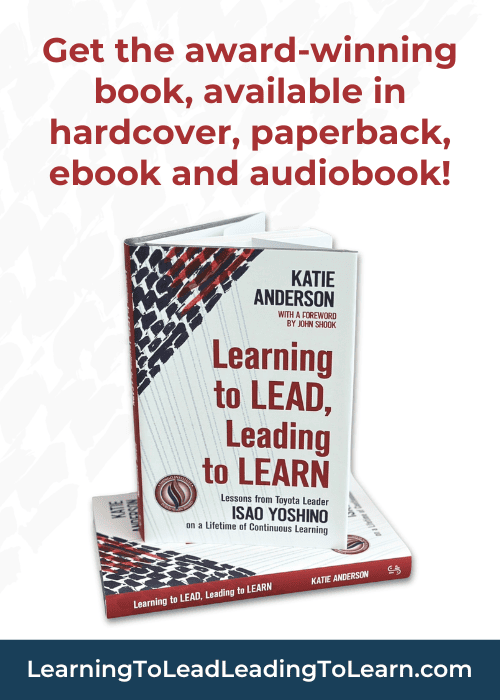
Katie Anderson is an internationally recognized keynote speaker, Shingo Award-winning author of Learning to Lead, Leading to Learn, and leadership consultant who helps leaders create people-centered learning cultures where people and performance thrive. As host of the Chain of Learning podcast, she explores practical ways leaders can create the conditions for people to learn, grow, and take ownership.
In this episode, Katie and Suzie explore the four Situational Leadership styles, as well as how leaders can move beyond their default leadership style and adapt how they lead to what the person and situation actually need.
They discuss how leadership adaptability helps you know when to be more directive, when to coach and ask questions, and when to step back and delegate—while continuing to create the conditions for people to learn, grow, and take ownership.
Effective leadership isn’t about picking one leadership style and committing to it. It’s about developing the flexibility to use different approaches, pausing to assess what the person and situation need, and adapting how you lead so that your influence has the impact you intend.
In this episode, you’ll learn:
✅ Why “leadership is influence” reframes how you lead, and why influence has nothing to do with manipulation or control
✅ How to diagnose what someone needs, and why one person can require four different approaches in the same conversation
✅ How leadership flexibility and adaptability differ—and why knowing the styles isn’t the same as knowing when to use them
✅ Why only asking coaching questions can leave people stuck, and how to know when to step in with more directive leadership
✅ How the “power of the pause” helps you move from reacting out of habit to adapting with intention
Listen Now to Chain of Learning!
Tune in to learn how to move beyond your default leadership style and adapt how you lead to what the person and situation actually need.
Watch the conversation
Watch the full conversation between Katie Anderson and Suzie Bishop on YouTube.
 About Suzie Bishop

Suzie Bishop is an established leader in workplace education and leadership development, currently serving as vice president of product development at The Center for Leadership Studies (CLS). She holds a Bachelor’s degree in Communication and Media from North Carolina State University. Since joining the team in 2012, Suzie has played a pivotal role in revitalizing the brand, leading award-winning initiatives and driving innovation in experiential learning.
A Certified Professional in Training Management (CPTM) and Stakeholder Centered Coach, Suzie is also a Marshall Goldsmith 100 Coach, a Thirty Under Thirty Leader recognized by Elliot Masie and is the co-author of CLS’s latest book, Situational Leadership®: The Model for Leading Others, Navigating Change and Unlocking Performance.
Reflect and Take Action
Before you adapt, pause.
Most of us don’t struggle because we lack good intentions. We struggle because we move too quickly into the leadership style that feels most natural to us.
That’s when we can slip into the doer trap — giving too much direction, asking questions when someone actually needs support, or stepping in before we’ve really understood what the situation calls for.
The practice is to create enough space to notice the mismatch before reacting.
Before your next conversation, try this:
- Take an intention pause. Give yourself five to ten seconds before responding.
- Notice your default. Are you about to tell, ask, coach, encourage, or step back because that’s what you usually do?
- Assess what this person needs right now. Consider the specific task, their experience with it, and what will help them move forward.
- Flex your approach. Choose the response that fits the situation rather than the one that feels most comfortable to you.
- Stay focused on ownership. Ask yourself whether your response is helping the other person learn and grow—or pulling the problem back onto you.
Flexibility is having different leadership approaches available to you. Adaptability is knowing which one this moment calls for.
So before your next interaction, ask yourself:
What does this person need from me right now—and how might I need to flex from my default?
Important Links:
- Connect with Suzie Bishop
- Purchase a copy: Situational Leadership: The Model for Leading Others, Navigating Change and Unlocking Performance by Suzie Bishop and Sam Shriver
- Learn more about The Center for Leadership Studies
- Follow me on LinkedIn
- Subscribe to my newsletter
- Check out my website for resources and working together
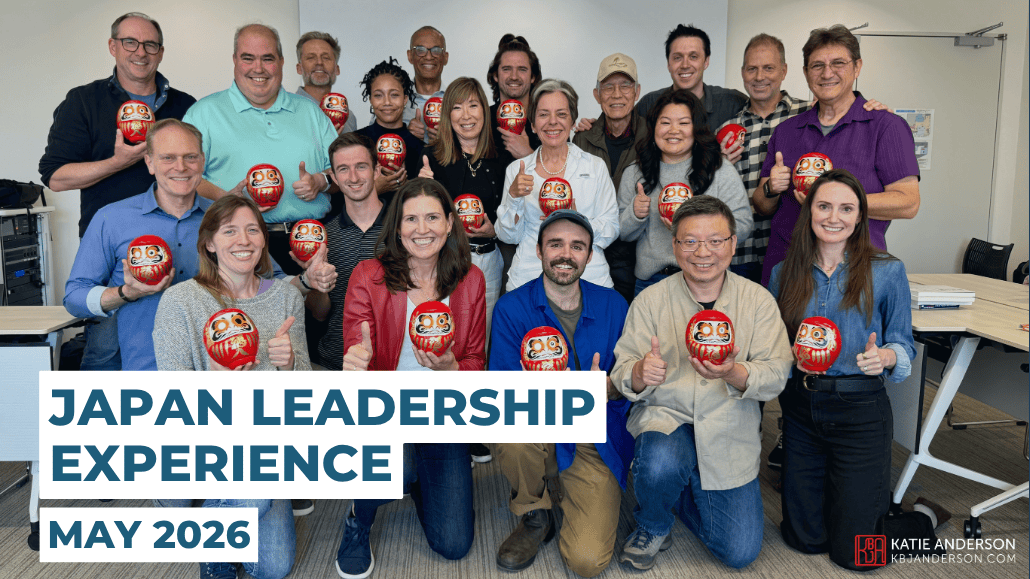
- Join me on the Japan Leadership Experience
- Episode 56 | Slow Down to Speed Up: The Power of the Pause to Accelerate Continuous Learning
- Episode 71 | Own the Thinking Process, Not the Thinking: How Leaders Build Problem-Solving Capability
- Episode 44 | Master the Coaching Continuum and Become a Transformational Improvement Coach
Subscribe to Chain of Learning
Be sure to subscribe to Chain of Learning on your favorite podcast player so you can build high-performing cultures of continuous learning. And share this podcast with your friends and colleagues so we can all strengthen our Chain of Learning® – together.
Frequently Asked Questions
What is Situational Leadership?
Situational Leadership is a framework that helps leaders adapt their approach based on what the person they’re leading needs in a given situation. Rather than defaulting to one style, leaders learn to assess readiness and respond with the right balance of direction and support, using four styles that range from highly directive to fully delegating.
What are the four Situational Leadership styles?
The four styles are telling (high direction, low support), selling (high direction, high support), participating (low direction, high support), and delegating (low direction, low support). The key is that none of these is better than the others. The right style depends on the individual’s readiness for a specific situation, and the same person may need different styles for different responsibilities.
How do I know which leadership style to use?
Start by assessing what the person needs for the specific situation, not who they are in general. Look for cues: are they new to this and seeking direction, or experienced but needing encouragement? Suzie Bishop and Katie Anderson both recommend practicing the “power of the pause,” taking even a few seconds before a conversation to assess the situation rather than defaulting to your natural style. Learn more in Katie’s podcast episode Slow Down to Speed Up: The Power of the Pause, her Industry Week article on the power of the pause, and her Forbes article on the leadership power of the pause.
Timestamps:
00:54 – When your leadership approach isn’t landing
02:52 – Why leadership is influence, not control
04:43 – Creating the conditions without controlling
06:51 – What Situational Leadership looks like in practice
07:35 – Flexibility vs. adaptability: the critical difference
07:48 – The four Situational Leadership styles
10:03 – What happens when leaders default to one style
11:41 – How to recognize your natural leadership tendency
13:08 – When asking questions isn’t effective coaching
15:05 – Why the same person may need different leadership styles
16:46 – How to be directive without taking away ownership
17:37 – The cost of not adapting how you lead
20:46 – Leading with people, not through them
21:37 – Why organizations need a common leadership language
24:05 – Creating the conditions for people to ask for help
24:26 – Suzie’s new book with Marshall Goldsmith
25:24 – The leadership challenge even top executives struggle with
29:06 – How to give direction without taking over
30:33 – Influence versus control when you have authority
31:06 – Three types of power that shape your influence
32:51 – Why trust is your most important source of power
33:55 – The power of the pause
36:02 – The difference between flexibility and adaptability
37:08 – Practice an intention pause before you respond
Full Episode Transcript
Suzie: [00:00:00] But throughout our training, there’s always like this aha moment. Usually it’s when people get their assessment feedback, or when we start going through some of the exercises, and it’s like, oh, that’s why like when I delegated that individual that I’m leading looked at me with a blank stare, or like that’s why that project didn’t move forward in the way that I thought it would, is because they’re using their natural tendencies versus the one that that individual needs.
Katie: Welcome to Chain of Learning, where the links of leadership and learning unite. This is your connection for actionable strategies and practices to empower you to build a people-centered learning culture, get results, and expand your impact so that you and your team can leave a lasting legacy. I’m your host and fellow learning enthusiast, Katie Anderson.
You know when you’re helping someone on your team with a problem or a project, and you can feel that what you’re saying isn’t landing. You’re asking open-ended questions, but you can see they’re getting frustrated. Perhaps [00:01:00] what they actually need is more direction on what to do, not more questions on what they might do.
Or you’re giving a lot of directive instruction, and they’re shutting down because they actually already know what to do. That mismatch between how you’re showing up and what the other person actually needs in that moment is one of the most common and most invisible leadership gaps. Most of us were never taught that different situations call for different leadership styles, or even if we know that, how then we might flex between those styles.
We are taught an approach: be collaborative, be empowering, ask questions, or be directive, be the leader with the answer, and then we stick with it. It becomes our default. But the people we lead or wanna help don’t just need one thing from us. Whether they’re team members, direct reports, or even our friends and family, they need us to flex.
And getting that match right between what they need [00:02:00] and how we show up is what separates a leader or coach who’s well-intentioned from one who’s truly effective. My guest today is Suzie Bishop, vice president of product development at the Center for Leadership Studies and co-author of the new book, “Situational Leadership: The Model for Leading Others, Navigating Change and Unlocking Performance.”
She’s also a Marshall Goldsmith one hundred coach and is working on a second book with Marshall about situational coaching that’s coming out later in twenty twenty-six. So stay tuned to hear more about that. I was excited to receive an early copy of, “Situational Leadership.” And as I was reading it, I was struck how it opens with the premise that leadership is influence, which is something I talk about a lot in my work too.
So I started our conversation by asking Suzie, what does leading through influence really mean, and why is influence the anchor of situational leadership? Let’s dive in.
Suzie: I think the reality is, as [00:03:00] we know now, even if it wasn’t taught to us this way, that leadership is so much more broad than a hierarchy And I’m influencing up in my organization.
I say influence because it’s really any time you impact or influence someone else’s behavior to, to do something or they have a response, you are influencing. They of course, have a choice in how they respond, too, but influence is happening between those two people or those teams and those dynamics. So influence is happening up in organizations, it’s happening peer-to-peer, it’s happening down, but it’s also happening with your clients, and it’s happening within your personal relationships and your friendships, and your kids influence you.
So we talk about it on a much broader scale because I think that’s the reality of how we interact with others.
Katie: I really resonate with the concept of influence. It’s like influence versus control, and really the only thing we can control is our own behaviors, which we’re gonna get into here because that’s the heart of what [00:04:00] situational leadership is really about.
But I think it’s interesting. I, I got a lot of feedback that from some people that the word influence has a negative connotation, and that’s not the framing you have here.
Suzie: I think especially today, influence can be like influencer, and I’m trying to almost like manipulate in a way or get you to purchase or buy or follow a channel.
But again, I think the reality is we are influencing each other’s behaviors. We’re leading each other’s behaviors. So yes, I get that it can go in that direction, but that’s kind of a, I think, a social aspect of it right now versus what the dynamic between the two people are.
Katie: Right. And that’s, that’s the frame that I have, too, and it’s really like how do we impact and create the conditions for other people to do whatever, you know, they still have agency and choice.
It’s, so it’s not the control, it’s the influence. You know, I’ve been hearing about situational leadership for years and, and knew a bit, you know, I, I kind of knew [00:05:00] fundamentally about what it was about. I was really excited to read, “Situational Leadership,” this week, and I’d heard about it for years, the concept, the framework.
I mean, it’s been around for almost 60 years. Yeah, this is the first real modern book about the approach, and I’m curious what led you and your co-author to choose to write this book now.
Suzie: Most organizations in our industry, they start with the book, and if the book gains enough popularity, they say, “Oh, these can be training programs,” and then they kind of build from there.
You’re completely right that we were the complete opposite. Like, yes, our founder developed the situational leadership model. It was a textbook originally. It was Management of Organizational Behavior, and it was like hundreds and hundreds of pages. It couldn’t have been like more thick, but we then just went straight into training programs.
And so why this book now is- Honestly, around the pandemic, we had a real opportunity to look at our model and [00:06:00] say, “How do we make sure that this remains accessible for today’s workforce?” So much had changed, hybrid work, um, the change, the building trust, and, like, what can we trust in our leaders today? And so a lot of those concepts, though we knew that Situational Leadership influenced those, weren’t in our programs.
So we updated our entire curriculum, and then we got to a point where we said, “We wanna make this even more accessible by putting our modern take, research, approach, and stories into a book.” So we kinda feel like this is, like, nice, like, bookend off of this new curriculum that we’ve been building for the last couple years.
Katie: I really like it. I- it’s so accessible. It has, like, the right amount of context, the right amount of history, you know, the right amount of framework, and then practical exercises. So I’m really excited for my listeners to grab a copy of,“Situational Leadership.” You know, before we go any further, I, I haven’t asked, like, how do you define Situational Leadership, and what is it for those [00:07:00] who haven’t heard about it?
Suzie: Situational Leadership is a framework. It’s a model that gives you the steps to know how to give the right approach to someone when you’re leading them. So how can you apply the most effective leadership style? We kinda say meeting people where they’re at.
Katie: Right, and it’s like flexing and, you know, I’ve long talked about how we have these continuums as leaders or as coaches that we need to show up, sometimes being more directive, sometimes being more open based on where the other person is at, not just how you wanna show up, and, uh, that’s really the art, right?
Knowing how to show up in the situation, in the moment to help that other person.
Suzie: Right. We say that flexibility is your ability to use all four Situational Leadership styles, but adaptability is knowing when to use the right one for the right moment.
Katie: Well, so what are those four different styles?
Suzie: Yeah, so leadership style one is you’re more directive, so you’re telling someone what to do, how to do [00:08:00] it.
And then style two is you’re kinda selling them. You want them to know the why. So you’re still giving them all the directions, but you really want to incorporate their enthusiasm and leverage that and kinda sell them on that why piece. Then you move over to a style three approach, which is highly participative.
You’re in it with them, you’re encouraging them. There’s a bit of kind of like a cheerleading style. They’ve done it before, but they’re feeling insecure. And then a style four is you’re delegating. They are autonomous. They are great at that task, that piece of work, and you just wanna let them fly and, you know, still, you’re not abandoning them.
You’re letting them know that you’re there, but you want them to be independent.
Katie: We’ve all had those situations where we need something different from our leader, and, like, they’re showing up in a different way where there’s n- this mismatch. It’s like that mismatch is where the conflict or the challenge comes in, rather than it being inherently not a good approach.
It’s just not a good approach in that, in that moment for that situation.
Suzie: Right. And that’s the [00:09:00] exact word that we use is, like, a match or a mismatch, and you can totally feel when that’s happening. If I’m autonomous and I’ve worked here for a while and I know how to do this task and I still have my leader giving me all this high direction, yes, they’re over-leading, they’re micromanaging, but it’s a mismatch.
It feels off for a reason.
Katie: Yes, for sure. And like, but if you’re also a new, a new hire and you don’t have the skills and someone just, like, throws you into the deep end and with a… Like, with the goal, you’re like, “I don’t know how to do it.”
Suzie: Completely abandoned.
Katie: Yeah. You use words that are similar to how I talk about it.
I, I say you need a challenge and the support, and, like, find that right tension between those to get the right, like, learning zone. And you say- you use a different framework, but it’s really very much aligned.
Suzie: Yeah. We use, um, directive and task behaviors to talk about the level of direction, and then supportive and relationship behaviors to speak to that two-way dialogue and where all that, kind of the relationship again shows [00:10:00] up.
Katie: So I’m, I’m curious. A lot of the leaders I work with genuinely care about having a positive impact and developing their people and helping them, but tend to default to one mode or have, like, a preference style, like either always coaching with open questions or always being much more directive or being more hands-off and laissez-faire.
What have you observed in the work that you do or the organization does when a leader gets stuck in one mode?
Suzie: I saw all your sticky notes in the book, which I love.
Katie: Yeah.
Suzie: Um, that’s kind of really, like, an opening story that we told about one of the leaders. Um, her name is, is Margo, and she was over sales, and she always tended to give a ton of direction, and that really worked with new salespeople because, like you said, they’re new to the job.
They haven’t done it before. They’re kind of, like, seeking to please, like, “Tell me exactly what I w- need to do.” But then you have these salespeople who are tenured and have never done it before I also think like [00:11:00] that’s really natural. Like Margot or any of us aren’t trying to be bad leaders. We’re trying to find our natural fit.
We think that we’re coming across well because it feels good to us, and we don’t always recognize how it’s landing with other people. But throughout our training, there’s always like this aha moment. Usually it’s when people get their assessment feedback or when we start going through some of the exercises and it’s like, “Oh, that’s why like when I delegated that, that individual that I’m leading looked at me with a blank stare,” or like, “That’s why that project didn’t move forward in the way that I thought it would” is because they’re using their natural tendencies versus the one that that individual needs.
Katie: What are some of the ways you help leaders have this aha moment of how their natural tendency might be a place they’re getting stuck or a trap that they’re in?
Suzie: One is just the assessment. So we do a LEAD assessment, but it’s leadership effectiveness [00:12:00] and adaptability description, and we actually put the assessment, uh, in the book as well.
So we didn’t just save it for our training courses. If anyone wants to take the assessment, they can. So I think anytime you get those results, um, that’s an aha moment. I think even just throughout the course, there’s exercises where we talk about just like you and I did, “Oh, when I, um, need autonomy, and I’ve done this for so long, and my manager…”
We talk about the feelings Like, how have you felt when you’re a high performer but your leader did this? So we, a lot of times, like to put the leader in the seat of the performer, because we’ve all experienced those moments, to create some of the aha. And then we also do a lot of exercises. We actually have one called the match mismatch, where we force people to, like, be mispaired and then talk about, like, “Oh,” like, “why did that not jive?”
Um, so there’s a lot of different exercises and ways that you try to get people to be in tune with their natural leadership style and why it’s working or [00:13:00] not working.
Katie: Yeah. Those frameworks can be so helpful, and I’ve found that, like, once people even have that aha moment of the awareness of their natural tendency and how they’re showing up, that into itself creates change and improvement.
You know, when you start to see, oh, I’m aware now there’s even a mismatch in, in this, and then it gives opportunity for the practice. A lot of leaders I work with… So I talk about how we have to break the telling habit. So, you know, I- my experience is a lot of leaders and change leaders default to more of a telling directive or jumping in and giving all their answers, either out of enthusiasm or ’cause they feel like they have the right answer or they wanna help.
And so then they over practice, like, okay, coaching now is only asking questions, and I, and I have to help them see, like, no, no, no, no, no. Like, it really is that situational model. Asking the open questions is helpful in, in a few different styles, but sometimes it needs to be more directive. But what’s important is you’re not, like, taking over the ownership of the problem or the doing.
You’re still with the mindset and the framework, “I’m here to [00:14:00] help the other person move forward in their problem.”
Suzie: I’ve heard some of that, too. We of- often have people like, “I would never tell someone what to do. They’re adults, and they got this job and-” We’re not saying like walk in and just start boom, boom, but like use style one until…
It’s when you receive those cues that telling someone what to do is appropriate, you’re actually then giving them the gift of direction in how to be successful. And I’ve also heard the other piece that you’ve shared where people are like, “It’s my job to just ask questions.” Yes, I think it’s your job to ask really good questions when it’s appropriate and that individual has given you the cues that they’re stuck and you need to work through something together versus just telling them how to get out of that situation, or again, if they already have all the answers.
So nothing’s ever good or bad. We say it’s situational or it depends, and all of those are great tools to have in your toolbox because you’ll need all of them at [00:15:00] some point.
Katie: Right. It’s again, it’s the art of being flexible and, and assessing the situation. And, you know, it’s not even just what does that one person need because, and you, you highlight this really well in the book that the same person could need you to show up in a different way depending on the task or the project or the situation that they’re working on in that moment.
So the same person can need a different style. So talk to me about how, you know, what you share in the book and, and how leaders can sort of address or match the same person at different levels on different tasks.
Suzie: Again, I think you have to put yourself in the follower or the individual’s shoes that you’re influencing, but just think about a one-on-one.
I did speak about in the book, like meeting with one of my project managers Well, upfront, there’s things that we talk about every single week. They’re kind of just, like, very specific status updates, completely, like, R4 for that. I just say, “Name. Like, walk me through this, this, this.” They do that. But then there’s a new project.
They don’t have any of the details on that next thing that we [00:16:00] pivot to in our one-on-one, and that particular thing, I need to provide some direction. Well, the very next thing is a quarterly presentation that we give our strategy team, and since we do it quarterly, she’s done it before, but she doesn’t do it all the time, and she’s influencing up in the organization, and she needs some encouragement.
So in one conversation, there’s multiple things that we’re touching upon and flexing. So she’s not one readiness level for those things either. In the entire conversation, you’re adjusting your approach.
Katie: Yeah. And, and that’s really where being able to practice all these different modes allows you to then not be as worried about what’s the behavior, but how am I assessing and then sort of t- as you said, tapping into that toolbox of behaviors and questions or, or, or modes of, of showing up.
I talk often that we can’t, like, command and control our way to a true, like, high-performing, people-centered culture. You know, but there is that, there’s those times where we do need to be directive, and I, I think it’s, it’s [00:17:00] understanding that you’re not commanding or trying to control. It… You can be directive but still give agency, still give space, still give ownership.
Suzie: And I find, and, like, I’ll divulge myself, like, I tend to be more on the right side of the model. I tend to be more directive, whether at work, at home, with kids. And sometimes I have to invite people, or sometimes uninvited they’ll say, like, “Yeah, I got it.” Or like, “I, I know the drill.” Or… So you also have to listen to those moments, too, and, like, know when to adjust.
Katie: Yes, 100%. What have you seen as, like, the cost when leaders aren’t making this shift, not s- not seeing, and, you know, either staying stuck in one or two modes at the organizational level? Or it could be at the individual or at the organizational level. What, you know, what, what’s the impact?
Suzie: I’m always thinking of, like, these two variables and how they interplay with one another.
And, like, one is success. We’re all here at the end of the day for a job. There’s goals. There’s key performance [00:18:00] indicators. Like, I’m responsible for moving the needle, but also the engagement and the culture and the retention of our people. And so I’m always looking at those two factors and how I can influence those in each situation.
There’s some situations where it just like calls for very high success factors. Like we’re in a crisis, the client didn’t get da, da, da, da, da, da. Like you’re going all in on success. And there’s others where there’s these moments of someone like came to you, and they were super vulnerable, and you have to like really lean into these engagement.
But you’re– I’m always thinking of those two factors at play and how I need to adapt my approach to keep those balanced.
Katie: You know, as you’re talking, it ma-makes me think back to like a very early podcast episode I had with Eduardo Briceno, where he talked about like the, the performance zone versus the learning zone.
And like there are times where we need to be, make sure the performance is high. That’s, I think, what the success is that you’re saying. And then there’s other times where we have more space where we can be [00:19:00] more open coaching, learning moments as well. And so leadership’s hard. We have to keep assessing all these diff– like, what does this situation need and how do I show up in service of helping the other person?
Suzie: And you hear organizations present themselves as like, “We’re a high performance culture.”
Katie: Mm.
Suzie: When you’re trying to recruit, you’re saying like, “Oh, we’re like highly engaged,” and some people, and this can be a, a good term to some and a toxic term to other, like, “We’re a family environment.” Or you also kinda have to look at those options and how an organization presents themselves.
But I would love if I was interviewing for a new job, whether it was with someone representing the organization or the leader that I might work with, and they say, “We try to balance both At the end of the day, that’s someone that I would wanna work for or work with.
Katie: Right. We need to get the results, and we need to develop the people at the same time and, and, and be able, be able to do both.
You know, I was interested, too, in the, going back to the beginning part of the book, and yes, I have [00:20:00] so many sticky notes. So another thing that I loved about this book, ’cause I’ve been geeking out a lot about sort of the history of management as I’ve been working on my own, um, next book. You know, you, you, you talk about, like, Taylor- Taylorism and then Theory X and Theory Y and, uh, all the, all these backgrounds that really influence different mindsets.
And what I like, there’s a few things here, like I really like that you frame that… I talked with Da- David Yeager about Theory Y, where it’s, we inherently believe that people have capability for growth. They have a willingness and want, and wanna be developed. And so you’re not really talking to those leaders that are true, like, don’t believe in people, but really they, but maybe they don’t know how to show up in that most effective way.
And so I thought there was really great history and sort of, um, I don’t know, it’s not just the history, but it’s like the, the research side in a very accessible way, so thank you for that.
Suzie: Oh, I appreciate that. Yeah, there’s gotta, you gotta think about people as more than a means to an end. You know, there’s a high benefit, and yes, we can achieve our goals through people, but it’s also, [00:21:00] it’s with people, not through them.
Katie: Yes.
Suzie: Yeah.
Katie: Well, I’m, I’m curious, so, uh, ’cause, because this, this is another thing I have been thinking a lot about as I’ve been working on my book, and I did some research to understand how do people define, like, a people-centered organization or a learning organization or a people-centered learning organization.
Uh, you know, then some people have a methodology that they’re trying to use in their organization. What is it that the organizations are coming to you wanting to create in their culture, in their leadership teams? What are some of the words that they use, and what are some of the challenges that they’re experiencing that’s the gap between where they wanna be and where they are?
Suzie: Some of the biggest challenges and trends is, like, the multi-generational workforce right now, like five generations in the workplace, the change and uncertainty, the lack of trust. But what they’re asking for in that and why they’re speaking with the Center for Leadership Studies is, we just feel like if we had a common language And sometimes there’s this disconnect in just how we talk about the work [00:22:00] and, like, how we show up and can use some of these common terms.
And situational leadership, I feel like sits at the foundation of effective leadership. Like, of course, there’s so much other research and models and frameworks that you can use to make your– have a more robust approach. Like, we love DISC, we love MBTI. Like, of course, you have to talk about emotional intelligence.
But what our clients come to us for is like, “We just need a foundation in how we can speak with one another and have a common language,” and it really gives you that framework and approach and four very easy steps to follow.
Katie: Yeah. And, and how, and how to make it a choice based on some qualities that you’re seeing showing up in the individual or the team that you’re working with as well.
Because that’s– I mean, that ultimately we have to be able to make that choice in the moment of like, “How am I matching my behaviors with what’s needed here as well?” And that can be really hard to do, and if you’re overthinking it, then you’ve, like, actually lost the moment. So how do you, like, build [00:23:00] those muscles to, to do it more effectively?
Suzie: What I love too is, like, a common language, like, that means you’re having a dialogue with someone else. Like, situational leadership isn’t just something you do to other people. Like, “Oh, I’m observing your behavior, so that’s why I’m doing this.” You’re having a conversation around, “I observed this. Like, help me unpack that and understand that,” and we have a dialogue to assess readiness so I can give you a match.
We also really want the, the follower or the individual on the other side speaking up and asking for what they need. The leader’s not always gonna get it right. There’s a relationship where we also say, “I have to own my own readiness. I’ve never done this before,” and you’re being vulnerable. And of course, you have to have a culture and a psychological safety and the trust to be able to do that.
Like, those are the organizations that we wanna work with, um, where they’ve built that culture, and they want to be able to have that dialogue.
Katie: The leaders really create the conditions for those qualities to exist in the [00:24:00] culture and the behaviors too, that it’s okay to even say, “I don’t know,” or, “I’m new to this,” and that that’s not gonna be seen, looked down upon, but that’s like seen as a, as an, a helper, a helping signal as well.
I’m excited too, before we had our, uh, our intro call to each other, Suzie, you shared that you’re concurrently working on another book right now. I can’t believe it. Two books coming out the same, or same year, which is a lot. Tell us about that book, um, that you’re working on with Marshall Goldsmith.
Suzie: Yeah. So working with Marshall, it’s fun.
I’m gonna be with him this weekend, so very excited to see him. But- I knew that he started his career at the Center for Leadership Studies when our founder said, “I’m double-booked, and I’m gonna go teach this situational leadership program, but I need you to be in New York to do this as well.” And he did his, like, you know, famous, like, “Sign me up,” like, “I’ll, I’ll figure it out.”
So over the years have stayed connected with Marshall, and one day, [00:25:00] you know, given how much kudos he gives, and he always is talking about his heroes, um, and Dr. Paul Hersey and Francis Hesselbein and so many others, I was like, “How much of situational leadership have you used for your coaching practice, and it’s led you to be the successful coach that you are today?”
I mean, he has every title in the world. I think at this point it’s like thinkers this, global guru that, like number one. And he said, “Knowing situational leadership allowed me to adapt my approach to my coachee, but it was often situational leadership was the thing that they didn’t know, and that was the problem that I was helping them solve for.
That was their leadership challenge, is that they couldn’t adapt their approach, and I helped them see that.” Once I had that in, I pitched him on what we’re calling Match, and we’re doing a situational coaching approach and how the model applies to the coaching practices that he’s been [00:26:00] living along with many other coaches in the field.
Katie: I love it. I’m already gonna preorder my copy of Match, ’cause, I mean, I feel like that’s so much of the work I do, too, is I’ve had these aha moments for myself, and now how do I help other leaders see that in e- both in their leadership but also in their coaching? Like, how are they, they cr- how are they creating the skills to be able to flex and do this and then pass that on?
It’s really like this concept of what I call a Chain of Learning, which is what the pu- name of this podcast is, because it’s, you know, it’s like how do we help each other not just with the task that we’re doing, but actually cr- learning the behavior, and that’s where it grows and expands across not just the organization, but all aspects of our lives, too.
You know, you mentioned being a parent, you know, a friend. Like, when we can do this at work, it also impacts how we’re showing up, you know, in all these aspects.
Suzie: Absolutely. It becomes a lens. Like, I cannot not see the world through this lens once I’ve learned this framework. [00:27:00] It’s hard to ignore once you know, oh, this person is showing m- me this behavior.
It’s my job to diagnose it and recognize it and then adapt to them. It is about them.
Katie: I’m curious, as you’re working on Match, what is one situational coaching move that you’re exploring including in the book or sharing with leaders that, that listeners could even start trying right now?
Suzie: I think one thing that we’re looking at is you hear so much about the importance of asking questions in coaching, and so I know this already came up a little bit- We are in no way trying to get away from or saying that asking questions is a bad thing.
Like, of course, in the coaching world, asking questions is great. What Marshall and I also look at is in addition to questions that help us diagnose the situation, that’s one of the tools in our toolbox, how then do we need to adapt as a coach? And [00:28:00] there’s a lot of debate on what is coaching versus, like, consulting versus leading versus…
There, like, during, there’s so many definitions and practices, in no way do we wanna play a role in saying that someone’s overall kind of, like, their business approach or anything like that is wrong. Ultimately, though, as a coach, what you are trying to help is the performance and the success of that individual.
So if that question leads you to a place where you can provide advice or you can facilitate that individual speaking to someone else where they can then get advice, you would make that connection. Or again, just using all four styles and not feeling like you need to stay in a box of only asking questions and having things be revealed.
Um, again, it’s a great practice. Like, you have to ask those questions, but you also have to use all the tools in your toolbox, and so we speak [00:29:00] to that in situational coaching.
Katie: Yeah. It’s really that continuum or, and maybe it is a quadrant, you know, but how do we flex our style? And, uh, you know, something, a way I would frame that is with the mindset or the intention of never taking over the actual doing, but you can be more directive, or you can be, have a recommendation, or there could be some mentorship or some cheerleading that happens.
It isn’t always just questions. And, uh, certainly questions are great. Like, we can’t just tell. Telling is al- always telling is definitely not the, the way forward either.
Suzie: I always love, too, um, and one of the things we talk about in the book is the dynamic between a coach and a coachee and a leader and a follower is very different.
You know, one you are working for at the end of the day, and, you know, one is kind of an invited relationship into, into your life. And so I do always love how Marshall says, “I’m gonna give you the benefit of my experience.” He does say, say thank you. He’s always good about, like, say thank you to everyone.
But you can [00:30:00] make a decision to take it or leave it And so I think that, you know, that’s always an important thing too, of like who do you invite into your life as an advisor and as a coach, but you don’t always have to just do what, what they say. You have a, you have a choice in that.
Katie: Right. There is a different dynamic when someone is your manager or your parent or has a, has some positional authority where even if they’re showing up to coach in that moment, there can be a directive, “No, this is what you actually have to do.”
Right. Um, so that’s, that’s that tension where they’re controlled. There is a point of there can be control, but ultimately, and this is my perspective, that if we really want people to come along, we have… The more, more effective when we don’t have to tip into that control where we really truly are staying in that, that legitimate influence.
Yeah, and actually the ti- the one, one question around that, I, I thought that was interesting that you talked about three different types of power that are really connected to being influential, was the legitimate, um, power, the expert power, um, and the referment, which is really around the trust. [00:31:00] And how, how do you see those, the interplay of those, uh, in the difference maybe between the more like the leadership side and the coaching side?
Suzie: The legitimate power piece is really the position over, and you have the control. And I don’t wanna say that that’s not present at all in a coaching relationship. It’s more present in a manager relationship, less so than in a coach relationship, but it also kinda depends who your coach is, and you have to acknowledge that.
Like, if your coach is Marshall Goldsmith, it’s hard not to acknowledge that there’s some legitimate power there given, you know, he’s maybe just coached like the top CEOs like in the world. But I think in like this typical coaching dynamic, it is more of an, of an equal, but you have to acknowledge when it is there and, and isn’t there.
Expert power in kind of the manager relationship, that’s changing a lot in the workplace. It used to be if you’re my manager, it’s probably [00:32:00] because you sat in my role or my seat, and you r- rose in the organization, and now you’re kinda passing down a lot of that knowledge. We’re diversifying so much, and things are changing so fast.
There’s no doubt that expertise is far more dispersed throughout the organization. But I think it’s important as leaders to make sure you’re connecting your individuals with the right expert, expertise within your organization. So are you the expert on at least getting them the answer? A lot of times we’re hiring a coach because we value their expertise, whether it was their education or they have some sort of certification or who they’ve worked with, or there’s some sort of piece and expertise knowledge that comes there in why you may want to connect with them and why you respect them and their expertise.
But no matter what, whether it’s a manager relationship or a coach relationship, we’ve seen that the number one factor, the most important factor, is if [00:33:00] you have referent power, which is trust. And no matter what, if you don’t trust your leader, your manager, your coach, anyone else kind of influencing your behavior, there’s only so much progress that’s going to be made.
Um, so I’ve done a lot of studies and tried to write in the book, uh, why that trust is so important.
Katie: Right. So believing that the person has your best intentions. Yeah, and if we, we start to think that there is the gotcha, that can, that can really destroy a lot of the work. Suzie, thank you so much. Others…
I’m, I’m so excited for, uh, Match to come out, and I am thrilled that, uh, you and Sam wrote, “Situational Leadership.” It’s such a… It’s gonna be a resource, I know, for me and my clients. As we, as we wind up, what is one piece of advice that you have for listeners who are wanting to bring more of a situational leadership approach to either their leadership or their coaching?
Suzie: I think the one thing that I would wanna share is kinda like the [00:34:00] power of the pause. If you want to be more effective in your influence attempts, whether you’re sitting in the seat of a coach, a leader, a parent, a peer, that pause and kind of just looking at the situation and assessing, “How can I be the most successful in this?”
Like, “What does that other person need from me?” Already, whether you know the framework or not, I think you will see things that you have not yet seen that will initially help you begin to adjust your approach.
Katie: That pause is, like, helps us move from that habit or the reaction to being much more purposeful and intentional of, like, how am I gonna show up?
So the power of the pause, uh, and then match your style based on what’s needed in the situation. So, thank you, Suzie, for coming on Chain of Learning. I look forward to, yeah, for, for Match coming out and all the wisdom that you and Marshall Goldsmith will be sharing as well.
Suzie: Thank you. I’m so appreciative. [00:35:00]
Katie: I love how Suzie ended with the power of the pause, because that’s really where all of this starts.
Before you can match your style to what someone needs, you have to stop, pause long enough to see actually what they need, and that’s the part that most of us skip. We become reactive rather than intentional. We default to our natural style, the one that feels comfortable, the one that’s worked before, that we don’t often notice the mismatch between how we’re showing up and what that person needs until something breaks down or they’re frustrated, and we start moving towards control and doing rather than creating the conditions for the other person to own, learn, and grow.
This is what I call the doer trap, and it happens to all of us, especially if we don’t pause to assess and to think about what’s really needed in the moment and then how we’re aligning our actions to that need [00:36:00] What I keep coming back to from this conversation is Suzy’s distinction between flexibility and adaptability.
Flexibility is having all the styles available to you and that you’ve practiced them. Adaptability is knowing which one this moment, this situation calls for, and that knowing that’s not a technique, that really is a practice, and it takes the pause. It takes the intention to look at the person you’re engaging with and ask, “What do they need from me right now to move forward?”
Not what I wanna give, what they need. That’s influence, not control, and that’s really leading with intention. As you head into your next conversation, whether it’s with a direct report, someone you’re coaching, or even a friend or child that you need to help grow or solve a problem, I want you to consider this.
First, where might your natural tendency be working against what the other person actually needs, even with the [00:37:00] best intentions? And two, practice taking that pause, what I call an intention pause, before your next interaction, even five to ten seconds to reflect and ask yourself, “What does this specific situation call for, and how might I flex from my default instinct?”
If you’re looking for some more tangible practices to become an effective leader or coach, here are a few past episodes to check out to help you. Episode fifty-six, Slow Down to Speed Up: The Power of the Pause to Accelerate Continuous Learning, where I go deeper into that pause that Suzy talked about and why it’s so essential.
Episode seventy-one, Own the Thinking Process, Not the Thinking, about the shift from being the one with the answers to holding the process so that others can do the thinking. And episode forty-four, Master the Coaching Continuum, to discover how you can become more flexible in adapting your approach to the moment from more directive coaching to more open coaching.
I’ll put the links to these and other episodes that [00:38:00] I mentioned in the podcast, as well as ways to connect with Suzy Bishop and get your copy of, “Situational Leadership,” in the show notes. And if you wanna go deeper with this type of leadership practice, building your coaching and leadership capabilities so that you can show up more effectively to get results and build capability at the same time, I’d love to help support you and your teams.
You can learn more about my custom learning experiences and trusted advisor support at kbjanderson.com. If you’ve enjoyed this episode, be sure to click follow on your favorite podcast player so you never miss an episode. And I’d really love it if you left a rating or review to share something that you’re getting value from from this podcast, whether it’s Apple Podcasts, Spotify, YouTube, or wherever you listen or watch.
It helps other leaders and change practitioners find the show and helps grow our Chain of Learning. Thanks for being a link in my Chain of Learning today. I’ll see you next time. Have a great day.
Subscribe to Chain of Learning
Be sure to subscribe or follow Chain of Learning on your favorite podcast player so you don’t miss an episode. And share this podcast with your friends and colleagues so we can all strengthen our Chain of Learning® – together.