




How do you build ownership instead of solving your team’s problems for them?
Stop taking ownership by offering your suggestions or taking on the execution.
Solving the problem makes it yours, and the person who brought it never builds the capability.
Instead, make ownership explicit: connect up front on who owns what, name which role you are playing, and adjust how you help to what that person needs in the moment.
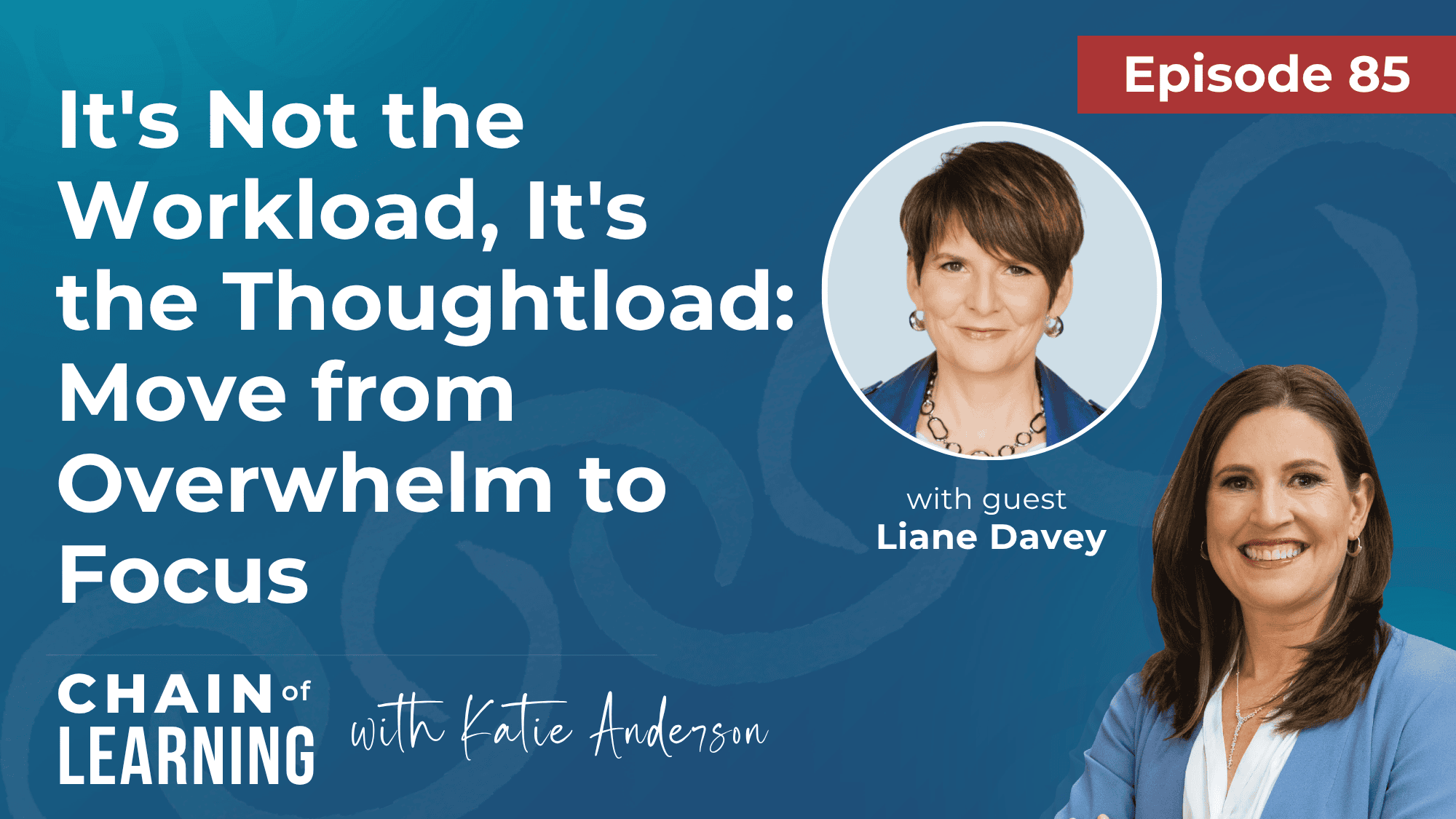
Leadership consultant Katie Anderson and transformational change leader Anna Pessah discuss this challenge and share practices you can implement to keep the thinking and doing with your leaders and team members.
When Helping Becomes Overstepping
Overstepping ownership doesn’t always look like overstepping. Often, it looks like moving the work forward.
You know how something could be improved, so you offer your suggestion. The work gets done and you can see progress. But the person you’re there to develop doesn’t build the capability they need, and the improvement doesn’t sustain.
This is a challenge every change leader, manager, and executive faces at some point. When we take ownership of work that isn’t ours to own, we can become the bottleneck.
As a transformational change leader at Kaiser Permanente, Anna Pessah sees this challenge play out with the internal consulting team she leads and the physician and operational leaders she supports.
We break down this challenge and the practices leaders and internal change practitioners can use instead. Leaders don’t need to stop helping or teaching. The practice is getting clear about what each person owns and adjusting how you help based on what that leader needs in the moment.
When ownership stays at the right level, people build capability, improvements hold, and you have the space to focus on what is actually yours to do.
In this episode, you’ll learn:
✅ How to make ownership explicit from the start, by contracting up front and saying out loud which hat you’re wearing, coach or consultant or teacher
✅ Why leaders learn good coaching practices best by being coached, and how making your own practice visible lets others model it
✅ Why the pull to step in gets stronger the more you care about the outcome
✅ Why the first version of a new practice usually swings too far, and how to find the middle without abandoning it
✅ When asking coaching questions stops being helpful, and how to be directive without taking over the thinking
Listen Now to Chain of Learning!
Tune in to learn how to keep ownership at the right level, adjust how you support others, and create the conditions for people to grow without becoming the bottleneck.
Watch the conversation
Watch the full conversation between Katie Anderson and Anna Pessah on YouTube.
 About Anna Pessah

Anna Pessah leads the internal consulting team that oversees the operating system at the North Valley Service Area of Kaiser Permanente, where she coaches physician and operational leaders on strategy, management systems, and the behaviors that support a culture of improvement. She is an industrial engineer from the University of Michigan and an ICF-certified coach.
Anna brings a blend of systems thinking, operational improvement, and leadership development to help leaders generate insight, turn goals into action, and build habits that stick.
Reflect and Take Action
Staying in a learning mindset means holding up the mirror to ourselves. It means looking at our own pulls to control and recognizing that our value isn’t always in having the answer, being the expert, doing the task, or saving the project.
These pulls can lead us into a pattern of behavior I call the Doer Trap — where we overstep ownership instead of creating the conditions for people to be successful in what they own.
Some simple practices:
- Get clear about who owns what – make ownership explicit rather than assuming.
- Assess what would actually be helpful – consider what the person needs in that moment to help them move forward.
- Keep ownership with them – show up in a way that keeps the ownership of the thinking and doing with the person who owns it.
- Model the way and label it – make what you’re doing visible so that others can model the way forward.
As you go through your week, reflect on where you might be overstepping ownership of thinking or doing that belongs to someone else.
Before your next conversation, get explicit about who owns what and ask: “What would actually be most helpful from me right now?”
Important Links:
- Connect with Anna Pessah
- Follow me on LinkedIn
- Subscribe to my newsletter
- Check out my website for resources and working together
- Episode 44 | Master the Coaching Continuum and Become a Transformational Improvement Coach
- Episode 66 | Leadership Is Practice: What It Takes to Lead Transformation as Responsibility Grows
- Episode 71 | Own the Thinking Process, Not the Thinking: How Leaders Build Problem-Solving Capability
- Episode 81 | Adapt How You Lead: Situational Leadership in Practice with Suzie Bishop
Subscribe to Chain of Learning
Be sure to subscribe to Chain of Learning on your favorite podcast player so you can build high-performing cultures of continuous learning. And share this podcast with your friends and colleagues so we can all strengthen our Chain of Learning® – together.
Frequently Asked Questions
How do you know if you’re doing your team’s job instead of your own?
If you are taking on the doing, the thinking, and the problem solving that belongs to your team, you are overburdening your own cognitive load, and you do not feel like you have space to do the things you need to be doing. For example, in a strategy session Anna Pessah facilitated, a physician vice president said he was overburdened because he was doing the work of the chief, when what he really needed to be doing was thinking about how he was enabling the work of the chief. For more on how this healthcare organization built its leadership operating system, see Episode 66 | Leadership Is Practice: What It Takes to Lead Transformation as Responsibility Grows.
How do you coach someone without solving the problem for them?
Ask what would be most helpful right now before you offer anything. Then say out loud which hat you are wearing, coach or consultant or teacher, so the other person knows what kind of conversation they are in. When someone is truly stuck, asking more questions stops helping, and there is nothing worse than being asked a question when you do not know the answer. You can be directive and still keep the thinking with them: say what you have seen work before, then ask how that helps them think about their situation. Katie Anderson calls this the coaching continuum, covered in Episode 44 | Master the Coaching Continuum and Become a Transformational Improvement Coach.
Why do improvements stop working after a consultant or coach leaves?
Because the capability never transferred. If the consultant owned all the execution of the initiative, the results might be real in the short term but won’t sustain in the long term. The team never builds the leadership capability to sustain and improve the work, so the moment that support goes away, so does the improvement. Katie Anderson calls the pulls to take over ownership of the work or problem solving the Doer Trap™, which she writes about in IndustryWeek and Forbes, and explores in Episode 71 | Own the Thinking Process, Not the Thinking: How Leaders Build Problem-Solving Capability. Developing leaders at scale depends on transferring that capability, not delivering the results on their behalf. Leaders, consultants, and coaches should own the thinking process, not the thinking.
Timestamps:
03:16 – Why change leaders struggle to keep ownership with leaders
05:22 – When helping starts creating dependence
06:15 – Building capability instead of becoming the bottleneck
07:12 – Why doing more can make your job harder
09:23 – Getting explicit about roles and ownership
11:25 – Why new practices require reflection and adjustment
13:17 – Making your leadership practices visible
15:03 – Why asking what someone needs changes how you help
16:03 – How to give direction without taking over
22:16 – What happens when leaders operate at the wrong level
24:05 – The personal cost of staying in the weeds
25:30 – Why helping can turn into overstepping
27:43 – When coaching questions aren’t helpful
31:25 – The power of listening—and leaving space
36:46 – Why humility is essential to learning
38:18 – Recognizing your own pull to control
39:06 – Simple practices for keeping ownership where it belongs
Full Episode Transcript
Anna: [00:00:00] The organizational clarity around ownership is important. So we’re super clear that the execs own the health of the system, and now they are getting super clear that at the VP level, you own the health of the system within your portfolio. And then at the chief and director level, you own the health of the system within your service line.
And so really driving that ownership and being clear that that’s the expectation, so then when these qu- you ask these questions that promote ownership, you’re, you’re all going in the same direction. We’re all working towards that same goal because we want people to own their work and feel empowered, and that’s what’s really gonna help us take off and get to the next level.
Katie: Welcome to Chain of Learning, where the links of leadership and learning unite. This is your connection for actionable strategies and practices to empower you to build a people-centered learning culture, get results, and expand your impact so that you and your team can leave a lasting legacy. I’m your host and fellow learning enthusiast, Katie Anderson.
You think you’re helping, [00:01:00] but you’re actually hurting. You care about the project. You want it to succeed, but the leader isn’t fully owning it, or the team members just aren’t executing on the tasks as well as you know you could, or you’re working with a team and you have a great idea for a solution.
You’re excited. You see how things could get better, and you wanna help them make progress, so you step in, you give your idea, or you take on ownership to keep the project moving. You wanna make sure everything gets done, and you want to get to the outcome faster. In the moment, it feels like you’re the one helping.
You are moving things along, but the reality is, you’re hurting. You’re overstepping ownership. And whether you’re a change leader supporting a transformation, a VP working with their team of directors, or a manager coaching their frontline employees, the cost is the same. The person you are there to develop doesn’t grow.
The improvements don’t sustain as you move on to the next thing, and they keep coming back to you, and [00:02:00] you become overburdened. So the question to ask is: what’s actually yours to own, and where should you instead be creating the conditions for others to own it? That’s the crux of how we build capability in our organizations and in individuals.
My guest today, Anna Pessah, has been working on this question for the last decade from two different sides: as an internal consultant and as the leader of the internal consulting team at Kaiser Permanente in the North Valley service area of Northern California. Anna is an industrial engineer. She and I have known each other for almost nine years.
I’ve coached her directly, worked with her team of internal consultants, and led executive retreats for their organization. It has been fantastic to watch her grow into the leadership role she’s in now. We started off our conversation talking about something we’ve both been thinking about a lot lately, this concept of ownership, and how it’s one of the biggest challenges, particularly for internal change [00:03:00] leaders, in keeping the ownership of the doing, the projects, and the thinking with the actual leaders who own the work.
So we started there, and I asked Anna what are her observations, and why is keeping ownership with leaders so hard for internal change practitioners? Let’s dive in.
Anna: As a change leader, you know, we are the subject matter experts in operational excellence, and yet we know that in order for change to sustain and have continuous improvement and really this culture of excellence, that the leaders have to own the system.
So as change leaders and as a leader of the, the team of change leaders, we hold the subject matter expertise, we hold the standards, the tools, uh, and we hold, like, a teaching and education component and a support component, but ultimately, the success lies in the hands of the leaders, and that starts at the top [00:04:00] And so that same thinking then also applies for us as change leaders in that we have to help drive the ownership while still maintaining this role of teacher, consultant, coach, and we all have to wear all these different hats at the same time and know when to switch them based on the context, the content, the leader, uh, the environment.
And that’s a really hard place to be as an organization as well as, uh, a change leader and a team of consultants facilitating that change.
Katie: That has been my experience, too, both when I was internal and then working with change teams like your group and so many others as well. And what I hear… And it’s, it’s also not this, like– And we’ll, we’ll talk about this, too, because this is not a isolated to change leader problem.
This is a challenge that operational leaders also encounter, which is like, “What’s mine to own, and what, at what level of system am I operating, and, and where, where is it mine to do, and what should, where, you know, [00:05:00] what should I be taking on?” But let’s, let’s really focus on the in- internal change leader team.
And you made a comment to me that when we overstep and start, like, doing things more than just providing that support and scaffolding, things start to go sideways because, you know, we’re owning it instead of, of the people who truly own it. What are some of those things that you’ve seen, like, where it’s going sideways, and, and how can change leaders recognize when that’s happening?
Anna: As a consultant, so I lead a team of consultants, we often want to help, so we are there to support, and we are very well intentioned in supporting leaders or supporting frontline teams to drive improvement, to drive change that has real measurable outcomes. And sometimes we think we’re helping by doing the do, right?
Because we’re helping move things forward. We see progress. There’s action items. Tasks are getting completed, and we’re, we are driving outcomes. But the problem becomes then we are the ones driving the work [00:06:00] as opposed to the leader owning it and driving it. And then it creates a intermediate dependence on the consultant to drive the results.
And, uh, what we’re really doing is robbing that leader of their own capability building and their own development to then drive those results without us there. And so it’s this fine line between teaching and facilitating and then also developing the organizational capability and developing the leadership capability in that other person to be able to sustain and maintain that on their own.
And I think that’s one of the benefits of these internal consulting teams is that we know the broader context. We know the system, and we’re able to help leaders grow within that system because we have the, the insider knowledge. And then we’re there to continue to support as needed, but really we’re trying to de- develop that independence.
And we have to separate our value from the actual outcomes and focus our value also on the development of the person. And I think the same mindset goes for leaders, right? Yes, you’re trying to drive- Outcomes, but you’re also trying to drive ownership and accountability. [00:07:00] And so being able to have that internal recognition of where and how you’re adding value, and oftentimes it’s not as direct as we like it to be or might want it to be.
Katie: It’s a really hard shift, right? We’re used- we’ve gotten rewarded through our education and through the early careers of being the ones who’s done the doing, you know, and, and getting the answers and being right, and both the leaders we work with and, and being an internal change leader, like, we see things and we, we care and we wanna get that result, but then we’re actually shortcutting the thing that’s actually gonna sustain the long-term thing that we really wanna be seeing.
Anna: Right. And- It actually makes our lives harder because then we become the linchpin, uh, or we become the bottleneck-
Katie: Yeah …
Anna: uh, where then we’re required to move the work forward as opposed to, um, there’s this great video from David Marquet that says, “In order to give control, you need clarity and competence.”
So our role as the leader is to make sure that the teams understand they have the organizational clarity, they know what direction we’re going, and they have the technical [00:08:00] competence to be able to execute on that, and they’re actually able to do it faster and better than we would be able to.
Katie: What are some of the things you do to help your team and yourself when you catch yourselves sort of stepping in or overstepping too much and starting to rob that, that learning opportunity or that growth opportunity for the leaders you work with?
Anna: Yeah. It really just comes down to a lot of refle-reflection and, um, like individual reflection and then reflecting on a team on any certain situation or experience to say, you know, what was the benefit of that behavior? Like, you took this, this pathway, tell me more about your decision-making in that situation and what might you do differently next time?
And creating that space where we can talk about that as a team. And that can be a challenge, too. You know, as individual c- as l-leading a team of individual contributors who are subject matter experts in their own right, facilitating those conversations can be challenging because you want people to have ownership of their own portfolio of consulting work, and yet we also have to maintain consistency across the entire consulting function.[00:09:00]
And so being able to have those conversations and set shared expectations and really have our own standard work and observations of that standard work to make sure we’re being consistent in keeping the execution, keeping the learning with the client and not with us as the consultant.
Katie: So I’m thinking back to it’s really important to have clarity on roles and expectations, and I’m just thinking back to some of my earlier days of being an internal change leader, too, and, and learning some of the skills of, uh, for…
Actually, I learned from Peter Block about how to contract for roles and who owns what and, and how critically important that is because not only hold ourselves accountable, but also for clarity ’cause a lot of times people expect the internal consultant to come in and to do the doing, and that your role maybe isn’t just guiding and teaching and facilitating.
And so how do you think about that and, and how have you helped your team get better at, as you said, that role clarity in the organization?
Anna: Yeah. We still have a lot of growth opportunity here, and we’re always learning and evolving and the pendulum has swung multiple directions for [00:10:00] us here in being, you know, completely service oriented.
Like, “Okay, you’re assigned to this portfolio of work. Whatever that leader needs, that’s what we’re gonna do,” you know, within the realm of, like, trying to build the operating system and mature it. And then we’ve swung the other way of, well, we need to contract every conversation and, uh, have gotten feedback that, like, that feels really strict and really transactional and not as relational.
And so we’re trying to, uh, kind of level that swing in the middle, um, and something that we’re trying now is having those contracting conversations at the beginning, but really making it a co-creation with the client so that we’re aligned on scope- The purpose, the aim, key responsibilities, and the expectations and timelines.
And so really just capturing that up front and making it clear that this is a partnership, and here’s what I’m gonna do as the consultant to support you and the operational team and the outcomes, and here’s what I need of you to also support the team, the work, and the operational outcomes. So we do that at the beginning, then we do kind of a, [00:11:00] a midpoint…
I do a midpoint check-in, and then at the end we reflect and say, “Okay, how did that go, and what percent towards our goal did we get, and what might we do differently in the future?” And so th-this is a new practice that, like, literally within the past eight weeks, we have, uh, you know, continued to refine our own internal processes.
And again, like, really anchoring, like modeling the way of we, we have standard work, we’re observing our standard work to make sure it’s producing the expected outcomes, and we’re PDSA-ing it over and over again so that we can continue to provide high-quality service that drive high quality outcomes.
Katie: Well, I love that you’re experimenting and, and trying something new and, and being so cognizant of that modeling the way.
You know, you and I have worked together for, or known each other for, what? Almost nine years now. I think it’s a long time. Well, and I’d love to go back in time in a moment, but I’ve realized we can even be teaching and coaching these skills and these behaviors to leaders and not realize even how strong our own habits are.
And so being able to, like, hold the mirror up to each other or have that [00:12:00] power of reflection to say, “Wow, I know I should be asking coaching questions, but I’m, I’m jumping in and telling everyone my id- my great ideas of how this should be, and that’s not, that’s not my s- role here. I’m not the owner of that.
I should be holding the space and creating the conditions for them to be thinking that out loud.” And it’s, it’s really hard ’cause we all have different pulls towards wanting to jump in for a variety of reasons.
Anna: Yeah. Actually, Katie, a lot of my coaching expertise has come from my coaching relationship with you.
So you coached me for a number of months back in the, I don’t know, 2019, 2020 timeframe, and I learned just from seeing you coach me. And so I think, you know, same thing, right? You were modeling the way, and that helped me see a skill set in practice and, um, was able to say, “Oh, like, that landed really well,” or, “Oh, I see how, how you did that,” and then reflect on what that made me feel as the client and then think about, “Okay, well, how can I re- recreate that when I’m…
have the coach hat on as well?”
Katie: Oh, it’s been such a pleasure to work with you, and, you know, [00:13:00] that’s the power, too. I learned a lot of these skills from other people I worked with, including Margie Hagene, who I hope will come on the podcast soon ’cause she’s just been an incredible coach and mentor for me, that I learned so many of these things.
One of the most powerful things that I learned from Margie, and I’ve paid forward, and it sounds like you’re paying forward now too, which is not just modeling the way, but what I call labeling it, which is, like, telling people what you’re doing and why. So that’s both sort of the contracting of, of the role, but really almost narrating out loud like, “I’m taking a pause because I wanna give space for you to think about it,” or, “I’m holding back in giving my ideas because, you know, I first wanna hear how you’re thinking about this situation.”
And a- it then, it helps people see the reason behind what- You’re doing and why, and then you’re more effectively able to sort of say, “Oh, okay.” How did that process impact you and how, if any, do you use that with your coaching clients?
Anna: 100%. The labeling thing, I think I probably actually forgot that that originated from you because you have such a skill [00:14:00] in naming what it is that you’re doing.
And so what I find myself doing, because as a consultant, we also play, uh, a coaching role, and it’s important for us to know when to be consultant and when to be coach, and it’s important that the person we’re working with knows when we’re playing each role. So I literally, you know, I just pretend like I’m taking a hat off and I’m like, “Would it be okay if I take my coach hat off now and put my consultant hat on?”
In addition to labeling, like asking permission, um, so that there’s alignment on that, oh, hey, there’s been a role switch here, or Hey, someone’s gonna show up differently and we’re, we’re okay with that. And then acknowledging when we’re gonna switch back so people know what conversation they’re in.
Katie: We assume that people under- like it just makes sense, but it, it, that clarity is so important, and it goes back to that word clarity you just said, clarity of roles and sort of the reason behind what you’re doing and that it’s…
It also holds yourself accountable. Like, “Oh yeah, I’m here to ask…” Like when I’m narrating it out loud, it helps me from stepping into that, what I call the doer trap or the telling habit. Like, it helps [00:15:00] hold us like, okay, this is the practice I need to stay in right now.
Anna: Yeah. I think the other thing that’s helpful is just to ask people what would be helpful for you right now?
And when people know like, oh, you know, Anna could play coach, Anna could play consultant, Anna could play teacher, and when I just put it on them to say what would be helpful? And they’re like, “Hey, I could really use a teaching moment right here. Like, I’m really stuck on the technical piece of this.” It’s like, okay, I’m not gonna ask you questions then.
Like, let me teach you this thing, and then I, and then say, “Okay, I’m gonna switch back to coaching.” Uh, I think about this in my, in my personal life too, like with my partner, like, is this a quiz or is this a question? Like, are you just venting or do you want a solution, right? So like the clear is kind and really where the conflict happens and when this like internal struggle, whether it’s at home or at work, it’s like when we’re in different conversations.
So how can we make sure that we know which s- which conversation we’re in and we’re both in the same one?
Katie: Yes. And going back to where we started this conversation, like this concept of ownership, all of the things you’ve done, and this is what, you know, I, I’ve, I coach people on as well, is like [00:16:00] how do you keep the ownership of the thinking or the problem or the doing with the other person?
You can still be directive and keep that ownership by saying like, “Okay, here’s how I might approach this, you know, situation. How does this help you think about this current thing?” You’re not just saying, “You need to do this. Like, do this and now.” And it’s a very, that’s a very different dynamic, ’cause sometimes people do need a new idea.
It’s the difference of making a suggestion when you’re sort of taking on the, basically just telling someone, “You should do this,” versus, “Okay, I see you’re stuck, and here’s how I might approach this,” or, “Here’s how I approached this in, in the past. How does that help you here?” And it’s, that’s just, that, that nuance is so powerful, but it’s about ke- it’s like what Edgar Schein had talked about, keep, and we, when we wanna be a help- helper, when we wanna help, it’s really keeping that ownership with the other person.
Anna: Yeah. I, I would also add That the organizational clarity around ownership is important. So we’re super clear that the execs own [00:17:00] the health of the system, and now they are getting super clear that at the VP level, you own the health of the system within your portfolio. And then at the, at the chief and director level, you own the health of the system within your service line.
And so really driving that ownership and being clear that that’s the expectation. So then when these qu- you ask these questions that promote ownership, you’re, you’re all going in the same direction. We’re all working towards that same goal because we want people to own their work and feel empowered, and that’s what’s really gonna help us take off and get to the next level.
Katie: Yes. When organizational expectation is like, you internal consultant actually do own this, and we’re just giving you all this to do, that’s a misalignment too. If you’re trying… I’ve, I was talking with, um, a colleague that you and I know, and his organization has gone through a real shift from think, you know, seeing their internal change leader teams from being true coaches to now they’re the operational excellence execution side, and it’s like you just drive it and do it, and, and that’s coming from the [00:18:00] top, and it’s a total flip in, in the role, and that’s really, that’s really challenging when you see the, the, the, the real organizational need in the longer run is building capability.
And for l- for listeners who wanna learn more sort of about the organization that Anna works with and some of their transformation, I talked with, um, her former colleague, Carl- Carlos Schultz, back in episode sixty-six. Um, that’s actually how Anna and I met years ago when Anna, before she even worked in healthcare, I was running a consortia of, um, operational excellence, uh, co- companies wanting to have high-performing operational excellence organizations.
And Kaiser Permanente North Valley was one of the, the companies that was involved, and Anna had reached out to me for an informational interview, and that’s how she got connected with the organization that she’s now grown into a, a more senior leadership role. Um, and that’s really been awesome. And to be able to partner with you as an individual, to work with the team and the executive team on all of these capabilities has been a, a delight.
And also, our [00:19:00] relationship out of this has been one of the best parts of it.
Anna: Yeah, absolutely. I mean, I, I owe a lot of where I am today to you, Katie, both from that initial introduction and also the support and development along the way, and really through seeing you as a, a thought leader and really enjoying all the different ideas that you explore and the way that you articulate them in such a, a clear and simple way that’s, like, really easy for people to sink their teeth i- in.
I think sometimes as consultants, we overcomplicate things or, you know, we try to have all these tools and all, all these frameworks, and really you’ve been able to distill it down in a way that people can, can grab onto. And that, that’s been helpful for me just in, again, modeling the way and like, uh, setting some inspiration for me and my, my leadership.
So thank you.
Katie: Well, you’re welcome. And thank you. It goes both ways, right? And so we’re all learners and leaders. That’s the Chain of Learning, right? So- Yeah. Uh, and so I’m working on my next book, and that’s what I’ve really been trying to hol- uh, hold with me is like [00:20:00] how to keep it simple, because that is really the power.
It’s the simplicity. It’s having some mirror moments about, oh, is… Are my behaviors really aligned with the impact I wanna have? Like, that’s what I talk about intention. And then what are some traps or some pulls towards something else that are happening for me? And then what are better, simple things that I can do that are really gonna have an incredible impact?
And it’s, it’s those things we’ve talked about. It’s like having a pause, g- asking open questions, labeling it. It’s, it is so simple, and it opens up so much. But we have… We can like teach all those concepts, but if we don’t really understand, I guess, the things that are tripping us up or like pulling us towards that when we’re not even aware of it, that’s, that’s the real challenge.
And it all gets back to this concept of ownership, I believe.
Anna: Something else that I’ll recognize in you, Katie, is that you’ve also created so many communities where people can learn and practice together. So I think I’ve participated in a couple of different things that you’ve curated with various other leaders or on your own, where it’s just a community of practice of like, “Hey, we’re, we’re all learning.
[00:21:00] We’re gonna give you some structure, and we’re gonna give you some time and space to practice these things.” Uh, and that’s been really helpful in my own development. And then also thinking about, okay, within our own organization, how do we continue to do that? Because you can be didactic and you can teach people till you’re blue in the face, but really until they’re actually practicing and doing that intention setting and reflection afterwards, they’re not gonna hardwire those new behaviors to make them habit.
Katie: And it starts with us, too, because if we, if we’re, like, just preaching it out there and not doing it ourselves, that’s not modeling the way, right? And so we have to be the learners first as well. So thank you. I, I’m, I’m, like, glowing from all the positive words, so… But it really, this is my, my, my real purpose that as I come, have talked about here on the podcast before, I’ve discovered or uncovered through years of thinking about it and talking about it, that it’s to connect the hearts and minds of people around the world so that together we can make it a better place.
And convening community and people together is, is, just gives me so much joy. And that’s why I love doing this podcast, too, and, and having conversations with amazing people around the world. [00:22:00] So thank you for being part of, part of that.
Anna: Yeah. Thank you.
Katie: So what we were talking about, this concept of ownership, and then we teased this at the beginning, too.
It’s not just, like, the change leader that needs to be aware of the ownership. You know, of course, in the partnership between the change leader and the, and the operational leader you’re working with, you need to have clarity of that ownership. But this is a challenge for operational leaders in their day-to-day work as well, of overstepping ownership and maybe functioning at the wrong level.
And what are some things that you see in your organization and, and how that gets leaders tripped up?
Anna: Actually had a great example of this last week, um, as we start our annual strategy planning cycle. We, as an org, are constantly trying to, you know, stretch out the accordion of leadership. So get the execs to operate at the exec level, get the VP to operate at the VP level, chief and director operating at the chief and director level.
Was facilitating a conversation, uh, last week, and there was this great insight. There was a, a lot of, like, struggle and sh- strife around, um- Some of the nuts and bolts of the [00:23:00] strategy planning. And there was this great insight from a VP of his own struggles, and he, and he was like, “Oh, I think I’m having such a hard time because I’m doing the work of the chief, and what I really need to be doing is thinking about how am I enabling the work of the chief, as opposed to how am I actually doing that work?”
And so really, he had this insight of like, “Oh, I need to elevate my thinking. I need to make sure I’m operating at the VP level so that my chief can operate, you know, at the top of his scope.” And so, you know, it was just this shift in perspective around his own behaviors and how he’s either helping or hurting the people that report to him and, and the service lines that he leads.
Katie: Right. If, if he’s taking on all of that doing or thinking or problem-solving, he’s overburdening his own cognitive load, but also he’s taking away… Like, so he probably f- doesn’t feel like he has the space to do the things he needs to be doing. How, how do you see that play out in your organization now or others that you work with?
How does this challenge of operating at [00:24:00] the wrong level of system impact the whole organization or the individual?
Anna: Yeah, I think the individual feels so overburdened. I was speaking with a leader a couple weeks ago from a different organization who recently, uh, switched organizations, and we were reflecting on, like, her new, her experience in her new role at a new org.
And she paused and said, “You know, I think for the five years prior, I was always stressed, and I was always hungry.” And she’s like, “Now I don’t feel stressed, and I feel well-fed and nourished.” And so because she was so in the weeds in her previous role, she was stuck in the day-to-day grind of everything, even though she was the top, and it just wore her down, and she couldn’t, she could never figure out how to get herself out of the weeds.
Uh, and it took her leaving that org to be in a different, a different role with different sets of expectations and roles and responsibilities where she’s like, “Oh, I feel like I’m not [00:25:00] stressed and hungry anymore.”
Katie: Oh, this, uh, this unburdened leadership. I mean, that’s like, that’s the real payoff. It’s like not only doing…
Like, you’re probably more effective, but you’re also like, “Oh, my work is better.” Like, why do I have to take on everything? And I’m curious ’cause I, I’ve been thinking about this a lot for my next book of like, what are these pulls towards stepping in or owning it all or overstepping ownership and like, like our caring about everything and our concern or trying to control it becomes caring becomes carrying.
What are some of the things that you see are those pulls towards control or stepping in and sort of taking over ownership for things that really shouldn’t be yours to, to own and do? Instead, you should be like, you know, of course, the providing support and creating the conditions.
Anna: I think that new leaders fall into this trap as they’re trying to build rapport and build relationship.
When you are establishing a, you know, a reporting structure or, you know, you’re a physician VP, you have four chiefs that report to you. Um, [00:26:00] they’re, they’re trying to gain your respect and admiration. You’re trying to gain their Respect and admiration. So they’re like, “Oh, I’ll … Like, I’m gonna bring you the problems,” and then you’re like, “I’m gonna solve the problems.”
And then it just creates this horrible relationship where th- now the chiefs feel like they can’t make any decisions on their own, and the VP feels like, “Well, they need me to make all the decisions for them, but I don’t actually know anything.” And so it doesn’t feel good for anyone. There has to be this realization and some awareness, right?
So I think someone has to hold up the mirror, or you have to be able to hold up the mirror for yourself to be like, “This isn’t working. Everything is getting stuck with me. Things are moving slower. We’re not getting the right outcomes. Like, something has to change, and I as a leader have to reflect on my own behavior.”
And then I think once you have that moment and once you realize that there can be a better way, it’s like there’s no arguing that that way is better. Uh, and it, it’s actually more fun for you. Like, you’re like, “I get to lift my head up. I get to look out into the future. I get to [00:27:00] do the fun, strategic stuff, and now I’ve empowered these people,” right?
It’s like this decentralized command thing that feels so much better for everyone involved. But it’s so easy to fall in that trap because you think you’re helping, but you’re actually hurting.
Katie: Yes, and that, that’s the crux of it. We think we’re helping, but we’re actually hurting. And, like, not only hurting the people we work with, but, like, overburdening and hurting ourselves, too, and then it becomes this, like, vicious cycle that’s so hard to get out of.
I, I’m curious for you, Anna, like, ’cause I, I believe we all have these spots where we kind of do that, and, like, I feel like there’s this aha or mirror moment that happens at some point. I’m curious if there was one moment or something that happened to you where you realized that this was … You were, you were sort of falling into these traps, these doer traps, too.
What was that experience for you?
Anna: I think I’ve actually had the opposite. So I’ve had instances where I’ve asked coaching questions when really the other person needed direction, and that is equally as frustrating for people. I remember [00:28:00] early on, uh, in my healthcare career, there was an assistant chief running the emergency room, and we were just starting to stand up our management system and we were talking about problem-solving huddles.
And he ra- he raised his hand and said, “How have you seen this work in 24/7 operations? Like, what might this look like in the ED where we have docs starting every hour? We have … You know, it’s, it’s shift work. We have nurses that work two days a week. We don’t have the same people in the room every single time.
Like, what have you seen other 24/7 operations do?” And I was like, “Well, what do you think?” And it was-
Katie: He’s like, “No”
Anna: W- it went back and forth for longer than it needed to, and I just, I didn’t answer the question. And we, they never got anywhere. Like, we, like, the problem wasn’t solved. He felt frustrated because he was looking for an answer, and I was a- I was just asking a question, and I was frustrated ’cause he wasn’t getting to the answer.
Katie: Yeah.
Anna: And so I, I have to remember, like, oh, put the … Sometimes you do have to put the direct [00:29:00] hat back on and, like, asking the questions Is doing a disservice, um, because there’s nothing worse than being asked a question when you truly don’t know the answer.
Katie: Yes. I mean, and so I, I see this all the time. This happened for me, too.
It’s like when I help people see that, like, oh, helping isn’t just giving the answer or being the expert with the answer and then therefore sort of taking over the doing or the thinking. It c- it’s learning how to ask open questions and, and h- hold that space. But it’s, it’s a continuum and it’s, it’s like it’s not like telling is wrong and asking is good.
It’s like knowing in the moment what’s helpful and, as you said, when someone’s really stuck, just continuing to ask questions no longer is helpful and that’s where you need to put more directive hat on. But sounds like … But sometimes it’s, it’s not like saying you have to do it this way. It’s like what we talked about earlier in this episode, say, “I see you’re stuck.
Let me, l- yes, let me share with you what I’ve seen before. How does that help you now?” And I think that’s the real nuance to learn. It’s like how do you assess the situation and [00:30:00] what hat do you wear in that moment? How do you, as you said, put the hat on and h- hat off, which I learned from Margie, which sounds like I passed on to you as well.
No, I, I love that as well. And for listeners who want to know more about sort of how to navigate what I call this coaching continuum between open asking to more directive telling and teaching, I, I talked about this back in episode, uh, 44 about mastering the coaching continuum, ’cause that’s the crux. It’s not like- Coaching or helping is now only asking questions, and that’s the hard part.
We- our brains go to, like, this binary, “Okay, it’s not this, it’s this.”
Anna: Well, and I also leverage, um, Ken Blanchard’s, uh, Situational Leadership model as well. So, like, being able to assess someone’s, um, development level based on their motivation and their competency o- towards a specific goal, and then, um, showing up as either directing, supporting, coaching, or delegating, uh, once that assessment has been mutually agreed upon.
Katie: Yes. It’s an awesome… It’s a really helpful model, and I actually just, um, interviewed Suzie Bishop, uh, on episode 81 [00:31:00] about their new book from the institute on the Situational Leadership model. It’s a really helpful, easy, accessible, um, book, too, Situational Leadership. So go listen to episode 81, but also that framework is really, really helpful on how to assess in the moment, and then you can then know where to, where to show up.
How do you assess in the moment? And that, that’s the art of l- leadership, that’s the art of coaching. It’s the, the biggest challenge for all of us, too. It’s not just one way.
Anna: Yeah. Well, and I think assessing in the moment, the main skill set there is listening, like being able to pick up on the cues and understand where they are.
And if you don’t know, just a- ask them, right? There, there’s no harm in asking and getting that-
Katie: Yeah …
Anna: alignment on where, like, where their thinking is so that you can make sure you show up in the right way. And then I think also, like, the power of silence goes a really long way, because you may be listening, and you may think they’re somewhere, but then you pause, and they get somewhere else on their own without you even intervening.
And, like, that’s, that’s the best case scenario.
Katie: It’s the b- I [00:32:00] still have to count to 10 because it’s awkward to leave that space. But, like, isn’t it so reinforcing when people answer their own question and you’re like, “Oh, they really didn’t need me. They didn’t need my answer. They just needed the space to think out loud or think of their own answer”?
And it’s like we, we wanna help and we default to us providing it. I… The last thing I wanted to talk about was going back to what you mentioned about the different hats. Because w- throughout all our lives, you know, our home lives, our work lives, we’re all wearing different hats, and we’re going from meeting to meeting.
That changes the, what hat we’re wearing. Even in the same conversation, the hat we need to wear changes. And, you know, one of the things that you and I have shared is, like, we’ve both been the, the manager of an internal Team of consultants, independent contributors, you’re a subject matter expert in your own right, and there’s portfolio things that you have ownership for.
You’re coaching executives, and it’s like, it’s so easy to get just sort of reactive into one zone. How do you, and [00:33:00] I’m, I’m sure it’s imperfect, but as we all are, but like, how do you, how do you manage the, the wearing different hats, and, and then how does that help you coach your leaders into… ‘Cause they, they’re too, they too are wearing a lot of different hats at the same time.
Anna: I always try to tr- try to draw from personal experiences to help me at work. So outside of work, I, I mean, like we all do, we all wear different hats. Um, I’ve got three young kids. That, that in and of itself is enough of a skill set that I, I need to know how to switch and what people need. So my kids are five, three, and one, and they’re all at very different developmental stages, and they will continue to be at very different developmental stages, and they’re also just different people.
And so they have different needs, and they require me to show up in a different way. And being able to practice things outside of work that it makes it so much easier to then apply them at work. Having that awareness when I’m with my kids, when I’m with my partner, or even the variety of, uh, community engagements and projects that I’m involved in, uh, just being [00:34:00] cognizant of who do I wanna be as a…
Like, in general, who do I wanna be? And then what does it take in each of these environments to achieve that? Um, and then also, you know, outside of work, like, what is– what do I want my life to look like? And inside of work, like, what do I… Not just what do I want, but, but what is the direction this organization is going, and how do I need to show up in a way that is of service to that mission?
I think as long as I anchor myself in that, the rest follows. I, I’m probably oversimplifying. I think it takes a lot of practice, but being able to practice outside of work makes it a lot easier inside of work. Um, and really just anchoring on that greater sense of purpose. I mean, that’s why I transitioned to healthcare in the first place, um, is that I wasn’t feeling very aligned from a mission or purpose perspective in my previous roles.
When you work in a healthcare organization, most people get into it for altruistic reasons, and there is just this, like, collective sense of a higher sense of purpose [00:35:00] that’s a lot easier to rally around. And once you have that, it’s easier to show up in the way that you need to.
Katie: Hundred percent. I’m right with you.
Intention equals heart plus direction. It’s like, yeah. When… And having that purpose and so, so, so critical. And that’s why I loved working in healthcare too. I found it actually a really, as you said, easier place to connect in some ways because people are drawn to the, the mission and, like, you know, I worked at a children’s hospital.
What could be more mission-driven than saving children? Connect with your purpose and align your actions and, and be explicit on what you, what you own. And when you’re taking over ownership, you’re actually in time, many times quashing the very thing that you’re wanting to, to create. And so how do we have that awareness too, that when we’re trying to help and we overstep, it’s not helpful, and, and how do we make a different, uh, choice?
Anna: Yeah. I think the other piece I’ll add is, for me, my two core values are growth and creativity. And so those two things really complement each other nicely in [00:36:00] this role, where it’s like I’m deeply invested in My own growth and then helping other people grow. And then the creativity piece, it’s like it’s fun for me to get to show up in different, different ways in different places ’cause I’m like, “Oh, cool, like I get to try this new thing,” or, “We get to co-create over here, but in this, in this space on this side, it’s more coaching,” right?
Like, that’s exciting to me, and so I think that helps, uh, in addition to the purpose components.
Katie: As we wind up here, I lo- I mean, I love talking with you, and we could go on for so many, so many hours. What is one piece of advice that you have from your experience of, you know, moving industries, moving into an internal consulting role, and now leading a team of con- internal consultants and, and trying to build this capability and ownership in your…
the leaders you work with? What’s one piece of advice you have for people to really keep that ownership in the right place, um, so that you’re really growing the long-term sustainability of the transformation?
Anna: Yeah, I think it boils down to humility [00:37:00] and being comfortable not knowing all the time, uh, and trying to learn.
Katie: Yeah. The learning mindset, right? A lifetime of continuous learning.
Anna: Yeah.
Katie: Thank you, Anna. Thanks for joining us on Chain of Learning, and I look forward to many more years of learning together and partnering and continuing to grow our, our Chain of Learning, so thank you.
Anna: Thanks so much, Katie.
Katie: It was great to reconnect with Anna and reflect together on leading change and her leadership journey.
This whole conversation was a Chain of Learning in action. So much of what Anna described here, the labeling, the hat switching, asking what would be helpful, the pause, these are all practices I learned from my own coaches, put into practice, and passed on to her and her team. And now she’s teaching them to the physician and operational leaders across her organization, and that’s what the Chain of Learning is.
I also loved hearing that Anna and her team are experimenting. That new contracting process is less than two months old, and they’ve realized they’d [00:38:00] swung too far one way, then too far the other. So they’re reflecting and adjusting and practicing and reflecting some more. And that’s what this work is all about, trying something, reflecting and learning, and getting a little bit better every time.
I also love that Anna ended on humility because that’s the foundation of learning. Getting comfortable of not having all the answers, not knowing everything all the time, and staying in a learning mindset. So much of our instinct to overstep ownership comes from that place of wanting to help, and that’s what makes it so hard.
We step in because we care, and we need to stay in that learning mindset, hold up the mirror to ourselves, or have other people hold that mirror up to us. Look at our own pulls to control, that even when we’re intending to have a positive impact, we might be creating a negative one It requires a shift in how we see our value.
It isn’t always having the answer or being the expert or doing the task or saving the project. [00:39:00] It’s in creating the scaffolding for learning and improvement. These pulls lead us into a pattern of behavior that I call the doer trap, where we overstep ownership instead of creating the conditions for people to be successful in what they own.
As Anna and I talked about today, the practices in creating the conditions themselves are quite simple. Start with clarity about who owns what and make it explicit rather than assuming. Assess what’s actually gonna be most helpful in the moment to help that person move forward. Show up in a way that keeps ownership with them.
And throughout it all, model the way, label it so that they can model the way forward. And this is the focus of the book I’m writing right now, our pulls to control and how we can more effectively create the conditions for others to learn and grow in the things that they have ownership for. And I can’t wait to keep showing you more on this podcast and as the book comes to life.
If you wanna go deeper on these concepts too, be sure to go back to episode forty-four [00:40:00] where I describe that coaching continuum, and episode seventy-one where I talked about how your role is to own the thinking process, not the thinking itself. You own the process, not the doing when it’s not yours to own.
As you go through your week, reflect on this episode and where you might be overstepping ownership of the thinking or the doing that belongs to someone else. Maybe it’s not always in those obvious places. It’s those times where you feel like you’re helping, but you’re actually taking over. And before your next conversation, get explicit.
Say out loud and define who owns what. This is that contracting conversation. And ask the person what would actually be most helpful from you right now. I’d love to hear how it goes. I’ve dropped the links to connect with Anna in the show notes, along with links to the related episodes I mentioned here.
And if you enjoyed this episode, be sure to follow or subscribe to Chain of Learning now. Share this [00:41:00] podcast with your friends or colleagues so we can all strengthen our Chain of Learning together. And be sure to leave a rating and review on your favorite podcast player because it helps us grow our Chain of Learning.
Thank you for being a link in my Chain of Learning today. I’ll see you next time. Have a great day.
Subscribe to Chain of Learning
Be sure to subscribe or follow Chain of Learning on your favorite podcast player so you don’t miss an episode. And share this podcast with your friends and colleagues so we can all strengthen our Chain of Learning® – together.