




Why Change Leadership Starts with the Right Question
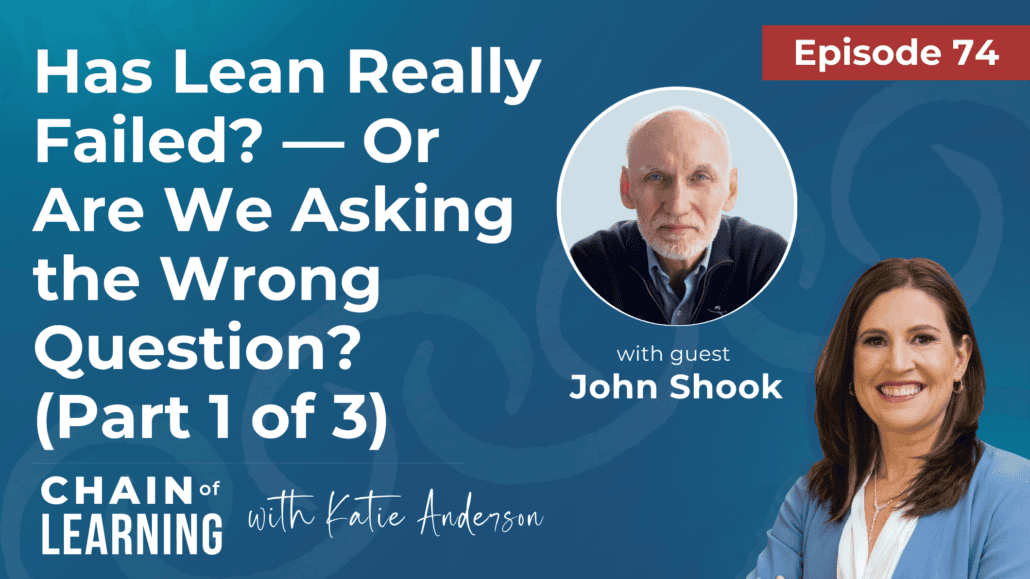
Has lean failed?
That question led to one of the most downloaded conversations on Chain of Learning — my two-part discussion with Jim Womack in episodes 37 and 38.
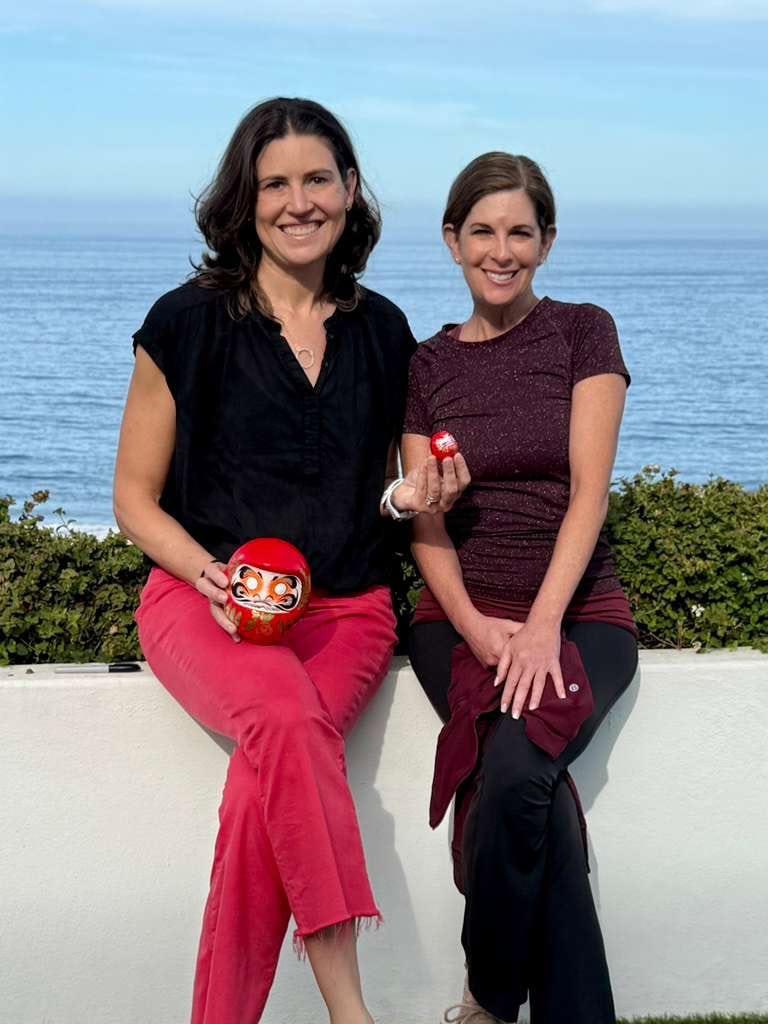
In this new conversation, I sit down with John Shook — one of the most influential voices in Lean and continuous improvement worldwide — to explore a different perspective.
John doesn’t reject the question. He reframes it. He challenges us to step back and ask something deeper: What problem are we actually trying to solve?
That conversation became so rich that we expanded it into the first three-part series in the history of Chain of Learning. And I believe John’s perspective will reshape how you think about leadership, change, and your own influence in the work.
In this episode, you’ll learn:
✅ Why the question “how many lean enterprises have we created?” may be leading us in the wrong direction — and what we should ask instead
✅ How to start with the problem to be solved, rather than leading with tools, jargon, or frameworks
✅ The difference between “command and control” and what John calls “command and abandon” — and which one you’re more likely doing
✅ Why the key question in problem-solving is not “is this accurate?” but “is this useful?”
✅ How to recognize your span of influence and build systems at the right level that help people think, learn, and take ownership
✅ Why purpose → work → capability is the right sequence — and why most leaders start in the wrong place
Listen Now to Chain of Learning!
Tune into this episode to explore John Shook’s powerful reframe on lean, leadership, and why the question we ask may shape the impact we’re able to create.
Watch the Episode
Watch the full conversation between me and John Shook on YouTube.
 About John Shook

John Shook spent eleven years with Toyota in Japan and the U.S., where he helped transfer the Toyota Production System globally. He later served as President of the Lean Enterprise Institute and Chairman of the Lean Global Network.
John is the co-author of the award-winning books Learning to See and Managing to Learn, and wrote the foreword to my book Learning to Lead, Leading to Learn. As an industrial anthropologist, he brings a perspective that connects culture, systems, and practice to bridge deep thinking with real-world application.
Reflect and Take Action
One of the shifts I keep coming back to from this conversation with John is moving from frustration toward possibility.
So many people shared with me last year that their biggest challenge is leadership buy-in. Feeling like they’re pushing a boulder uphill. Waiting for someone above them to finally “get it” so the work can move forward.
But as John points out, every level of the organization is often waiting for someone above them to make the change first.
That’s what makes his reframe so powerful.
Instead of measuring impact only by how many “lean enterprises” we’ve created, John invites us to look at the millions of individuals whose thinking, leadership, and lives have been changed through this work.
Including ourselves.
- Focus on your span of influence, not your span of control
- Build systems at the level you can directly impact
- Create conditions for people around you to think, learn, and take ownership
- Model the behavior you want to see more of
Notice when frustration is pulling your focus upward — and redirect that energy toward the people and problems in front of you
Because the only thing any of us can truly control is how we show up.
And that’s where change starts.
Where are you waiting for someone else to make the change first?
And what would shift if you focused instead on the conditions you can create right where you are?
Important Links:
- Full episode show notes
- Connect with John Shook
- Follow me on LinkedIn
- Subscribe to my newsletter
- Check out my website for resources and working together
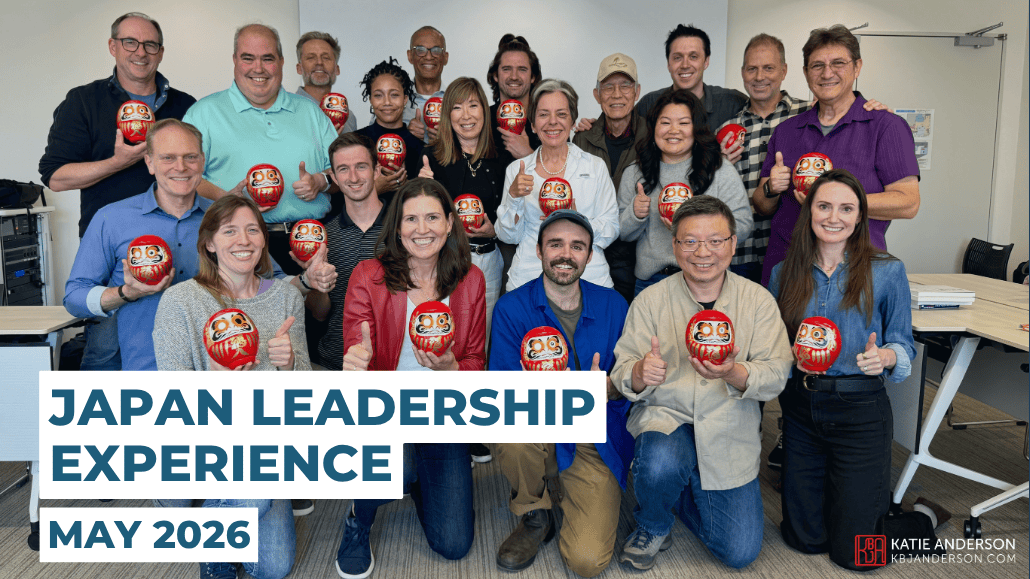
- Join us on the Japan Leadership Experience
- Grab a copy of, “Learning to Lead, Leading to Learn”
- Episode 37 | Lean Has Failed (or Has It?) with James Womack
- Episode 38 | What’s the Future of Lean? with James Womack
- Episode 52 | What You Love About Lean and Operational Excellence — And Your #1 Frustration: How to Get Executive Buy-in
- John shook’s toast at the, “Learning to Lead, Leading to Learn,” book launch
Listen Now to Chain of Learning
Listen now on your favorite podcast players such as Apple Podcasts, Spotify, and Audible. You can also listen to the audio of this episode on YouTube.
Timestamps
03:00 – Why John Shook believes we may be asking the wrong question about lean
04:10 – How millions of individual transformations may be the real measure of success
05:25 – Why change leadership always starts with changing yourself
06:40 – The tension between influencing others and trying to control them
08:15 – What a people-centered learning culture actually looks like in practice
09:05 – Why John avoids lean jargon and starts with the problem instead
10:00 – The Toyota question that shaped John’s thinking: “What problem are you trying to solve?”
11:15 – Why learning only matters when it’s grounded in the work
12:30 – Toyota’s “attitude toward learning” and why it changes everything
14:10 – What makes Toyota different beyond tools and processes
15:05 – Why leaders must create the environment for learning and problem-solving
16:00 – How organizations drift into “big company disease”
17:05 – Why purpose → work → capability is the sequence most leaders miss
18:15 – The risk of starting culture change with leadership behaviors alone
19:20 – Why focusing on the work reveals what’s really blocking change
20:10 – The hidden ways leaders unintentionally create control
21:00 – Why John sees more “command and abandon” than command and control
22:05 – Why most leadership advice is accurate—but not useful
23:20 – Focusing on your span of influence instead of waiting for senior leaders
25:05 – Why frustration with leadership buy-in can become destructive
27:15 – How every person at work already has “problem consciousness”
29:00 – The surprising truth about who is most frustrated in organizations
31:20 – Why even CEOs often feel unable to create real change
32:15 – Building systems at your level that create ownership and capability
33:20 – Why modeling the behavior matters more than pushing harder
34:10 – Shifting from frustration to possibility as a change leader
35:15 – Creating the conditions for people to think, learn, and step forward
36:15 – Why sustainable change starts with how you show up each day
Full Episode Transcript
John: [00:00:00] One thing I would say that I observe is that I don’t see that much command and control per se. I see a lot of command and abandon. Everyone is frustrated at work, which is a good thing to think about as you’re getting started, by the way, which is everybody at work anywhere at any time has a problem consciousness.
So we can go in and try to look for that and we can tap into that as opposed to force fitting according to our preconceived notions.
Katie: Welcome to Chain of Learning, where the links of leadership and learning unite. This is your connection for actionable strategies and practices to empower you to build a people-centered learning culture, get results, and expand your impact so that you and your team can leave a lasting legacy.
I’m your host and fellow learning enthusiast, Katie Anderson. How many lean enterprises have we actually created? That’s the question that the continuous improvement in lean community has been asking for over 40 years. And that’s actually the question I explored with Jim Womack back [00:01:00] in episode 37, the second most listened to episode in this podcast, and continued in 38.
But John Shook proposes it’s the wrong question to ask. And in this episode, the first of a three-part series, John offers a reframe that I believe will change how you think about your own impact as a change leader. I was thrilled that John agreed to come on Chain of Learning this year, and I knew our conversation would be rich.
And it was. It was so rich that we ended up breaking it into three episodes, which I’m going to release in back-to-back weeks. John Shook is one of the most important links in my chain of learning. He wrote the foreword to my book,“Learning to Lead, Leading to Learn.” He was the first non-Japanese employee of the Toyota Motor Corporation, working directly with Mr.
Isao Yoshino, the subject of my book, for several years in the 1980s, and has been one of the most influential thinkers and practitioners to bring lean thinking into the broader global community. John is both a social [00:02:00] anthropologist and practitioner, grounded in experience, and that lens comes through everything he does.
In this first episode, we unpack his big reframe, are we asking the wrong question, and explore what it takes to lead sociotechnical change. In the second episode, John and I go behind the scenes, sharing personal stories and insights from his time at Toyota and our shared experiences living and working in Japan that many of you probably haven’t heard before.
And in the third, we answer your questions, and John shares his final reflections and words of advice. I know you’re going to love this whole conversation as much as I did.
John: So without further ado, let’s dive in.
Katie: You and I, when we were talking a few months ago We’re reflecting on my conversation with Jim Womack and how, you know, we were responding to a comment he’d made that lean’s failed, or rather that we as like a lean community have failed by not creating lean [00:03:00] enterprises almost anywhere in the world over forty-five years.
And when you and I were talking, you suggested maybe a reframe and that we’ve been actually asking the, like the wrong question. So let’s start there. What question should we be asking, and what are your thoughts about that?
John: Yes. It’s something that comes up a lot, and I don’t want to say that there’s anything wrong with asking how many wall-to-wall, end-to-end, uh, lean enterprises we’ve created.
We’d all like to see them. We’d like to see them everywhere, which is an interesting question. What would a lean world look like? Here’s one thought. It, it’s not gonna be a problem-free world. It’s gonna be a world in which people respond to problems differently. That’s all. So it’s still gonna be, be pretty messy probably.
But, but where I’m… But when I think of that question, again, we’re looking at it… Uh, there’s a very different way to look at it. And if you start off asking how many Toyotas have we created, and that was one of the questions thirty years ago, people were… things, you know, we were talking about, and certainly I, I think Womack and Jones were, but others as well.
You know, you need a [00:04:00] lean company across the street, a Toyota plant across the street. You learn from it, and you, you become like that. I, i- and if you look at it that way, I, you know, there… no, there no more Toyotas have been created. I mean, none. Have, you know, people created their own version of, of what that would look like?
And even there, you could, you could say probably not very many. But on the other hand, as you and I sit here, there’s two individuals. Uh, and all the individuals who are listening to this podcast, your show, uh, who have bought and read your book and other books and who go through their work life with their life changed from having encountered lean thinking, I think the number is…
How many peop- how many… then how many of those success stories are there, individual person success stories? And I’m gonna say it’s, the, the number is countless. It’s endless. They’re, they’re everywhere. They’re everywhere we go. There are people who will… are passionate about this. Uh, it’s changed their life.
It’s changed their work life for sure. And for [00:05:00] many of them, many of us, it’s actually changed our life. Uh, and again, does that mean that we live our lives or our work lives wall to wall waste-free or something like that? No. Uh, but it means we approach the things that come at us in a very different way.
We respond to things that come at us, or we approach challenges, things we want to do in a different way. From that standpoint, I think it’s been an incredible success. Uh, I don’t know how many people in the world do you think have been profoundly impacted by this, so that they think about problems, they think about work, they think about, uh, what a, what a, what an organization, you know, should be, can be.
Uh, how many people have had profound changes in their thinking in that regard? And I’d say that I don’t think we could count the number, but it’s in the millions, I’m gonna say That, that’s just the way I look at it. And I look at it that way more and more, I think, as time goes by, that it is a personal change.
If you think about change and what we can change, what we can all impact, there… We all, we know, we all know this. There’s only one thing. There’s [00:06:00] only one thing we can change, very literally, very concretely. And so that is the most, the more proper, I think, point of reference, which is a personal individual change.
I don’t know. So that’s the way I look at it. And I’m not trying to run from the fact that we haven’t had success we would like to see, uh, in terms of organizations. We would certainly like to see more. We’ve, we’ve known… We know a lot of people, uh, who have made, you know, successes here and there. Uh, but, but people…
You know, when this question comes up, people always go think about the big CEO of the big company. Uh, and those exa- those, you know, success stories are few and far between, between, to be sure. But I, I, I, I think that’s not the most productive way to think about it. It’s not the way I think about it. I won’t tell anyone else not to think of it that way.
Think of, think of it however you want, but that’s not the way I think of
Katie: it. A few thoughts. One is absolutely, like, the only thing we can truly control is our own selves. We can only influence and create the conditions for others to come along on that journey, [00:07:00] and that’s something we can own, but we can’t…
It’s like trying to force people to be a lean thinker is actually doing the o- direct opposite of what we’re trying to do, right? So-
John: But even if we do that, what we’re doing is we’re just changing what we do first. That, that, that’s the only thing we’re actually changing. If, if we were… Anyone, anyone who’s participating in this, and I would invite them to push back on this idea if they wish, it’s…
That’s totally fine. But if you’ve ever had a kid, um, or if you ever were a kid, and if you’ve had a 16-year-old who you were tr- you’re trying to change, you know you can’t change them. You cannot change. You can change what you do to try to then have a different impact. And if you don’t have any kids that are 16, you were once a 16-year-old, and you can remember what it was like when someone would try to change you.
Again, that doesn’t mean we don’t go through the strategies and, and, and the, the, the, all the thinking and, and, and, and associated actions to, to achieve broader change in our organizations. Doesn’t mean we don’t do that. But we start with thinking about ourselves. [00:08:00] And I think that impacts, uh, everything. Um, not only this abstract question of how successful has lean been, but also when we think about all the questions that come up about what we can do or should do in our companies.
It all, I think, comes back to this. That’s my way of thinking about it. What do you think?
Katie: I agree. We can only start with ourselves and then try and be the change we want. Like model the way, right? For what we want to see more broadly. I’m curious, John, how you think about, you know, sometimes You know, people are trying to “copy Toyota” or what, what do we mean by like a lean, you know, organization, and does it have to look a certain way?
I’ve been trying to come up with words that connect with other people that, you know, maybe isn’t using are more the, the language that we know from the continuous improvement in lean cultures about like high-performing, people-centered learning cultures. But how, how do you describe that, that sort of end point of what a lean culture is without necessarily being Toyota?
John: Well, here, here’s where what I [00:09:00] do, and, and it’s the way I think about this at a higher level, but it’s also what I do. It’s just highly situational. So the words I use are actually just gonna depend on who I’m talking to. If I’m talking to a, uh, you know, I don’t know, a cousin, family reunion, or I’m talking to a gathering of old classmates, I’m gonna talk about it in one way.
If I’m at a company or organization, I’ll talk about it another way. And even then, one, one, one rule I made for my- for myself a long time ago, and I think I adhere to it pretty well, is, is I won’t use a single lean jargon unless the other person uses it first. So if someone, you know, wants to talk about, you know, the A3 process, that- that’s fine.
I’m, I’m not gonna bring it up. I’m not gonna, I’m not gonna bring it… A lean or a kanban or a, a single piece of jargon. And that’s… I think that’s been a pretty good, pretty good rule. Now, and as it turns out with me, and probably with you too, most places you go, people you meet, you know, they wanna talk [00:10:00] about some lean thing.
Um, and that’s okay. But even then, I’ll try to shift the discussion over to what they’re actually dealing with, uh, in their w- work situation. What problem, what problems they need to solve, what problems they’re trying to solve. And if you wanna call that a lean thing, uh, ’cause in a way you can, ’cause I think that is where lean begins, just thinking about challenges, problems, and how we’re dealing with those to make things better.
Um, that was the, you know, the question that I would always be asked going back over 40 years ago when I was at, with Toyota in Japan. You know, if you had some idea, the question’s always unfailingly, “What problem are you trying to solve with that?” And it would sometimes be very frustrating ’cause you couldn’t answer it well.
So I think that’s a more appropriate place to start than with any of the lean jargon, including, I don’t know, the other things you said. Including people-centered, including, uh, what else?
Katie: Learning.
John: I mean, that’s kind of a universal thing. We’re humans and we learn. I mean, that’s how we get from, you know, being a, uh, an infant to, to where we end up.
So learning, I’m good with that. [00:11:00] And the problem with learning is just that, you know, if you go back 40 years ago, 40 years ago or so when the whole learning organization, uh, discussion was happening, it can become kind of diffuse and kind of vague, uh, not very, you know, grounded in, in, you know, in, in reality in the work Uh, but that’s okay.
Uh, we can, we can make it so by, by, by, by en- really engaging in the, in the, in that conversation, especially if you’re in a place of work. But I think it is about learning, so I don’t know. I don’t mind having a, a quick conver- I, I don’t know. I don’t mind starting there at all. That’s a good place to start.
But, but even there, how, how are we gonna go about learning? What are we gonna do? It’s gonna be b- through, through, through addressing problems or challenges. I don’t, I don’t care. I don’t differentiate so much between the positive or the negative way of putting it, problem or challenge. One way or the other, that’s what we’re trying to do, I think.
Katie: Closing the gap between where we are and where we need to be, whatever, if that’s an opportunity or a problem.
John: If it’s an opportunity or problem. You know, and, you know, being, uh, being with the Toyota background, I, I like the word problem. That’s what I gravitate to because an opportunity, [00:12:00] as you know, as as, as we would like…
An opportunity is something you can choose to tackle or not.
Katie: Mm. Mm.
John: A problem is not. It’s a problem, therefore it needs to be addressed. And so, so, uh, the word, the word problem resonates with me. But again, it’s just, that’s just the, the background from which I come to all this. It was always problem, problem, problem-solving.
And there’s where problem-solving is a funny phrase as well. You know, we don’t usually solve these, all these problems. You… There, there are certain ones you do, but, but, but you do, you address them, you know? Uh, and, and then how we do that and how we make progress and making things better through doing that, that’s the, uh, that’s the objective of the question.
Katie: You know, I was reflecting… Well, the, o- one of the phrases I use the most is from your former boss at Toyota, Isao Yoshino, and thank you, of course, for writing the forward to my book, Learning to Lead. Learning… Learn- “Learning to Lead, Leading to Learn” Oh my gosh, I almost tripped up on that ’cause it’s a mouthful sometimes.
But, uh, you know, he said… I kept asking, you know, those… It’s almost, [00:13:00] it’s over 11 years now that we started spending time together in Japan when I, when I moved out there, and I was like, “What’s the secret to Toyota?” And he kept saying, “There’s no secret. There’s no secret.” And then one day he made this offhand comment that the only secret was its attitude towards learning.
Uh, and I think that encompasses everything you’ve said. It’s really about the problem-solving, the setting the challenge, the target, and helping support people. I mean, it’s really what you described in Managing to Learn as well.
John: I, I, I think that’s the d- the, the, maybe the most defining characteristic.
Having said that, that starts to raise these other questions a- a- about, uh, why doesn’t everyone do it? Kind of takes it back a little bit to the, to, to, to square one. It’s about learning. Everyone knows learning. Everyone… You know, my goodness, there’s more attention given to learning and education and, uh, than, than almost anything in life.
In fact, if you’ve ever spent much time at a, at a, at a school, you know the one frustration of principals and teachers is that every parent thinks they’re an expert on education. So we all think about that a lot. We’re f- we focus on that a lot. So what is it then about, you know, this company? [00:14:00] And I’ll, and I’ll, you know, for, for, for partly just to have fun and for dis- discussion, I, you know, will say I, that, that Toyota is the company that’s figured this out.
Now, again, people are welcome to push back on that Um, and so it is not perfect. That’s not, that’s not it. That’s, that’s, that’s not the point. But there is something characteristically different about that company and what they’ve become, the way they became it, that is instructive to us to learn from. But then what is that if it’s just about learning?
I think there are other things, there are other things you can point to that are different between Toyota and other companies, I suppose.
Katie: What are some of those things that you think are the most important?
John: You know, I think it becomes that same laundry list that we, that we could think of. You know, people are engaged.
People are engaged and if you walk into a Toyota work site, office, or, you know, factory, you’ll see, uh, you know, highly engaged people swarming around problems and swarming around challenges and, and, and things of that sort. Those things are there. They have managed to create this environment. Another word they would use a lot, you [00:15:00] know.
They would talk about how leaders’ role is to create the environment. They have created this environment over many, many years that has, you know, turned out to be very hard for other companies to, to, to replicate or, or to find their own way to achieve the same thing. Now, Toyota’s a big, giant, you know, global corporation.
Um, and especially at that level, we know that there are not a lot of companies that do the same thing that have come, that have become that. At a smaller level, I think we’ve all known, you know, smaller companies that, that could kind of at least work that way for a while. You know, startups. Actually, I think it was Womack that many, many years ago, he s- he said that all companies are lean when they’re, when they start up, and, uh, I think that could be true.
I think that could be true. You know, you take five people in a garage, and they have something in front of them that they’re trying to accomplish, and okay, y- you know, one person goes to buy the parts, and the other one is doing the design of the, of the thing and, and, and, uh, and everyone is coming together focused on what…
And then focused on what they’re doing. And then as the c- organiz- [00:16:00] organization gets bigger and bigger, the challenge, uh, the challenge organizationally changes, uh, greatly. Uh, and then all of a sudden you find that, you know, that you can have big company disease with only, like, 100 people. And it’s ama- it’s amazing how that hap- happens.
Katie: So if we go back to your, you know, the original comment that the only thing you can change are, is really yourself. So what is, what does that look like, that personal transformation, for people wanting to make sure that they’re creating these companies and, and not getting stuck in the, the big company disease and how to overcome that?
Where to start?
John: I mean, I don’t know. Can’t sit here and say I have all the answers. I’ve seen a lot, Lucy. I’ve had a chance to experience a lot, you know, in Japan, Toyota, with Toyota overseas and other companies since then. I think keeping a f- a, a, a razor sharp focus is something that sounds jargon-ish.
World-class focus. World-class. You know, world-class is not a good term. You know, world-class tends to be often not very good. We keep a sharp focus on, on our objective, our purpose, what we’re trying to [00:17:00] accomplish. Again, the problem to solve. Clay Christensen, the, the job to be done. I think keeping that in mind, uh, all the time.
And, and, and from there it goes straight to not Abstraction, but what really needs to be done to accomplish that? So what is the work to be done to achieve the purpose, to solve the problem? What is that work? Uh, and then from there, the asking, you know, how can we do that? What are the capabilities that we need?
And then it’s only natural that you want to develop capabilities. So then the whole, the whole suite of, of, uh, processes around de- developing people becomes a natural thing to do. We have to develop capability to be able to do the work to accom- to solve the problem or accomplish the, the purpose. And then it’s useful to think about things like what management system we might need and what leader behaviors can be required.
I find people that often try to start there. And again, it’s natural because we’re in some [00:18:00] organization that’s having struggles, it’s not doing the, the, the… So s- And, and you can… It’s easy to point to, uh, the behavior of, of leaders in an organization. It’s… And, and, but, but, but I think starting there immediately off takes us kind of off track, and it, and it has us chasing things that are actually hard to change.
And that even as we start to do that, then detracts from focusing on what we’re here for, which is to create value f- value for customers. So that’s the ultimate problem that we’re here to try to solve.
Katie: Oh, it, it does get back to the real, the original, and then the rest, the rest will come. But again, it comes back to individual behaviors.
And, you know, I- one of the biggest challenges I see when working with organizations, both with the continuous improvement practitioners, the lean practitioners, and then also in working with executive teams, is making this shift from I’m the expert with the answer or more of a… We’re default trained in this command and control type of, uh, mindset, even if we’re not in- intending [00:19:00] that way.
And from your experience in working with so many companies around the world, what, what’s sort of those, those enabling moments to make that shift? I have my own experience, and I’m really curious for you.
John: So compared to what some other colleagues in this community might think, I, I do tend to want to go to the performance problem at hand.
So it may not sound or appear so people-centric at first. I, I… But if we don’t keep our eye on that prize, then things will become skewed by wor- by, by, by worrying about corporate culture things that aren’t immediately so addressable. Not, not that, not, not that culture isn’t important. It is. But, but, uh, even as Edgar Schein, who gave us the whole concept of corporate culture, said, “You don’t try to change that by attacking it dir- directly.
You have to focus on what’s the task at hand. What are we trying to accomplish?” You go there and see what kind of challenges, what kind of problems are occurring, and that’s what you work on. And then as you work on those, you find that there are cultural or, or, or factors at play that [00:20:00] inhibits you from moving forward.
So getting it to those problems through that process, I think is an important thing But, you know, y- y- here’s a question for you, too, though. You mentioned command and control. So question, so how many command and control leaders do, do you see nowadays out of 100, out of 10, out of 100? Out of 100 leaders that you spin across, how many of them are command and control?
Katie: I don’t… I mean, they definitely exist out there. I don’t, I… My experience is it’s not people who are overtly command and control, but are unintentionally stepping into control by jumping in with the answer or wanting, getting so attached to the outcome that we aren’t allowing some, the learning process of the struggle or maybe even a project to fail, which then masks things.
So we’re actually trying to control the outcome. So it’s not, maybe not command and control per se, but how we’re not even aware that we’re s- actually control, trying, in, in our effort to get to this specific outcome, that we’re controlling it and not creating the conditions or the environment, and I see that as being the biggest [00:21:00] challenge and barrier.
It’s like start- starting to do so much doing.
John: O- o- one thing I would say that I observe is that I don’t see them as command and control per se. I see a lot of command and abandon. So they don’t step into the control space at, at all. I mean, by con- you know, there’s a need to control things, and that there, there are ways to control, you know, performance, you know, at the team or at what- whatever level that are entirely appropriate.
We do have to make, uh, 500 cars this shift. We do have to address, you know, the, the patients that are coming into ER and that are in our ward. We have to, we, we really need to do these things. We need to do them in a timely fashion and, and, uh, and with high quality. And if you wanna use the control, the word control to talk about how to make that happen, I, I don’t object to that so much.
Depends on what, what you’re trying to control. There’s process control. Um, but then there’s also develop capability so that people can work, you know, and, and own their p- their piece of the pie, their piece, their piece of, of, of the work. But for sure, leaders and all of us, leaders, uh, all, uh, the word leader.
Uh, [00:22:00] so what is a leader? What is, what’s the opposite of a leader?
Katie: Follower.
John: Yeah. So we never talk about that. If you go to the bookstore, there’s 100 books on leadership, leadership. We never talk about followership, and I don’t know if those, if that’s, that’s probably the opposite. Is that a useful way to think about it or not?
I’m not saying it is. I’m saying that this word leadership is, is just used so much, uh, in ways that I often find, I often find what discussion leadership to be, what we say about it. Take 100 books and, and 90 of those books are gonna be good, and they’re gonna tell us a lot of accurate things, but they’re not useful.
They’re accurate, but they’re not useful. So yes, we’re all out there. We have our preconceived notions, uh, that we’ve been trained in for, you know, by swimming in the water for, for our whole careers, uh, even, and even before that. So changing all that isn’t going to be easy. It requires intention. Not saying it’s not worthwhile to try to change it.
But, uh, it’s not easy, and it’s often, I’m finding not necessarily the most useful place to, to, to [00:23:00] stop. Use the word useful a lot here. So I think lean thinking to be abstract, a little bit abstract for a minute. I don’t know if it’s abstract or not. But we have… It’s, it, it, it fits squarely in a, in a certain philosophical tradition, and that’s the philosophical tradition of pragmatism, and I mean the word pragmatism there in, in, within the, with the phil- philosophical definition.
In that sense, it’s an American philosophy developed in the US, you know, 1800s. A while, close to well over 150 years ago. And the central question of the pragmatist is regarding anything… No, not talking about work now, just we’re talking about life, is, is it useful? So whatever concept w- we, we may discuss and bring up and, and wrestle with, how, how useful is it?
So, uh, most discussions of leadership, books about leadership, I find that they tell us all kinds of things that are accurate, but they’re not useful in the least. So what can we do that’s useful is when we’re sitting together is to get each person back to the personal thing, to swarm around them, for themselves to swarm around the [00:24:00] problem that they can own, the piece of work that they can own.
So again, this is gonna appear in the le- in a lot of, you know, leadership books or change management books that, that focus on, on what’s within your span of control, right? But that, I think, is a very im- important thing with thinking about all of this, ’cause people quickly want to address questions and matters that are outside their span of control, including what their leaders are doing or not doing, including what their leaders should be.
Oh, you know, you… Their, our leader’s not acting like, you know, you, you know, they read your book. It’s not acting like Mr Yoshino. Well, no, they’re not, and they’re probably not going to. There’s a sports story that’s used a lot about a, a basketball player that, that came walking back onto the court after he was injured, and since that happened, uh, 50 years ago, people will often say, okay, that, that give whatever name you want.
Let’s say you have a basketball team and you’d like m- so Michael Jordan is gonna, not gonna walk through that door. The, the door of your workplace at work, Mr Yoshino is not gonna come walk into that door. [00:25:00] So what can you do at your level, and what do you need of your leader? So what I find is people c- spend a lot of energy complaining, uh, about their leader.
I fi- I know a lot of people who spent their entire career, uh, wishing that they, you know, their, their boss was different. It’s understandable, but it’s not, you’re usually not very productive. So what do you actually need for your boss to do? And I often find that people haven’t really defined what it is they really need.
Uh, and then when if they sit down and go through that question, what is it that I need my, my boss… I can talk about my boss’s boss’s boss if I want to, but that just gets, again, further away. What do I need? And often it’s not so much. And if you ask rather within this condition, including an analysis of what I, what, w- where my boss is.
I’m using the old-fashioned word boss here. I hope that’s- That’s okay. Then that will determine how I can respond to this situation. I think all this is [00:26:00] highly, highly situational, and that’s one of the reasons some of the old sensei are so hesitant to give like a, a blanket answer to things, ’cause they know that what applies here, right here, right now may, but probably won’t apply to another situ- situation in another time and place.
So how can we focus on what we’re doing right here, uh, right now, I find to be the most useful thing for any of us to do, whether I’m thinking about leadership or just anyone in their place of work. Does that make sense?
Katie: It totally does. I have a few comments here. One is that, you know, just as you said, Mr.
Yoshino will very rarely give advice when people describe something going on in their work, and he’s like, “Well, I can’t… I, I, I can’t tell based on what, you know, what I know from my past. I can tell you how I would handle this at Toyota, but that’s different than your, your current condition,” ’cause it is so highly situational, and so it’s about how do we equip people to solve those problems.
But what you, what you called out is something that really resonates, and I shared with you some of the results of a survey I did last year, and I’ve talked about it on this podcast too, that hands down, like [00:27:00] so passionate about solving problems and the aha moments that we get from helping develop people and making meaningful impact and doing something that’s useful to bring f- you know, forward that word.
But like this overwhelming sense of frustration of trying to get my leaders’ buy-in, like the leadership buy-in or people aren’t getting it or I’m pushing this boulder up a hill. I mean, reflecting on that and, and sort of you hit this too, that maybe that too is sort of the wrong frame. That it’s like, what can I do?
What can I influence? And how can I be that change? Rather than being so frustrated.
John: I think it’s not a useful frame at all. I think it’s a very actually destructive or, you know, unconstructive frame from two standpoints. From the standpoint of improving the situation, one. Number two, for you personally. It just eats away at you.
Yes, everyone, yes, everyone is frustrated at work, which is w- a good way to th- a good thing to think about as you’re getting started, by the way, which is everybody at work anywhere at any time has a problem consciousness. So we can [00:28:00] go in and try to look for that, and we can tap into that, as opposed to force fitting, you know, what, you know, you know, what, what, what, you know, according to our preconceived notions.
So that, that’s, I think, an important thing that, that, that can help us out. Another is that I, I, you know, not, not to, not to tell a trite story, but it is true that, I don’t know, maybe 20 years or, or so ago, when I left Toyota and I, you know, I left Toyota, I started… I had a chance to, to, to teach at the University of Michigan for 10 years or so, or so.
Started consulting with companies at the same time. Found out to my surprise that I actually liked consulting. At, at, at the university, I loved working with students and, and at companies, I loved working with, with the people there. It’s very different. And through that process, as I was working with companies, I started in, you know, in the beginning, I’m not spending a lot of time with CEOs or anything like that, you know.
And, and when I did find myself with C-suite people, I wasn’t, you know, very comfortable with it. That, that, I was a lot more comfortable at levels where I had, you know, spent more [00:29:00] time working. But I, I recognized this, that I would spend time with companies in let’s say, uh, again, especially the earlier days.
Se- first several years I was working mainly with manufacturing companies and factories. It’s great. Nothing like, nothing like a factory, you know? You got stuff happening in front of you, and you got people and all this, you know, equipment stuff, and it’s a pressure cooker. Emotions run high, things break, and it’s amazing.
And, and the frustration hits. And some of the frustration around, you know, Lean stuff, because it sounds so wonderful. It sounds like, you know, Nirvana. You know? Wow, you know, Toyota must be this, this, must be paradise or something. And, and of course it’s not. You know, people at Toyota have the same level, the same problem consciousness.
They complain about work at the bar after work just as much as anyone does. And, and I found that as I would, you know, start working with h- let people higher in the organization. So you’d work with, you know, early on I might be working more with, uh, area managers in factories or something like that, and maybe a [00:30:00] corresponding manager in the office.
Literally they would say, you know, “If I was, you know, if I was the plant manager, you know, I could do this. I could do this Toyota stuff.” “I could make the progress that the, you know, you’re, you’re talking about.” And then I would have a chance to go talk to the plant manager, and the plant manager would say, “If I was VP Operations, I could get this done.
I could do this stuff you’re talking about. I could do it, but I can’t. I don’t control purchasing or, you know, I don’t control all these things. Engineering is horrible. They don’t… You know, I, I, I can’t do all this stuff.” And you go talk to the VP of Operations and, and they would literally, I’m, I’m, I’m telling this story quite literally literally true.
They would say, “If I was COO, I could do this because I don’t actually control purchasing. I don’t control these other things. I don’t control HR. You know, the people, you know, the people we have who aren’t, you know, as good as Toyota’s people.” “I don’t have anything to say about that.” And then you work… And here’s the interesting part.
You work your way up to the CEO. No joke, the [00:31:00] CEO is the most frustrated person in the company, almost invariably. And when I mention this to people, they’ll laugh at the first part. Yeah, you know, you cascade up and everyone’s complaining. But the part about the CEO being frustrated is often surprising to people.
They say, “Well, why can’t… Why? Why are they frustrated? They, they can get it done.” And no, they can’t. And they can’t for a lot of the reasons we know, right? About how the organization has a life of its own, a mind of its own, and they know they can’t just go out and dictate and command, get what they want, because they’ve tried it.
Now, they don’t know how to change that. They don’t necessarily, or they don’t know how to change that that easily, uh, but that’s kind of one of the dials at their disposal. But one thing to realize, in fact, it was a s- speaking of students, there was a student who I met about 15 years ago who, after he had spent many years at McKinsey- In McKinsey, you get to work with boards of directors and, you know, and, and, and, and CEOs and stuff.
And he made the observation that everyone has a boss. So CEOs have a boss. They are… They usually are not out there just doing what they want, [00:32:00] and they’re not saying what they want, and if they do, they’re not getting the organization to follow the way, the way they wish. They don’t know how to make that happen.
And in fact, to simply start changing the behavior, for example, let’s say behaving a little bit more like Mr. Yoshino, it’s probably not gonna work at all. The organization is not gonna respond, and they’re not prepared for that. So first of all, he couldn’t do it, and second of all, it wouldn’t work anyway.
So what you end up with is a situation where everything is interdependent. There’s nothing new about thinking about system dynamics. I know you had Nigel Thurlow on recently. I imagine he talked about that kind of thing, which is, which is something you, you do have to become aware of if you want to think about this, how to, how to, how to impact both enterprise change but also change at the individual level, you know, as, as managers.
So I think we have a complex situation. We have one that still points back to us wherever we are. What can we do to start building systems at our level, the level we have ownership, build those systems, and then start modeling the behavior? [00:33:00] At the end of the day, I think that’s the only thing we can do anyway.
And as it turns out, that’s the most effective thing to do as well. Most effective in terms of making change, but also most effective in terms of keeping yourself from going insane. Does that make any sense? Anything surprising there?
Katie: No, I think it just confirms what I’ve been, um, spending some time thinking about a lot as I’ve been working on my next book and, and synthesizing so much of the, the feedback and insights that I’ve, I’ve gathered from working with organizations and leaders around this too, this tension on what can we control, what can we do.
It’s create the conditions, the systems, and then focus on your own behavior, model it, and, and grow it. And that resonates with everything that came from, uh, you know, even what Mr. Yoshino shared about his experience at Toyota and working, you know, with different leaders at all different levels, working with you and, and the NUMMI transformation and how to, like, make that culture change.
You can’t set out to, to change the culture. You can only create the [00:34:00] conditions and model the way and hope that that enables people to make a different choice.
What I love most about John’s reframe in this conversation is the shift from frustration to possibility. Instead of asking how many lean enterprises we’ve created or why we don’t get leaders to buy in, the number one frustration that you shared with me last year, which I talked about in episode fifty-two, and feeling like we’ve fallen short or are pushing a boulder up a hill.
John instead invites us to look at the millions of individuals whose thinking and leadership have been transformed, whose lives have been changed, who are showing up differently because of this work, including ourselves And that’s the real measure of impact. It’s a powerful reminder of why we do this, why we care.
This is what lights us up about this work of leading change, transformation, creating high-performing learning cultures, about solving meaningful problems, [00:35:00] and helping people have those aha moments and the capability to solve the meaningful problems in their lives, too. As I reflect on this part of our conversation, in John’s cascade example, that every level of the organization is waiting for someone above them to make the change, I keep coming back to something that I believe deeply and have been talking about on this podcast, and it’s actually the focus of my upcoming book.
The only thing that any of us can truly control if we want to create an empowered, people-centered learning culture is ourselves. We can’t control that. All we can control is how we show up. So what does that mean in practice? Focus on your span of influence, not your span of control. Build the system at the level you can impact.
Create the conditions for people around you to do their best thinking, to have autonomy, to have agency, to say yes to the change. [00:36:00] Model the behavior you want to see, and trust that your Chain of Learning grows from there. It starts with you. And as I said, this is really the heart of the book that I’m currently working on, how we create the conditions for the change we wanna see rather than controlling our way there.
So stay tuned. More about that. As you reflect on this part of the conversation with John, think about the people whose thinking and leadership that you have the opportunity to influence, where you can create those conditions for them to step forward into something more and better. Who can you positively impact today, this week?
And how can you show up with curiosity, caring, and courage, and redirect your energy towards what you actually can control, yourself, and what you can influence and create the conditions for in others? What would that look like starting this week? If you enjoyed this first part of my conversation with John Shook, you [00:37:00] won’t wanna miss part two of this three-part series with John Shook, which comes out next week.
We go behind the scenes, personal stories from John’s time inside Toyota, stories from those shared experiences we have from working in Japan, working with Mr. Yoshino, and working with global organizations, and concepts and insights that many of you probably haven’t heard before. If you haven’t already subscribed to Chain of Learning, be sure to hit that follow button now on your favorite podcast player or YouTube, and sign up for my newsletter at kbjanderson.com, so you’re the first to know when the next episode drops.
Thanks for being a link in my Chain of Learning today. I’ll see you next time. Have a great day
Subscribe to Chain of Learning
Be sure to subscribe or follow Chain of Learning on your favorite podcast player so you don’t miss an episode. And share this podcast with your friends and colleagues so we can all strengthen our Chain of Learning® – together.