




Exploring the Tensions of Change Leadership Through Listener Questions
What does it take to keep a culture of continuous improvement moving forward—through pressure for results, across generations, and in a world increasingly shaped by AI?
In this final episode of my three-part series with John Shook, one of the most influential leaders and thinkers in the global lean community, we turn to the questions that were top of mind for listeners.
Before recording, I invited listeners to submit questions. We explore four of them directly in this episode, while many others were woven into Parts 1 and 2. Together, they surface the tensions change leaders and executives navigate every day.
As promised in Part 2, we also close with John’s reflections and parting advice for those of us working to create people-centered learning cultures. It’s not only about what we need to stop doing—it’s about what we need to keep practicing, beginning with ourselves.
If you haven’t yet listened to episodes 74 and 75, go back and start there so you can experience the full conversation from the beginning.
In this episode, you’ll learn:
✅ Why leaders should be patient for results but impatient for action
✅ Why getting to the assumptions that underlie your principles and values is where the real work of culture change begins
✅ How aligning around the real problem to solve help close the gap across generations and perspectives
✅ What the original intention of jidoka — separating machine work from human work — can teach us about navigating AI and keeping technology in service of people
✅ The real purpose of kaizen and continuous improvement
Listen Now to Chain of Learning!
If you’re navigating change and wondering how to keep people, learning, and progress moving together, tune in to hear John’s reflections and the questions shaping leaders today.
Watch the Episode
Watch the full conversation between me and John Shook on YouTube.
 About John Shook
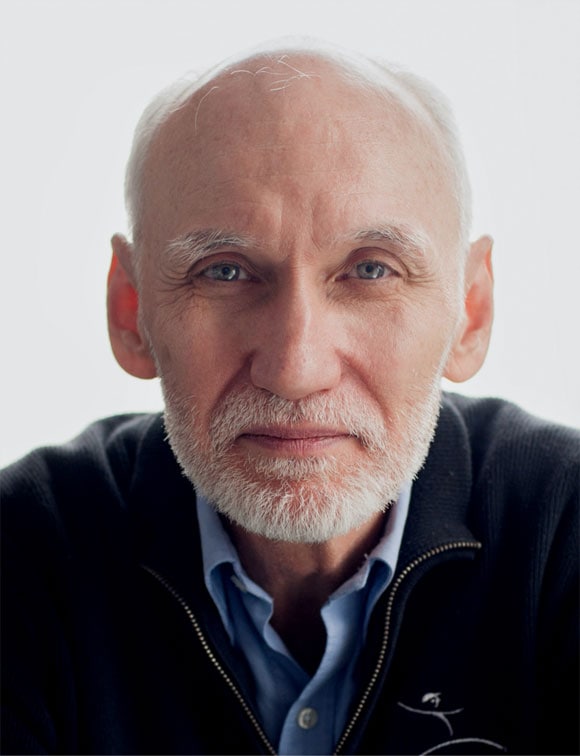
John Shook spent eleven years with Toyota in Japan and the U.S., where he helped transfer the Toyota Production System globally. He later served as President of the Lean Enterprise Institute and Chairman of the Lean Global Network.
John is the co-author of the award-winning books Learning to See and Managing to Learn, and wrote the foreword to my book Learning to Lead, Leading to Learn. As an industrial anthropologist, he brings a perspective that connects culture, systems, and practice to bridge deep thinking with real-world application.
Reflect and Take Action
The purpose of kaizen is to do more kaizen.
It is not to arrive at the perfect system, the perfect culture, the perfect leader, or the perfect destination. It is about taking the next step and then the next one.
Kaizen means the self-discipline to change ourselves for the good.
Creating the conditions for people to think, solve problems, and grow is a practice. Like any real practice, it never ends.
As you reflect on this episode—and this three-part series with John Shook—consider:
- What is something you can work on improving in yourself today to get a little bit better?
- Who can you help support in your Chain of Learning?
- How can you shift from trying to lead change to creating the conditions for learning, agency, and growth?
As you continue forward:
- Set your intention. What are you going to do?
- Frame it as an experiment.
- Put it into action.
- Reflect and learn your way forward.
Keep doing kaizen again and again.
Important Links:
- Connect with John Shook
- Follow me on LinkedIn
- Subscribe to my newsletter
- Check out my website for resources and working together
- Join us on the Japan Leadership Experience
- Purchase a copy of, “Learning to Lead, Leading to Learn”
- Episode 4 | Leading for Impact: The Power of Being Over Doing
- Episode 18 | Discover the Real Meaning of Kaizen
- Episode 37 | Lean Has Failed (or Has It?) with James Womack
- Episode 38 | What’s the Future of Lean? with James Womack
- Episode 59 | Get Better at Getting Better: Leveraging AI to Elevate Human Learning with Nathen Harvey
- Episode 73 | Small Steps, Leading with Heart: How Transformation Sustains with Richard Koch
- Episode 74 | Has Lean Really Failed? — Or Are We Asking the Wrong Question? with John Shook (Part 1 of 3)
- Episode 75 | Behind the Scenes with John Shook: The Human Side of Lean (Part 2 of 3)
- John shook’s toast at the, “Learning to Lead, Leading to Learn,” book launch
Listen Now to Chain of Learning
Listen now on your favorite podcast players such as Apple Podcasts, Spotify, and Audible. You can also listen to the audio of this episode on YouTube.
Timestamps
02:28 – [Listener Question] How do you balance patience with action?
04:06 – Avoiding solution jumping and analysis paralysis
05:20 – [Listener Question] What will matter most for the next generation of organizations?
07:21 – Why underlying assumptions matter more than artifacts
08:28 – The deeper level of hansei and reflection
08:53 – [Listener Question] How do you bridge generations without slowing improvement?
10:43 – Quick PDCA vs. long-cycle learning
11:23 – Aligning people around shared purpose
13:56 – [Listener Question] In our age of AI, how do we stay true to jidoka’s original intent, separating machine work from human work?
14:12 – AI, jidoka, and protecting human work
15:23 – Four questions to navigate uncertainty
16:17 – Why respect for people still matters in AI
17:15 – Jidoka beyond “automation with a human touch”
18:54 – Curiosity, experiments, and learning with AI
19:30 – The promise and risk of AI thinking for us
20:56 – John Shook’s final reflections
22:08 – PDCA beyond engineering and problem solving
25:39 – The purpose of kaizen is to do more kaizen
26:18 – Creating conditions for people to think and grow
27:00 – Shifting from leading change to creating conditions
Full Episode Transcript
John: [00:00:00] When it comes to the question of pace of change, I have unfortunately found that so far I don’t see a substitute for experience. To look at the patient in the eye, their complexion, uh, their body language, and see how they’re responding to treatment is what we’re doing in the helping profession of helping organizations.
And that then, it directly in- informs this pace of change. Slow down, go faster. Okay, we’re going this direction, add this piece to
Katie: it. Welcome to Chain of Learning, where the links of leadership and learning unite. This is your connection for actionable strategies and practices to empower you to build a people-centered learning culture, get results, and expand your impact so that you and your team can leave a lasting legacy.
I’m your host and fellow learning enthusiast, Katie Anderson.
This is it, part three of my three-part conversation with John Shook. If you haven’t already [00:01:00] listened to episode seventy-four and seventy-five, hit pause now and go back and start there to hear our conversation as it unfolded. For those of you joining us, John Shook is one of the most influential thought leaders and practitioners in the global lean and continuous improvement community.
He’s also an important link in my Chain of Learning, having written the forward to my book, “Learning to Lead, Leading to Learn,”and influenced me for nearly two decades through his writing, speaking, and mentorship. Before John and I sat down to record this conversation, I put a call out and asked you to submit your questions.
While we covered many of the themes you asked across the first two episodes, we had time at the end of our conversation to go in depth on four specific questions that were submitted. And at the very end, I come back to something that John and I teased in the previous episode, where I asked John to share his parting reflections and words of wisdom for all of us as we continue forward in our own work of creating cultures of learning and improvement.
So without further ado, let’s continue the conversation with John [00:02:00] Shook, starting with the very first question from you. This question comes from Ian Balfour, who joined me in Japan a few years ago on my Japan Leadership Experience. Ian’s question references something he learned deeply from that experience, from Mr.
Yoshino directly and from our visits to several Japanese companies, including one I’ve talked a lot about, including in episode four, who has a philosophy of tree ring management, and their purpose is happiness. Ian’s question: Mr. Yoshino says that having patience requires a lot of patience. When results are under pressure, how do you decide when to stay patient with a long-term strategy or intervene and accelerate change?
Ian explained the reason for his question, that a long-term philosophy can require a lot of patience, and that can feel really hard in the West when executives are demanding immediate results. Here’s John’s answer.
John: Well, you know, again, it’s a highly situational question, right? If we’re ta- if we’re in the emergency [00:03:00] room and we have to, uh, a life is at stake, then indeed we have to get, you know, some results right away.
But in general, I think you can say that a distinction between action and results, I think can help. I think patience for action and longer term change and impatience for action is okay, is not okay. That’s a way to go. And this is a great thing. I think a lot of these lean systems enable, lean tools enable us to, to, to, to embody this paradox.
There are a lot of paradoxes, polarities, contradictions that we’re trying to manage our way forward and not just choose either/or. This is one, a mindset, I think that, uh, often may perhaps, uh, could be a challenge for m- many of us who are afflicted with the Western mind . Try to think more both/and. So this is a good example.
We want to, you know, patience versus, you know, the need for the bias for action. We want to have a bias for action, for taking action, then learning from it, and then through that process, be patient for the longer term results. So we’re patient for longer term change, but very [00:04:00] impatient for, for action. And so we want to then basically…
And that, you know, one of the ways we’ll use, for example, the A3 and other tools is as a way to help us avoid jumping to conclusions, jumping to solutions, but also help us avoid analysis paralysis. And what happens is, usually in organizations, I bet many people, you know, could, could resonate with the idea that often in their com- in their organizations, they’re stuck in one or the other
Everyone’s jumping to conclusions and solutions all day long, or we’re just stuck in analysis paralysis. No one can make a decision. So we need to, we need to actually mitigate both of those together. If not, then, um, we’ll be in one of those kind of no man’s, no person’s land to mitigate the two.
Katie: That’s a helpful distinction too, right?
It’s not we’re being patient for anything to happen. It’s just being patient for the longer term results to happen and, and having greater clarity on are we needing to jump the gun right now or [00:05:00] not? Maybe that’s a bad example, like in a true emergency, but where do we give space for the learning and what are we shortcutting as well if we jump in with our answer or moving things forward because we need the result right now?
Yeah. Impatient for action.
John: Yep. And my, all, all of my bosses in Toyota were highly impatient for action. “Did you do this yet? Why not? Why haven’t you taken it?” So take action.
Katie: The next question was submitted by the Shingo Institute. As lean continues to evolve, what principles and leadership behaviors will matter most for the next generation of organizations?
John: Well, um, I don’t know. I guess to talk about that question. I mean, the ones, the, I mean, the fa- the, you know, the well-known ones are the ones that are gonna probably gonna remain as far as principles goes. Uh, so again, by respect for people, you know, continuous improvement. If we think of principles, I’m, I’m gonna kind of quote Edgar Schein here a little bit again, and, and he Taught us to think in terms of three levels, and one is artifacts.
And so you could say that, that a lot [00:06:00] of the Lean community has, has, you know, been too, uh, had too much fervor for copying artifacts only. And so now there’s recognition that those need to rest on principles. So principles or espoused values. So resting on thinking we have the principles in place or in, in terms of the espoused v-value still may not get us where we want to go unless we dig deeper.
So Shinge’s deeper level, he called underlying assumptions, and these are things… So principles and, and again, even, even values, you can write them down. You can have a meeting. We can say, “What are our values?” You could… Everybody could use Post-Its, you know, and… Or, or, or you could simply examine your company history over the decades and, and realize here, here are our lasting values.
That’s… We can write them down. Underlying assumptions are, are, again, deeper and harder to dig out. And so I, I… So in answer to the question, I would think, okay, that maybe that’s, uh, the ne- the next phase. The next stage is we need to go there more, and that has to do with what you… Things like what you think of human nature, [00:07:00] what you think of the place of the or- of the enterprise or the firm in society, um, what you think of how people interact this way or that way.
It’s into your notions of right and wrong. It gets into et-ethical quest- eth-ethics again. So I… As far as what we’re t- companies, Lean companies are currently writing down in terms of principles and values, I think that’s all… That’s fine. I think if you were to go to 10 companies that, that, that, that claim to be well down a Lean path, their list of principles would look almost the same.
That’s fine, and I bet those will all still be around later, back to the question from Shingo. But how many of us in… Are, are going that level deeper? Now you don’t change those things easily, so what’s the purpose of going deeper? Purpose is to understand yourself better and to identify things that you might need to address.
Now those are not gonna be easy to address. Back to the question of patient and impatient. You’re gonna have to exercise patience when it comes to making those kind of fundamental deep changes. [00:08:00] But even there, you can be impatient about identifying them, uh, and then t- in putting in place some sort of strategy and plan to address them, uh, over time.
It
Katie: was actually Margie who introduced that deeper reflection on assumptions to me and, and teams. Uh, you know, and she’s, she talked about how it was actually the deeper level of hansei, of reflection, that, that she learned from you and others at, from Toyota, is that we go into the… We don’t stop at the surface or even the behaviors and values.
We go deeper into those assumptions, and once we can uncover those as part of our true PDCA process, that’s where the deep learning comes from.
John: I think so. I think so. And I think that’s not easy. So I think, I think sort… A lot of us out, out here as, uh, coaches or kind of in the co… You know, we coaches are, we’re in the helping profession.
And so again, it, I think it behooves us to dive into some deep learning about that kind of thing It’s not so, it’s not so easy. Um, it’s not so easy.
Katie: The third question comes from Himanshu Raj, who also joined me on a previous Japan Leadership Experience cohort, [00:09:00] alongside several of his executive clients.
Himanshu’s question: How do you align senior leaders across generations, those in their fifties versus those in their thirties, from different eras of manufacturing and business, when instincts, decision-making styles, and definition of what’s right are fundamentally different? And how do you bridge this without diluting the pace of improvement?
Here’s John’s answer.
John: I think that’s a great question. I think, I think at, at one level, the answer is gonna be easy, things we’ve talked about, you know, uh, uh, already. You know, have to go back to thinking of each individual. Uh, it’s all situational, and let’s not worry about generations. Let’s focus on the problem at hand.
Having said that, I’ve always had the dream that we, that a given company, a given leader, a given individual practitioner could make progress on their own. When it comes to the question of pace of change, I have unfortunately found that so far I don’t see a substitute for experience. To look at the patient [00:10:00] in the eye, their complexion, uh, their body language, and see how they’re responding to treatment is what we’re doing in the helping profession of helping organizations.
And that then, it directly informs this pace change. Slow down, go faster. Okay, we’re going this direction, add this piece to it. I think keeping eyes wide open on the prize of what kind of changes we’re trying to bring about, and then self-learning, learn about ourselves as we learn the organization. And then PDCA.
I, I think so much comes down to PDCA and how we put something into action, into, into play. And we have quick cycle PDCA and longer cycle PDCA, which is, I think, something that’s also not recognized as much as it could be. Uh, we often like to emphasize quick cycle PDCA. Um, but that’s actually easier. You know, it’s easy to develop those kind of, those kind of habits.
I’m gonna say easier. Not easy, but easier. [00:11:00] A longer cycle is very hard. Uh, but a lot of work is, by its nature, longer cycle. I mean, if it, if it takes four, three or four years to develop a new automobile, a new, some new, uh, healthcare procedure, those are longer term. Now, you can break those down into small PDCA loops at the same time.
But for the question that, that he’s asking about, I, I, I would, I would, um, I would devise thinking back to the term of learning, uh, think in terms of, uh, learning cycles that can be put into p- into play, uh, and reviewed and reflected upon very quickly. Those are the thoughts that occur to me. How about you, Katie?
What is your advice to that question?
Katie: The same thing. I mean, going back to the individual humans, I think of grouping people by our generation also, um, is challenging. I mean, it’s an easy thing, but I always, I always go back to purpose, like aligning people around purpose and, you know, what’s the problem to solve.
And yeah, we may have to adjust h- how we’re dealing with things. But I go back to, like, when I was working in healthcare and, you know, [00:12:00] people are like, “Oh, the nurses feel this way, and the doctors feel this way.” And, like, the best way to get people aligned was say, “Well, what, what are we really trying to do?
Well, we’re trying to exper- like improve the experience for the patient.” Okay, we could really rally around that. Didn’t matter what generation people were from or what discipline they came from or what slice of the organization or pro- process. When we could have some shared purpose, that created the alignment.
And so I always think about how do we… r- whatever that sort of problem we’re seeing with maybe alignment and buy-in, might we say, how do we, how do we come to some shared purpose to work together?
John: Aligning around the problem to solve, that is the best cure for that.
Katie: And as we talked about earlier, you know, there might need to be some adjusting and approach for, you know, people who are more technically savvy versus people who aren’t, and that could be a generational thing or not.
But, like, how do we still bring them along and create the conditions for them to h- understand what’s happening? So again, going back to these comments about creating the conditions, creating the environment, creating the structures that help [00:13:00] people come along as well. I don’t know, Katie. Is the younger generation really that different?
No, I don’t, I don’t think they are. I think-
John: You’re younger than me, so.
Katie: I, I’m younger than you, and I have younger ki- like, you know, you have your grandkids and, like, there’s different ways that we know how to interact based on what we’ve learned. But I… we’re fundamentally human beings, right? And so that, that, at its essence, if we strip away, like…
And I, I get asked the co- question all the time around, like, country culture or, you know, organizational culture, and it, it… Yes, those things influence how we’ve been shaped and how we perceive situations or behavior, but those are, those are learned. But there’s something truly core to us about learning, wanting to be connected to purpose, wanting to help do something meaningful.
I mean, I think that really unites most of us as human beings. So if we go back to that essence, we can, we can overcome a lot of perceived barriers.
John: Go to the Gemba, you know, and address some problems, and, uh, get people to rally around those. Rally around that action.
Katie: The final question was inspired by one [00:14:00] submitted by Alan Hollinger, someone I’ve known for many years and worked alongside in healthcare leading change.
Alan’s question touched on something I’ve been thinking about a lot lately, the concept of jidoka, automation with a human touch, in our world of AI, which I also explored back in episode 59 with Nathan Harvey. I’ll put that link in the show notes. In the spirit of Alan’s question, I asked John, “In our age of AI, how do we stay true to jidoka’s original intent, separating machine work from human work and continuing to elevate what’s uniquely human?”
Here’s John’s response
John: Beyond what we’ve, uh, discussed, I’m not exactly sure what, what I can add except to say that this is another example, an extreme example of, of the situationality and a reason that you can’t just go like, “Oh, we…” As we say in America, “Spread it like peanut butter.” So the deeper we can assess a situation and understand our role…
So to someone… If someone came to me with that question, sitting in front of me right now, my, my first thought is gonna be, “What is your role?” And then what [00:15:00] is it that you see that you need to do, that you can do? Um, and then we can start to think about what some of those, what cause cultural matters are that are getting in the way specifically.
‘Cause as a big umbrella thing, it’s just, it’s overwhelming. Yes, yes, yes, California is different from India. People have, grow up different experiences. Companies are in different situations. How, how can we bring, uh, bring all that to bear to the problem at hand? So what is the task? So we’re not a-a-aligned around the task, the problem at hand, then w-we’re not gonna have success anywhere we go anyway.
And another couple of questions that could, that could, that could perhaps help here to define some of those things, the situationality, is for that person, if he or she was sitting in front of me, is what do you know about the situation? How do you know it? You’ve experienced it, you read about it, you saw a report, you’ve exper- you’ve experienced it how?
What, what do you know? So there’s four questions. What do you know and how do you know it? And what do you need to know and how can [00:16:00] you learn it? And I think those four questions followed by PDCA cycles then, ’cause the third, the, the f- what do, what do you know? How do you, how do you know it? What do you need to know?
How can you learn it? That will take you to some PDCA. So then, uh, conducting some PDCA, uh, cycles with rigor, uh, actually doing things and then reflecting and learning from those things is, I think, really the only way forward other than, you know, the good old principle of respect for people and bringing your sincere self into the situation.
So if you’re working in a, in a, in a, in a, in a culture that’s not your own, you will make mistakes, you will offend people. Uh, but you have to walk in as your authentic self You can’t overcompensate, you can’t over empathize. You have to be who you are, but then with eyes wide open when you’ve offended, when you make mistakes, to, to apologize, and then do what you can to return focus to, to the problem, the, the, the problem that we’ve agreed to solve.
Katie: And we can’t leave this conversation with just that, some [00:17:00] mention of AI and the co- you know, in our new world as well, and we talk about the concept of jidoka, which is not what, you know, automation with a human touch and separating machine work from, from human work. How do you think about whether or not that’s the right application of jidoka?
But how are you thinking about this whole concept of learning and human work in this new world of machine work and machine
John: learning? Well, there’s only a couple of things I can say about AI and, and how it’s coming in. And, and the first is that it-it again, it’s, it’s just such a wonderful example of how some of the deeper principles or thinking, uh, that Toyota came up with a-apply here.
This is precisely what Sakichi Toyota was, was, uh, working on 150 years ago. Uh, so his first key insight that led, that, that still informs what Toyota is, is this one of jidoka. So I’ve often said I’m gonna write an article one day about translation mistakes that I have made. And that was mine, automation with a human touch.
And I don’t know if it’s a very good one [00:18:00] really. I think to have to, to ask someone to do the work to look into those kanji is really worthwhile. It is a made-up word, you know, in, in Japanese, and it’s brilliant, uh, I think. And so that’s why ultimately we decided not to translate it. Just go… We’ll go with jidoka, with the kind of a parenthesis trans-tran-translation of automation with a human touch.
But it does mean separating people from machines and making sure whatever you do, that machines or technology, let’s, let’s replace the word machine with technology. Make sure the technology works for people, not the other way around. So I think that can still be our guiding light. Uh, how to achieve that, uh, in light of everything that’s happening with AI, uh, of course, I have no idea.
Just two things that occur to me. One is we, what do we do when we’re faced with, with a lot of uncertainty, a lot of unknown? I think the thing to do is to maintain a high degree of curiosity. Um, there is tremendous potential here. There’s also tremendous potential both, both, you know, positive and, and negative.
But curiosity, number [00:19:00] one. Secondly then, say what can we do to learn our way forward? Back to learning again, but structured learning. What, what can we do? How can we run some experiments that are very intentional? So this is where I’m very just amazed really with what Art Small is doing, uh, working on, uh, a number of things with AI and bringing it into Lean world.
One of them is a, an AI A3 coach, and it’s incredible. It’s just amaz- It’s mind-boggling. So where it’s gonna go, I don’t know. He doesn’t either. I mean, it, it may go nowhere, uh, for a number of reasons. One is that we’re… AI is changing so fast So what he’s working on, he acknowledges it may be just completely, you know, obsolete in six months.
But it’s amazing to watch what it can do. Can look at an A3, for example, and give you very good feedback. Now, then there are a lot of questions about how would we use that. Are we trying to, you know, you know… Whenever there’s a danger that people are gonna use any technology to stop thinking, I’m gonna let the AI think for me, that’s cause for, for concern.
[00:20:00] That’s, that’s, that’s the way I think. I would be curious, run experiments, and then look at the experiments of others to try to learn our way forward.
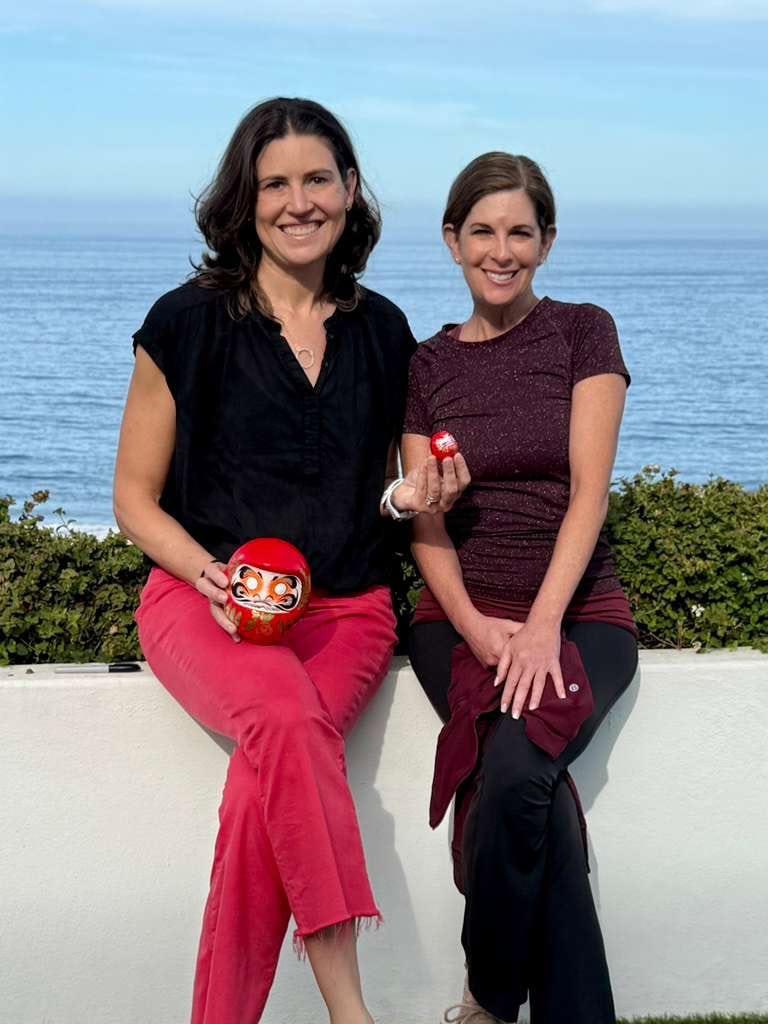
Katie: Learn our way forward, that’s it. Re- reminds me of the daruma doll. You fall down seven times, get up eight, and keep getting up and learning our way forward.
John: Hopefully AI doesn’t eat us on that seventh.
Katie: Yeah, yeah, no, hopefully it doesn’t eat us. And, you know, as, uh, going back to a con- our earlier conversation with, like, there’s a dual purpose for the A3. It’s not just to solve the problem, but also to develop people and develop ca- capability around coaching, as well as capability around solving the problem.
So, you know, we may create some other problems.
And as we wrapped up this conversation, I came back to something I promised you, and John, I do. In episode 75, John mentioned that when he visits a company or wraps up a conference, he always thinks carefully about his final words and what he wants to leave people with.
So I asked him, “What are your final words for us here as we conclude this conversation on Chain of Learning?”
John: Uh, well, [00:21:00] it’s, uh, highly situational, as, as we mentioned, but you just solved that or you gave a context for that by talking about today, this situation. So I thought about this a bit, because I knew, I knew you were gonna ask this.
I mean, a, a, a number of things come to mind. One is don’t complain. Don’t expect too fast, but don’t stop. So don’t stop doing and learning. Your first object of study and improvement is yourself, so don’t waste time complaining about your boss or your organization. Take action, observe, adjust, and do it again.
So that is PDCA. And I’d, I’d, I’d call attention to the fact that there are a couple of people, uh, opened my eyes to how PDCA… Again, we’re talking about scientific thinking, humanistic thinking, and, and, and ethics and aesthetics, of how PDCA isn’t just an engineering or a scientific thing. Um, there are a couple of people.
Uh, so Karen Ross wrote a book with, uh, Jeff Liker about lean thinking, lean… The Toyota Way in, uh, Service, or something like that. And she [00:22:00] observed that, you know, PDCA is, is a, is a robust process, to call it that, in any kind of work. And then th- there’s, there’s, there’s a guy, his name is Tom Reichert. So it’s an, it’s a 10-year-old book.
Didn’t get a whole lot of attention. Uh, and Tom’s, like, a consultant coach in the construction world. But what he did for this was he got a group of, uh, artists together and spent three days teaching them about lean, about TPS, Toyota Way. Yeah.
Katie: Lean conversations,
John: yep. With a, with an emphasis on PDCA. Then he took the, he took them as part of that to Toyota, to Georgetown And then he captured their reflections of what they had learned.
They knew nothing beforehand. They knew nothing at all about any of this. They’d heard about Toyota. Their… The… An overwhelming lust from it all was they said PDCA is something that we artists use more probably than they saw evidence of in the factories. Their life is all PDCA about putting in motion something to achieve a certain, a, a purpose, then [00:23:00] reflecting on what they’ve done and adjusting to take…
To go to, to, to their way forward. In answer to, to, to this question about, uh, uh, taking action, reserve, observing, adjusting, continued forward, continue going forward, to learn our way forward is thinking of it as a learning cycle is one, I think, uh, uh, I don’t know if it’s advice, but it’s some words and I think that we can all live by.
And one more thing, may- a bit of a, a bit of a story. Didn’t tell that many stories today. I had a chance a few years ago to s- to meet with a, um, one of the, uh, super experienced Japanese sensei of TPS. We were together having a couple of drinks, a couple… Maybe it was four of us that were there at the time, and he related a story of, of when he had just recently gotten together with the most senior TPS sensei.
Actually, it’s Mr. Hayashi who, who just passed away last year. I wrote an article about him. And he said that when he had met with Mr. Hayashi recently before that… Okay, I’ll tell you the, his name. His name is Saito. I think it’s okay to say that. Uh, he, and he said to us that Hayashi asked [00:24:00] me… Or Nanpachi, right?
So they all call Mr. Hayashi Nanpachi. He said, “Nanpachi asked me, what’s the purpose of doing kaizen?” So here, the funny thing is Saito is the, the… He, he, he knows every… I mean, he is a super experience and, you know, le- you know, TPS sensei. He’s been doing this for years. He’s fabulous. He’s just absolutely fabulous.
And so here he is being asked this, you know, freshman question, sophomore question by Nanpachi. So he said… So his, his antenna went up and said, “Okay, there’s some- there’s something going on.” But he gave the… Started giving the, the u- the answers you would expect, and I would ask anyone who’s listening here now to say the same thing.
What’s the purpose of doing kaizen? I don’t know, Katie, what’s the purpose of doing kaizen?
Katie: To continually improve yourself
John: so you can improve the world. So, so at, at the end of the day, yeah. So, so he went through the whole thing. To, to eliminate waste. No, no. To develop people. No. To, to, to build a system for customer first.
To, to, to just, to improve imp- to, to, to learn, [00:25:00] improve, improve, improve yourself. To remove struggle, which is something we love to do when we go with
So I guess that’s the only, uh, the only, uh, parting thoughts that I can, uh, add today. Thanks for having me today. It was fun.
Katie: What John leaves us with takes us back to the very beginning of where this three-part conversation started. Change starts with all of us and what we can control, influence, and improve.
I love this. The purpose of kaizen is to do more kaizen. It’s not the finish. It’s to do kaizen again, not to arrive at the perfect system, the perfect culture, the perfect leader, the perfect destination. [00:26:00] It’s about taking the next step and then the next one, and that’s what the spirit of kaizen or continuous improvement is.
It’s continuous. It never ends. I think back to the symbols that make up that word, kaizen, and what they show us about its real meaning. As I highlighted back in episode 18, Discover the Real Meaning of kaizen, it’s the self-discipline to change ourselves for the good. This work, creating the conditions for people to think, solve problems, to grow, it’s a practice, and like any real practice, it never ends.
It means we have to strive to get a little bit better every day, to change ourselves for the good, so that we can grow our Chain of Learning and influence positive change around us. So as you reflect on this episode, and in fact, all three episodes of this three-part series with John Shook, think about, what is something you can work on improving in yourself today to get a little bit better?[00:27:00]
Who can you help support in your Chain of Learning? And how can you shift from trying to lead change to creating the conditions for learning, agency, and growth? Set your intention. What are you gonna do? Frame it as an experiment. Put it into action, and reflect and learn your way forward. Keep doing kaizen again and again.
If this three-part series with John Shook sparks something in you as a change leader, I encourage you to go back and also listen to my conversation with Jim Womack in episodes 37 and 38, where we look at where Lean has fallen short and why and what Jim’s recommendations are for what we can course correct.
Together, these conversations with John and Jim, two of the most influential leaders and thinkers in the Lean movement over the last four decades, give us much to reflect on as we look towards the impact we can make in the future in creating thriving, people-centered learning organizations that do good in this world Thank you to everyone who submitted [00:28:00] questions for this conversation with John Shook.
And while we didn’t get a chance to directly discuss all of them, many were addressed in the spirit across all three episodes. And I’ll continue to weave your questions into future conversations on Chain of Learning. John and I are really looking forward to the dialogue and conversation that comes out of this series.
Keep sharing your thinking in comments on LinkedIn, via email, and more. We look forward to continuing the conversation together and with you. If you’ve enjoyed and gotten value from this series, please share the podcast with a colleague and leave a rating or review on your favorite podcast player. It helps connect Chain of Learning with other leaders who could benefit.
Thanks for being a link in my Chain of Learning today. I’ll see you next time. Have a great day
Subscribe to Chain of Learning
Be sure to subscribe or follow Chain of Learning on your favorite podcast player so you don’t miss an episode. And share this podcast with your friends and colleagues so we can all strengthen our Chain of Learning® – together.